


Pakistan’s central bank should hold its nerve on rates
Pakistan's MPC debates raising interest rates amid external oil price shocks from the Middle East conflict, despite stable domestic fundamentals, with experts split on an immediate hike.
- Monetary Policy Committee's interest rate decision.
- Rising oil prices and Middle East conflict's inflation impact.
- Pakistan's stable domestic fundamentals and fiscal improvements.
- Arguments for holding rates versus an immediate hike.
- The importance of fiscal restraint for economic stability.

Pakistan’s Monetary Policy Committee gathers today with the room considerably less settled than it was a few weeks ago. Treasury desks canvassed by BR Research are split roughly down the middle: about half expect the State Bank of Pakistan (SBP) to leave the policy rate unchanged at 11.5 percent, while the rest are braced for a 50-basis-point increase.
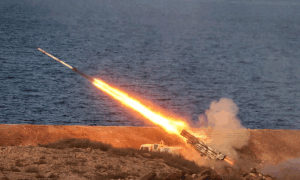
As the meeting has approached, the hawkish camp has gained ground, driven less by a deterioration in domestic fundamentals than by an external shock as oil prices have climbed again with the intensification of the war in the Middle East.
The bond and money markets are not signalling the same degree of conviction about an immediate increase. Rates further out have moved up since the July review, reflecting greater concern over the medium-term inflation outlook, but the front end has repriced much less aggressively. That distinction matters: the market is acknowledging that the probability of further tightening has increased without necessarily concluding that the SBP needs to act tomorrow.
On the domestic fundamentals, holding remains the more defensible position. Between March and July, Pakistan still ran a cumulative current-account surplus of $264 million despite seven months of war and repeated spikes in international energy prices. August current-account data are not yet available, but merchandise imports fell sharply from July, while SBP reserves reached $18.3 billion by early September, helped by fresh commercial loan proceeds alongside the broader improvement in external financing.
The fiscal picture is, if anything, more reassuring. The consolidated deficit for the last fiscal year came in at 2.6 percent of GDP, the lowest since FY04, while the government recorded a primary surplus for the third consecutive year and brought the debt-to-GDP ratio lower. Liability management has also improved the maturity profile of public debt, reducing some of the refinancing pressure that had made Pakistan particularly vulnerable during the crisis years.
The new fiscal year has opened with additional breathing room. The SBP transferred Rs1.93 trillion in profit to the federal government, almost Rs500 billion more than had been budgeted, while the Federal Board of Revenue collected Rs1.72 trillion during July and August against a cumulative target of Rs1.71 trillion. August itself missed its monthly target, so this is hardly grounds for fiscal complacency, but neither does the fiscal position currently point to a demand impulse large enough to require monetary policy to lean harder against it.
The uncomfortable counterweight is inflation. Headline CPI inflation averaged about 10.2 percent over the six months to August and accelerated to 11.1 percent in August, with September also likely to remain difficult because of imported fuel costs, the reversal in wheat and other food prices, and unfavourable base effects. Some of that increase will fade mechanically as the base shifts, but a growing share of the outlook now depends on the path of oil prices and, by extension, on a war that the SBP cannot forecast with any confidence.
That uncertainty has increased materially over the past few days. Drone strikes launched from Iraqi territory hit Saudi Arabia’s East-West pipeline, forcing the kingdom to shut the route that had become increasingly important for moving crude to the Red Sea while traffic through the Strait of Hormuz remained disrupted. The immediate concern is no longer simply a few barrels being taken offline; it is that one of the principal workarounds around the Gulf’s main chokepoint has itself become vulnerable.
That changes the character of the oil risk. Alternative export routes, spare infrastructure, inventories and shipping arrangements had allowed markets to absorb repeated episodes of escalation without every military confrontation becoming a sustained oil-price shock. If those buffers are progressively impaired, the war-risk premium begins to appear not only in crude prices but also in freight, insurance and the broader cost of traded goods, increasing the probability that imported inflation persists for longer than previously assumed.
This is the strongest argument for raising rates. With the rupee being managed tightly, the exchange rate is doing relatively little of the adjustment, leaving monetary policy to carry more of the burden of preserving positive forward-looking real rates and containing second-round inflation. The real effective exchange rate had already risen to 107.9 by July, while major central banks have also turned more hawkish as higher energy prices complicate their own inflation outlooks.
But an oil shock does not automatically require an interest-rate increase. Monetary policy cannot manufacture crude oil, repair a Saudi pipeline or lower war-risk insurance premiums; it can only restrain the domestic demand and expectations effects that follow. The relevant question for the MPC is therefore whether the external price shock is becoming sufficiently persistent to contaminate wages, core inflation, inflation expectations and the exchange rate, rather than whether petroleum prices happened to increase in the weeks before a meeting.
There is already evidence that domestic demand is adjusting without another rate increase. Large-scale manufacturing grew 5 percent over FY26, but output weakened noticeably towards the end of the year, including a 3.5 percent year-on-year decline in June. Petroleum demand also softened sharply in August: overall oil-marketing-company sales fell 16 percent from July and 3 percent from a year earlier, while high-speed diesel volumes fell 32 percent month-on-month and 19 percent year-on-year. Pakistan had imported no HSD at all in July as domestic refineries met requirements, limiting one channel through which higher international fuel prices would otherwise have immediately widened the import bill.
None of this eliminates the inflation risk. It does, however, argue against treating a supply shock that has intensified only in recent days as sufficient reason to tighten monetary conditions before its persistence and domestic transmission become clearer. Demand is already cooling, external and fiscal buffers remain materially stronger than in earlier episodes, and the first-round inflationary effect of higher oil prices is largely beyond the reach of the policy rate.
The Saudi pipeline attack is therefore less an argument for an automatic hike tomorrow than a warning against complacency after it. If the pipeline remains impaired, oil stays above current elevated levels, war-risk premiums spread through freight and insurance, and core inflation or inflation expectations begin moving higher, the case for tightening at the October 26 review will be substantially stronger. For now, the better course is to hold at 11.5 percent, retain a clearly hawkish bias, and preserve the option to act once the SBP can distinguish a temporary price-level shock from a sustained inflation problem.
That restraint must be matched on the fiscal side. The government should not treat stronger-than-budgeted SBP profits or the narrow outperformance of the two-month revenue target as an invitation to spend the windfall, because doing so would merely force monetary policy to compensate later. Holding rates tomorrow is defensible only if fiscal policy also holds its nerve.
Copyright Business Recorder, 2026

Ali Khizar is the Director of Research at Business Recorder. His Twitter handle is @AliKhizar



















Comments