



Pakistan needs logistics competition, not transport concentration
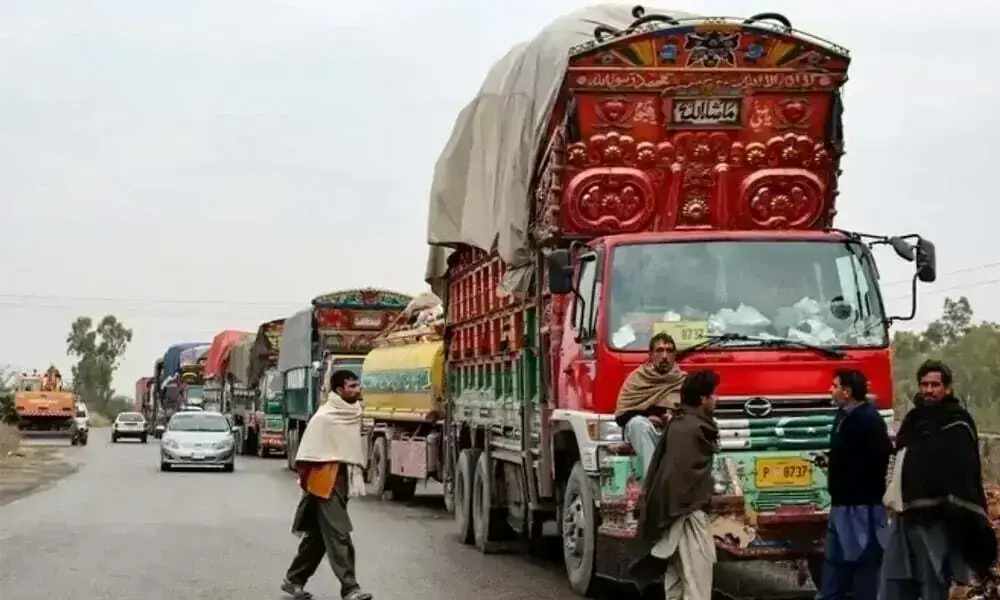
The goods transporters, who had gone on a countrywide wheel-jam on August 8, have deferred their strike for forty days after intense negotiations.
The immediate dispute has been settled, albeit partially, through negotiations, as it has many times before. But the larger question is why a single transport sector can repeatedly bring large parts of Pakistan’s economy to a standstill? The answer lies beyond transporters’ unions or weak enforcement of the state’s writ. It is rooted in decades of flawed transport policy.
Pakistan once used railways efficiently to transport commodities such as rice, cotton and oranges from Punjab to Karachi, while imported merchandise moved from Karachi Port to upcountry markets. Over time, however, freight operations deteriorated as Pakistan Railways increasingly focused on passenger services, and freight infrastructure was neglected.
The business community was consequently forced to shift cargo almost entirely to roads. Today, more than 90 per cent of domestic freight depends on road transport. This has created an unhealthy concentration in a sector that is strategically vital to the economy.
The cost of road dependence
Transport costs have become a significant burden on consumers, industries and exporters. One ton of Basmati rice transported from Punjab can incur around Rs4,500–5,500 in freight, while sugar transported from mills in interior Sindh costs around Rs2,500 per ton.
The higher logistics bill ultimately raises consumer prices, reduces exporters’ competitiveness and increases the cost of industrial production.
When trucks stop, factories, ports, exporters, wholesalers, farmers and consumers are immediately affected. Perishable commodities can be stranded, industrial raw materials delayed and containers held at ports, resulting in congestion, demurrage and additional inflationary pressure.
Transporters cannot be blamed for protecting their commercial interests. The real failure is that successive governments have allowed an economic structure in which there is virtually no meaningful competition between freight modes.
Pakistan has ignored its waterways
Pakistan once had the potential for a balanced multimodal transport system involving roads, railways and waterways. Yet decades of underinvestment, poor management, political interference and policy neglect shifted freight almost entirely towards roads.
Countries such as China, India and Bangladesh have invested in combinations of rail, inland waterways and roads. India, for example, already transports more than 126 million tons of cargo annually through inland waterways.
Pakistan has an extensive river and canal network of around 57,000 kilometres. Yet this natural asset remains largely unused for commercial freight.
Inland waterways can move bulk cargo using substantially less diesel than road transport and can therefore provide a cheaper and more energy-efficient alternative for commodities such as wheat, rice, maize, fertilizers and other bulk goods.
The government should initiate pilot freight operations on commercially viable stretches of the Indus system and gradually develop the necessary terminals and logistics infrastructure.
Motorways and the hidden fuel cost
Pakistan has invested heavily in motorways, much of it using borrowed foreign exchange, but has failed to generate sufficient industrial activity and exports to earn the dollars required to service its external obligations.
At the same time, overwhelming dependence on diesel-powered trucks has increased the consumption of imported fuel. This represents a hidden foreign-exchange cost of road-dependent freight.
The problem becomes even more serious amid Middle East tensions, risks around the Strait of Hormuz and crude oil prices above USD 100 per barrel. Pakistan has also recently faced historically high LNG prices, with the last spot cargo purchased above USD 21.88 per MMBtu.
For a dollar- and energy-constrained economy, using scarce foreign exchange to move cargo that could be transported more efficiently by rail or waterways is economically unsustainable.
Exports pay the hidden price
Logistics is a major component of the final cost of every export shipment. Pakistan cannot realistically aspire to USD 100 billion in exports while allowing one transport mode to disrupt supply chains from farms and factories to ports.
Karachi Port, Port Qasim and Gwadar are gateways to international trade, yet inland cargo remains overwhelmingly dependent on roads. A prolonged transport strike can therefore cause port congestion, vessel cut-off failures, demurrage and damage Pakistan’s reputation as a reliable trading partner.
Repeated strikes also expose an institutional weakness. Governments frequently negotiate under pressure and accept demands simply to restore movement. While this provides short-term relief, it creates a dangerous precedent: every successful wheel-jam strengthens the perception that economic disruption is an effective bargaining tool.
The solution, however, is not confrontation with transporters. It is competition.
Rail and waterways must return to national planning
Pakistan urgently needs a national multimodal freight strategy with measurable targets for shifting cargo from roads to rail and waterways.
Pakistan Railways should be transformed into a commercially driven freight carrier with modern locomotives, adequate wagons, efficient terminals and dedicated freight services linking ports with major agricultural and industrial centres.
Dedicated freight corridors connecting Karachi and Port Qasim with Lahore, Faisalabad, Multan and Peshawar should be treated as economic infrastructure rather than merely railway projects.
Even a modest transfer of heavy cargo from roads to waterways and rail could reduce highway pressure, diesel consumption and logistics costs.
NLC should become a multimodal logistics integrator
The National Logistics Cell (NLC) should be repositioned as a national multimodal logistics integrator rather than allowing the country’s strategic logistics architecture to remain overwhelmingly road-dependent.
NLC can connect roads, railways, ports, dry ports, warehouses and, where commercially viable, inland waterways through modern intermodal hubs.
Pakistan needs logistics competition, not logistics concentration.
The August 8 strike should be a wake-up call
The strike that has just ended should trigger a national debate on why Pakistan has allowed one mode of transport to acquire such disproportionate leverage over the economy.
Transporters’ strikes are a symptom, not the disease. The disease is decades of flawed transport planning that dismantled alternatives and left the economy hostage to a single dominant freight mode.
Pakistan cannot build an export-led economy, reduce its fuel-import bill or achieve durable economic resilience without fixing its logistics system.
The government must ensure that no industry, union or transport mode - however important - can hold the national economy hostage simply by switching off its services.
The answer is not to defeat transporters. It is to create enough alternatives that nobody can dictate terms to the economy.
Pakistan needs roads - but it also needs railways, waterways and genuine competition.
Copyright Business Recorder, 2026
The writer is a former Vice President of KCCI, former Board Member of REAP, and commodities and international trade expert















Comments