


SC declares applying income tax penalties on repealed ordinance unlawful
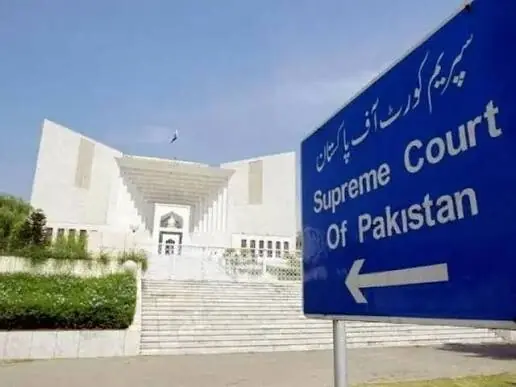

ISLAMABAD: The Supreme Court has held that the penalties under Sections 182,184 and 186 of the Income Tax Ordinance (ITO), 2001 are unlawful and legally unsustainable.
A five-member larger bench, headed by Justice Shahid Waheed, which decided the issue, also held that “the conclusion drawn by a three-member Bench (of SC) in the case of Eli Lilly Pakistan (Pvt.) Ltd depicts correct legal position relating to application of the amending provisions of section 122 (5), 122 (5A) of ITO, 2001 as prospective in nature and this cannot be applied retrospectively in respect of assessment ending on or before 30.06.2002, whereas, the contrary view taken by the subsequent Bench of co-equal strength in the case of Islamic Investment Bank Ltd is erroneous in law.”
A larger SC bench was constituted to settle the matter, as a three-member SC bench in Islamic Investment Bank (2016 SCMR 816) took a contrary view, departing from the strict prospective approach. An SC bench of co-equal strength (3-judge) in the case of Eli Lilly Pakistan (Pvt.) (2009 PTD 1392) held that assessments completed under the repealed Ordinance of 1979 must be governed strictly by the old law, while post-repeal assessments are governed by the ITO, 2001.
The judgment stated that upon the repeal and re-enactment of a taxing statute, any provision creating an additional charge or liability or any provision impregnated with adding to the liability of a taxpayer cannot be termed a mere machinery or procedural amendment and, consequently, cannot be given retrospective effect.
It noted that since the penalty provisions under Sections 182, 184, and 186 of the ITO, 2001 create an additional burden and fiscal liability, the same cannot be applied retrospectively in respect of assessments completed on or before 30.06.2002 under the repealed ITO, 1979 through an amendment of assessment under the provisions of Sections 122(5) and 122(5A).
The judgment further said that the distinction becomes even more apparent when the nature of the penalty provisions is examined independently. Unlike provisions regulating the procedure for assessment, reopening, or recovery of tax, Sections 182, 184, and 186 of the ITO, 2001 authorise the imposition of pecuniary consequences for acts of default, thereby exposing the taxpayer to an additional statutory liability that did not exist under the legal regime governing the relevant assessment year. “Such provisions do not merely regulate the mode or machinery for the determination of an existing tax liability; rather, they enlarge the legal consequences flowing from the taxpayer’s conduct by creating an independent fiscal burden. It is, therefore, immaterial whether such a burden is described as a “penalty” or an “additional tax consequence”, in either event, its operation affects substantive rights and liabilities.”
Copyright Business Recorder, 2026























Comments