


Delivering farm intervention: subsidize farmer’s wallet, not inputs
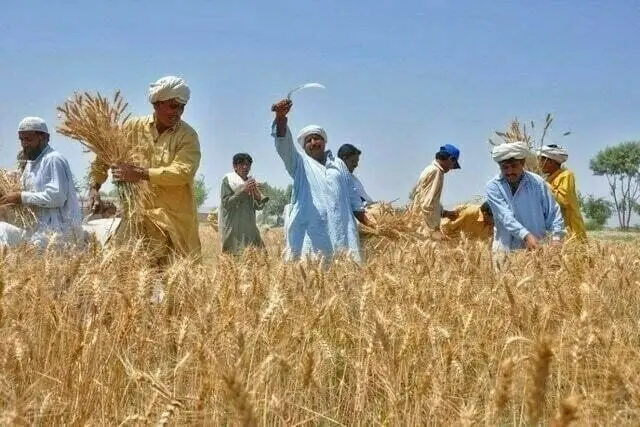

Pakistan’s wheat debate has an almost ritualistic quality. Input prices rise, growers warn that cultivation will become uneconomical, the government considers some form of support, and the discussion quickly descends into an argument over which input should be subsidised, how much additional consumption the subsidy might generate and whether the benefit will reach the “right” farmer. Somewhere in this sequence, the actual policy objective is reduced to background noise.
The immediate context may be wheat, but the underlying question is much larger. Once the government decides that domestic agricultural production warrants fiscal support, what is the least-cost mechanism for delivering it? Should the state reduce the price of a particular input, transfer unrestricted cash to growers, or provide pre-season liquidity that can be used across a defined range of agricultural expenditures?
Before answering that question, there is an awkward first-order issue. Why support domestic production at all? If the objective is simply to ensure food availability, imports remain an alternative. Self-sufficiency is not automatically economical merely because it sounds reassuring in a policy document. If importing wheat is structurally cheaper, reliably available and fiscally manageable, the government must explain why taxpayers should finance a more expensive domestic substitute.
But assume that debate has already been settled. Suppose the government has decided that foreign-exchange constraints, import volatility, food-security concerns and the political cost of a domestic shortage justify intervention. Suppose, more strongly, that timely fiscal support is what determines whether the country produces enough wheat or eventually returns to the international market as a distressed buyer.
Once intervention is treated as a foregone conclusion, the question changes. It is no longer whether the government should spend, but how a given fiscal commitment can produce the greatest increase in agricultural output at the lowest economic cost.
This requires moving beyond the habitual focus on individual inputs. Agricultural subsidy debates tend to follow a deceptively simple logic. Fertiliser is expensive, so subsidise fertiliser. Certified seed use is low, so subsidise seed. Mechanisation is inadequate, so subsidise machinery. Micronutrient application is negligible, so reduce its price.
The approach looks targeted and technically respectable. The government identifies an underused input, estimates its relationship with yield and directs support toward increasing its consumption. The difficulty is that agricultural output is not produced by one input acting independently. It emerges from a combination of seed, nutrients, water, crop protection, mechanisation, labour, land preparation, timing, weather and farmer judgement. The productivity of one input frequently depends upon the adequate availability of several others.
An observed relationship between a particular input and yield may be analytically useful, but it does not necessarily identify the binding constraint on an individual farm. A positive coefficient does not tell the policymaker whether the farmer’s next rupee should be spent on fertiliser, irrigation, fungicide, diesel, labour or better seed. Yet narrow subsidy programmes proceed as though the state has solved precisely that optimisation problem.
The weakness becomes clearer when consumption of an essential input remains broadly stable despite an increase in its price. Suppose farmers collectively purchase a substantial quantity of that input whether it is subsidised or not. A conventional analysis may conclude that subsidising the entire volume is fiscally wasteful because most purchases would have occurred anyway. The subsidy is paid on total consumption, while only a small proportion of consumption appears genuinely additional.
Viewed solely through input offtake, the criticism is persuasive. It is also incomplete because it ignores how farmers finance that baseline consumption.
Farmers do not preserve essential purchases by discovering additional money under the tractor seat. When liquidity is constrained, expenditure on high-priority inputs is maintained by cutting expenditure elsewhere. A grower may continue buying basic fertiliser but reduce spending on micronutrients, crop protection, irrigation, hired labour, mechanisation or higher-quality seed. The visible consumption of the priority input remains unchanged, while the wider production basket deteriorates.
This is the farmer’s-wallet argument. The production effect of making one major expenditure cheaper may not appear in greater consumption of that expenditure. It may appear in complementary expenditures that the farmer no longer has to sacrifice.
The relevant counterfactual is therefore not merely how much of the subsidised input the farmer would have purchased without support. It is what else the farmer would have forgone to finance that purchase. Conventional subsidy analysis tends to observe the first and ignore the second.
That distinction matters in wheat cultivation. If growers treat seed, basic fertiliser, irrigation and land preparation as unavoidable, they may finance those items even during a severe liquidity squeeze. The apparent stability of those expenditures can create the impression that affordability has little effect on production. In practice, the adjustment may be occurring through fewer irrigations, delayed spraying, reduced micronutrient use, poorer land preparation or substitution toward cheaper and inferior inputs.
A narrow subsidy may therefore target the wrong margin. It can make one input cheaper while leaving the overall working-capital constraint largely intact. It can also distort the input mix by making the subsidised product artificially cheaper relative to everything around it.
If liquidity is the binding constraint, the farmer is not deciding whether to purchase one additional bag of fertiliser in isolation. He is allocating a limited production budget across the entire season. The economic problem is the size and timing of that budget, not merely the price of one item within it.
Timing matters because agricultural production decisions are made before the crop is in the ground. A support package announced after sowing, or reimbursed after the farmer has already financed the season, may improve eventual income but cannot reverse the allocation decisions already made. By then, acreage may have been reduced, cheaper seed selected, land preparation delayed, irrigation curtailed or complementary inputs abandoned.
A post-season payment is therefore not economically equivalent to pre-season liquidity. The former is primarily an income transfer. The latter can alter the production plan itself. For support to affect output, it must be announced credibly and made available before growers divide scarce cash between competing uses. Timing is not an administrative footnote; it is part of the policy instrument.
Once the problem is framed as pre-season liquidity, unrestricted cash becomes the obvious alternative. A cash transfer allows the farmer, rather than the government, to decide where the marginal rupee should be spent. It recognises the farmer’s informational advantage and avoids pretending that a central agency can prescribe the correct input mix across millions of farms.
Cash may also avoid some of the opacity associated with subsidies routed through manufacturers, importers, dealers and retailers. The benefit reaches the intended recipient directly rather than passing through a supply chain in which the degree of pass-through is often difficult to establish.
Its weakness is that the same rupee can finance seed, school fees, healthcare, debt repayment, household consumption or a family wedding. None of these uses is inherently wasteful. Debt repayment and household spending may generate substantial welfare gains. But if the stated objective is additional agricultural production, those gains cannot be treated as evidence that the intervention achieved its purpose.
This is where policy debates frequently become confused. A programme introduced to raise production is defended because it supported rural households, while a welfare transfer is criticised because it did not raise crop yields. The objective changes whenever the original metric becomes inconvenient. If the government intends to support rural consumption, it should provide cash and describe the programme honestly. If it intends to alter production decisions, the instrument must retain a credible link with production.
A broad but restricted agricultural wallet offers that link. It sits between the rigidity of a single-input subsidy and the complete fungibility of cash. Support is delivered before the season and can be used across a wide range of verified agricultural expenditures, including seed, fertiliser, crop protection, irrigation, machinery rental, diesel, soil testing and other farm services.
The government does not dictate the farmer’s exact input mix, but neither does it abandon the production objective. The wallet expands the farmer’s effective working-capital envelope while allowing funds to be directed toward the constraint actually faced on the farm.
One grower may need irrigation, another crop protection, and a third machinery rental or better seed. The policymaker does not possess this information with sufficient precision, and there is little reason to pretend otherwise. The state should define the boundary within which public support can be spent and allow decentralised allocation within that boundary.
Pakistan already has a policy precedent for such an architecture in the Kisan Card. Its existence should not be treated as proof that restricted agricultural wallets necessarily work, nor should transaction volumes or cards issued be confused with production outcomes. It does, however, establish that agricultural support need not be delivered only through a price subsidy or an unrestricted cash transfer. A card-based mechanism can, in principle, serve as the rail through which farmers access a wider production budget.
This is the central advantage of the wallet over a narrow input subsidy. It relaxes the broader liquidity constraint without requiring the government to identify a universal marginal input. Its advantage over unrestricted cash is that it preserves farmer choice while maintaining a stronger connection between public expenditure and agricultural production.
The design will determine whether that theoretical advantage survives contact with reality. Merchants may collude with recipients to convert balances into cash. Suppliers may inflate prices. Politically connected firms may dominate the approved network. Land records may reward owners while excluding tenants and informal cultivators. A supposedly flexible wallet may also become so restrictive that it recreates the central-planning problem it was meant to solve.
The list of eligible expenditures must therefore be broad enough to reflect actual farm operations but narrow enough to maintain a genuine production nexus. Support should be time-bound to the relevant production window, digitally traceable and available early enough to influence acreage, sowing and input-allocation decisions.
An agricultural wallet also need not consist entirely of fiscal grants. For commercially viable growers, the cheapest way to relax the liquidity constraint may be seasonal working-capital finance backed by a partial credit guarantee. The public sector may not need to provide the entire rupee; it may only need to absorb enough risk for banks, suppliers or other financiers to provide it.
This suggests a tiered structure. Farmers with viable cash flows could receive guaranteed or partially guaranteed seasonal credit through the wallet. More constrained producers could receive interest support or blended finance. Direct grants could be reserved for those for whom repayment-based instruments are genuinely unworkable.
The wallet should therefore be understood as a financing rail rather than merely another subsidy programme. It can carry credit, guarantees, supplier finance, targeted grants or combinations of these instruments. What matters is that liquidity reaches the farmer before production decisions are fixed and remains usable across a sufficiently broad set of agricultural expenditures.
The programme should not be judged by cards issued, balances disbursed or transactions completed. Those indicators describe administrative activity, not economic impact. The relevant measure is whether the intervention generated additional agricultural value relative to a credible counterfactual.
In the wheat context, that means asking whether timely production finance increased output sufficiently to reduce the probability or scale of imports. More generally, the metric should be the fiscal cost per unit of additional agricultural output, adjusted for administrative expense, leakage and risk.
A restricted wallet must outperform its alternatives empirically. It must generate more production per fiscal rupee than unrestricted cash and do better than narrow subsidies that are easier to explain but rely on much stronger assumptions about what farmers actually need.
The conclusion is conditional but reasonably clear. Where the government has already decided to intervene, where the objective is additional agricultural production rather than general household welfare, and where pre-season liquidity is the binding constraint, neither unrestricted cash nor a single-input subsidy is the most coherent mechanism.
Cash is too weakly tied to production. Narrow subsidies depend too heavily on the state correctly identifying a constraint that varies across farms, crops, regions and seasons. A broad, production-restricted agricultural wallet offers a better compromise because it recognises the informational advantage of the farmer while preserving the accountability owed to the taxpayer.
The state does not need to guess which input is marginal on every farm. It needs to ensure that, before the season begins, a shortage of working capital does not prevent the farmer from buying it.





















Comments