


‘Bad governance, corruption, fiscal leakages’ behind current crisis: PDP
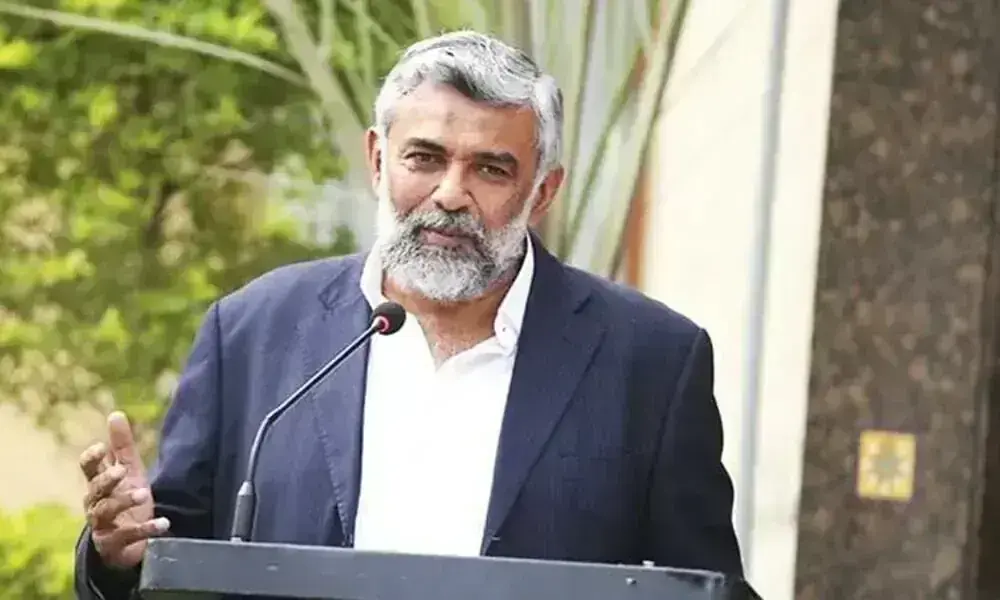

KARACHI: Welcoming the debate on the need of making more administrative units, Pasban Democratic Party (PDP) Chairman Altaf Shakoor said here on Sunday, “We should also focus on the real issue, which is bad governance and not the number or size of provinces.”
He said bad governance, systemic corruption, mega-project mismanagement, and fiscal leakages — not administrative geography — are driving Pakistan’s ongoing crisis.
He said every child born in Pakistan today inherits a bill for over Rs333,000, not to fund their school or health clinic, but to pay for decades of government failure.
He said as politicians push to carve Pakistan into new provinces as a fix for national stagnation, economic reality demands a ruthless truth: Pakistan’s crisis is not written in its administrative borders, but in its broken governance, systemic corruption, and unchecked fiscal waste.
He said according to official data from the Ministry of Finance, total public debt surged to a crushing Rs80.5 trillion by June 2025, reaching 70.7 percent of GDP, up from Rs71.2 trillion just twelve months earlier.
With the World Bank estimating that nearly 40 percent of Pakistanis live below the poverty line, rising debt-servicing costs now consume the bulk of federal revenues.
“This fiscal chokehold strips away resources from healthcare, basic education, modern infrastructure, and social safety nets.”
Altaf Shakoor said this financial decay is not caused by the administrative geography; it is driven by unmitigated institutional breakdown across core national sectors.
He said the energy sector stands as a prime monument to governance failure. Driven by delayed structural reforms, poor utility oversight, unrecovered bills, and shoddy long-term power purchase contracts with IPPs, the state was forced into an extraordinary Rs1.275 trillion (USD4.5 billion) bank-financed bailout in 2025 alone.
He said the state-owned electricity distribution companies lose over Rs350 to Rs400 billion every year to theft and grid decay. Rather than fixing the system, successive governments have simply converted operational failure into a permanent tax on electricity consumers.
The relentless drain of State-Owned Enterprises (SOEs) further underscores this systemic collapse. Official evaluations reveal that chronic loss-making commercial SOEs bleed more than Rs830 billion in aggregate annual losses. That is a staggering drain of nearly Rs3 billion every single day from the public exchequer, burning wealth that could otherwise build hundreds of modern hospitals and schools across the country.
He said simultaneously, national revenue collection suffers from structural enforcement gaps and preferential exemptions for powerful sectors. With an informal shadow economy estimated at roughly 40 percent of total output, the tax base remains dangerously narrow.
He said high-earning real estate, retail, and wholesale segments go largely uncollected, while decades of politically motivated bank loan write-offs for influential elites have forced ordinary taxpayers to foot the bill for private defaults.
Public infrastructure execution reveals an equally disastrous picture of procurement leakage and administrative ineptitude, he said. The Neelum-Jhelum Hydropower Project saw its cost surge from an initial Rs15 billion to over Rs500 billion due to design errors and execution delays. The Nandipur thermal power project doubled in cost while machinery sat rusting at ports due to bureaucratic foot-dragging. Internationally, flawed legal vetting on state contracts, most notably seen in multi-billion-dollar arbitration disputes like Reko Diq, has repeatedly created massive sovereign debt out of thin air simply due to state incompetence.
He said we are not building new dams, canals and water reservoirs not because the number of the provinces is much or low; it is pure incompetence. The vital projects like Sukkur-Hyderabad motorway are getting delayed not because of administrative units’ issues but because of bad governance.
He said in light of these facts, pitching the creation of new provinces as a cure for administrative inefficiency could be a dangerous, costly misdirection.
He said the international evidence proves that physical size is not the binding constraint on development. Well-governed territories deliver results regardless of size; corrupt, weak systems fail no matter how small they are carved up.
He said multiplying administrative units within a fundamentally broken framework will not fix power grids, plug tax leakages, or clean up public procurement. “Without deep institutional reforms, creating new provinces will merely multiply governor houses, chief ministerial secretariats, and provincial assemblies, expanding bloated bureaucracies and opening fresh arenas for localized corruption and political patronage.”
Altaf Shakoor said the central policy question facing Pakistan today is not how to redraw administrative maps, but how to enforce strict institutional accountability, reform public financial management, stop fiscal leakages, and deliver basic service for all citizens.
Copyright Business Recorder, 2026


























Comments