


Why Pakistan’s growth still not reducing poverty
Pakistan's economy shows stabilisation and growth, but this isn't translating into widespread poverty reduction or improved household well-being due to structural issues and a lack of job creation.
- The gap between macroeconomic stability and household economic reality.
- Structural reasons why economic growth fails to reduce poverty broadly.
- Key priorities for transforming growth into jobs, productivity, and incomes.

Pakistan’s economy today presents a familiar contradiction. The headline indicators suggest stabilisation is taking hold. Growth has returned after contraction. Inflation has eased from its earlier peak. External pressures are less intense than during recent crisis periods. The latest budget also signals an effort toward fiscal discipline, improved revenue collection, and continued engagement with international financial programme.
Yet this improvement is not clearly visible in the daily economic reality of most households.
For many families, the pressure on budgets remains severe. Food and energy costs still consume a large share of income. Employment remains uncertain, particularly for younger people entering the labour market. Informal work continues to dominate livelihoods, offering income but little stability or protection.
This widening gap between macroeconomic stability and household experience is now the central economic issue in Pakistan.
At its core, the problem is not the absence of growth. It is the weak connection between growth and poverty reduction.
Pakistan did make real progress in reducing poverty over the past two decades. World Bank based estimates suggest poverty declined from about 64% in the early 2000s to nearly 22% by 2018 and 2019. This was a major structural shift in welfare outcomes.
However, that progress has not proved durable. In recent years, poverty is widely assessed to have risen again into the high twenties. This reversal reflects repeated economic shocks, inflationary cycles, currency pressures, and persistent structural weaknesses in productivity and employment creation.
During the same period, Pakistan has experienced intermittent growth in the range of roughly 2% to 4%, depending on the economic cycle. Policymakers often describe this as stabilisation and gradual recovery. On paper, the direction appears positive.
But the central question remains unchanged. Why does growth not translate into broad based poverty reduction? The answer lies in how weakly economic growth is transmitted into jobs, incomes, and welfare improvements.
Poverty falls faster when economies sustain higher levels of investment in productive sectors such as industry, infrastructure, logistics, energy systems, and technology.
Recent budgets reflect a clear priority toward stabilisation. Fiscal tightening, revenue expansion, deficit control, and adherence to international financial commitments remain central elements of policy. These steps are necessary in a country that has repeatedly faced external financing stress.
But stabilisation is not transformation. Stabilisation restores macroeconomic balance. Transformation changes the structure of production, employment, and opportunity.
Pakistan remains stronger in the first than in the second.
A significant part of growth in Pakistan remains consumption driven. It is supported by remittances, short term demand cycles, and import related activity. This generates visible economic movement but does not expand productive capacity at scale. The economy becomes more active, but not necessarily more productive.
Employment dynamics reinforce this weakness. Each year, millions of young people enter the labour market, yet most new jobs remain informal. Informal employment is typically low wage, low productivity, and unstable. It provides survival income rather than pathways to upward mobility. As a result, even during growth periods, a large share of workers remains economically vulnerable.
The structure of production further limits inclusion. Agriculture and low productivity services still absorb a large share of employment, while manufacturing has not expanded enough to become a strong engine of job creation and wage growth. In successful development paths, poverty reduction occurs when labour shifts from low productivity sectors into higher productivity industrial and export-oriented employment, particularly in labour intensive industries such as textiles, garments, agro based manufacturing, construction, and light engineering. That transition remains incomplete.
Inflation adds another layer of constraint. Pakistan has experienced repeated increases in food and energy prices in recent years. Since lower income households spend most of their income on essentials, even moderate inflation significantly reduces real purchasing power for them. This weakens or even offsets the poverty reducing impact of growth.
At the same time, the benefits of growth are unevenly distributed. Gains are concentrated in urban centers, formal sectors, and asset owning groups, while rural households, informal workers, and low skilled labour receive a smaller share. This creates a dual reality where aggregate growth improves but shared prosperity does not follow.
Recent budgets attempt to address these pressures through stabilisation measures, fiscal adjustments, and targeted relief for vulnerable groups. These are necessary steps in managing immediate macroeconomic challenges. However, they do not yet fundamentally alter the underlying growth structure of the economy.
This is where international development experience offers a clear lesson. Poverty reduction is not driven by growth alone. It depends on the quality and structure of that growth.
Successful development experiences consistently show a few common features.
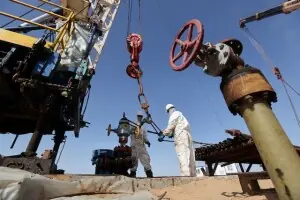
First, investment plays a central role. Poverty falls faster when economies sustain higher levels of investment in productive sectors such as industry, infrastructure, logistics, energy systems, and technology. Investment expands the economy’s capacity to generate future income rather than simply circulating existing income.
Second, growth must be employment intensive. The most effective poverty reduction occurs when economic expansion directly translates into job creation, particularly in labour intensive industries, manufacturing, small and medium enterprises, and export-oriented sectors. The strength of growth is measured not only by its rate but by its ability to absorb labour productively.
Third, human capital is essential. Education, skills, and health are not social outcomes alone but core drivers of productivity. When workers become more skilled and healthier, they move into higher wage and more stable employment, strengthening the link between growth and welfare.
Fourth, gradual formalisation of the economy is critical. As more firms and workers enter formal systems, productivity improves, wages stabilise, and access to finance and protection expands. Informality, by contrast, keeps large segments of the workforce trapped in low income cycles even during periods of growth.
Export expansion also plays a key role. Economies that reduce poverty at scale tend to integrate more deeply into global markets, diversify their export base, and build competitive production structures. This generates large scale employment and forces productivity improvements across sectors.
Rural productivity remains equally important. Poverty reduction accelerates when agriculture becomes more efficient through improved inputs, better irrigation, storage systems, infrastructure, and agro processing linkages. Rural transformation remains one of the most powerful levers for broad based welfare improvement.
Taken together, these factors point to a single conclusion. Poverty reduction depends not only on how much an economy grows, but on how that growth is structured and distributed.
Pakistan’s challenge is therefore not a lack of growth episodes. It is the absence of a strong transformation mechanism that converts growth into jobs, productivity, and incomes. Until that shift takes place, economic improvement will continue to appear in macroeconomic indicators, while remaining uneven in its impact on everyday life.
Conclusion
Pakistan’s challenge is no longer about whether growth can return. Growth is already returning in cycles. The real question is whether that growth can be converted into jobs, incomes, and sustained poverty reduction.
At present, the structure of public finance reflects a difficult reality. A large share of resources is absorbed by debt servicing and security needs, while development spending remains constrained. At the same time, the tax effort increasingly depends on consumption-based instruments such as sales tax and petroleum levies, which naturally place greater pressure on households and the formal sector.
This creates a system where stability is financed first, but transformation is delayed.
That is the core imbalance.
Pakistan does not lack economic activity. It lacks expansion in productive capacity that can absorb labour, raise wages, and reduce vulnerability. The budget focus on stabilisation is understandable in a high debt environment, but it also means that growth remains narrow and uneven in its social impact.
The way forward is not a marginal adjustment. It is a clear shift in economic direction.
Three priorities stand out.
First, reorient public spending gradually from consumption support toward productive investment in infrastructure, energy efficiency, logistics, and technology.
Second, ensure that growth becomes employment intensive by prioritising labour intensive industries such as textiles, garments, agro based manufacturing, construction, and light engineering, along with manufacturing, export oriented sectors, and small and medium enterprises that can absorb labour at scale.
Third, accelerate human capital development and formalisation so that workers move from low productivity informal activity into stable and higher wage employment.
Without these shifts, Pakistan will continue to achieve stabilisation without transformation. Growth will appear in macroeconomic numbers but remain weak in its ability to change household realities.
The real test is not whether the economy grows again. It is whether growth finally begins to change who benefits from it. Because in the end, the measure of economic success is not stability alone. It is whether stability finally turns into opportunity.
The writer is an Economic Analyst and former Secretary General of the Federation of Pakistan Chambers of Commerce and Industry (FPCCI). He has also served as Senior Director Research at the Institute of Cost and Management Accountants of Pakistan (ICMAP)

















Comments