


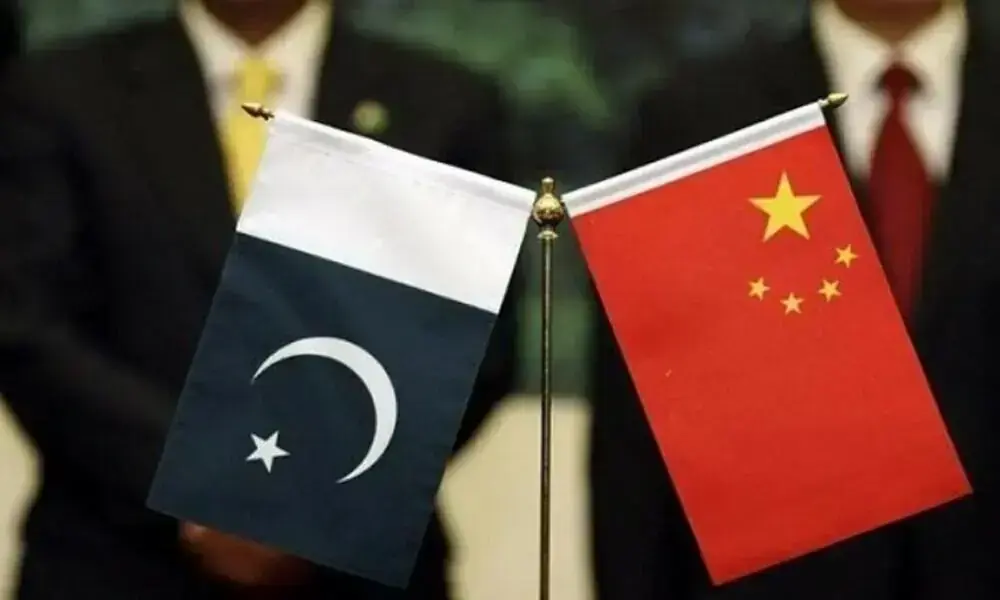

The public language of the Pakistan-China relationship is well established — ‘Iron Brothers’, all-weather strategic cooperative partnership, and a friendship higher than the Himalayas and deeper than the oceans. These formulations have been exchanged at every bilateral summit for decades, and they are not empty — the relationship is real, the strategic convergence is genuine, and the infrastructure investment along the China-Pakistan Economic Corridor represents a commitment of a kind that few bilateral relationships can match.
But I have just spent a month in China, moving between universities, villages, museums, and policy conversations.
Some of those conversations took place in settings where the usual protocols of attribution did not apply — closed rooms, among people who study these questions professionally and spoke with the freedom that such settings permit.
What emerges differs, at least in emphasis, from the official communiqués and English-language reporting. Against this backdrop, three recurring concerns consistently surfaced in the conversations and appeared to resonate across Chinese academic and policy circles.
The first is fiscal precarity. China has watched Pakistan return to the IMF multiple times in recent years, navigating liquidity crises and sovereign debt pressures with a regularity that strains the credibility of the partnership’s long-term economic foundations.
A country of almost 260 million people, with a significant nuclear capability and a strategic location at the junction of South Asia, Central Asia, and the Arabian Sea, should not, in the Chinese view, be perpetually on the edge of insolvency. The bewilderment is genuine. So, it must be said, is the concern.
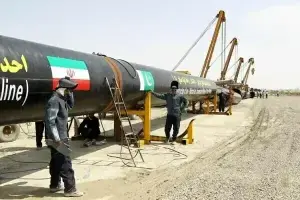
The second is the security situation for Chinese personnel. China’s investment in Gwadar and along the CPEC corridor is substantial enough that the security situation there is not an abstraction in Beijing’s policy circles — it is a live operational question.
The attacks on Chinese workers, the persistence of terrorist threat, arguably with roots in economic grievance, the gap between the development narrative and the reality on the ground: these are subjects my Chinese interlocutors had thought about carefully. There was consensus around the view that security apparatus alone would not resolve grievances with possibly political-economic roots.
Visible local benefit for ordinary citizens matters as much as the security architecture. Regarding the idea of joint security presence without accompanying civilian benefit, the view was that it risked deepening the narrative that CPEC serves external rather than local interests.
The third is strategic positioning. Pakistan’s attempt to stay close with both Washington and Beijing simultaneously — to maintain mutually beneficial relationships with both without fully committing to either — this can appear, from the Chinese side of the table, less like sophisticated omni-balancing and more like strategic ambiguity of the kind that erodes trust over time. This was not expressed as hostility. It was expressed as the observation of a long-term partner who would prefer clarity.
It would be a mistake to read these concerns as evidence of a relationship in difficulty. Quite the opposite. The frankness with which they were raised is itself a sign of the partnership’s depth. Relationships in which difficult things cannot be said have already begun to calcify.
What I encountered was not Chinese disillusionment with Pakistan but Chinese investment in Pakistan’s success — the kind of candour that only flows between partners who take each other seriously and expect the best of each other.
None of this represents official Chinese policy. These were private conversations between people who study these questions professionally. But the gap between what is said in those rooms and what appears in joint statements is instructive in itself. The Iron Brotherhood is real.
The questions are also real. That both can be true simultaneously is perhaps the most important thing a Pakistani observer can report from a month inside Chinese academic and policy life.
What struck me most was how closely these Chinese concerns mirror what many Pakistanis themselves say. The fiscal fragility. The security concerns. The strategic ambiguity. These are not Chinese critiques of Pakistan. They are what Pakistan’s closest partner is watching, with a patience that should not be mistaken for indifference.
What is increasingly in question is whether Pakistan is making the most of the partnership. The CPEC corridor, the Gwadar port, the infrastructure investment — these are instruments of development that require a functioning state to convert into sustained prosperity. The instrument is present. The question is the hand that holds it.
Friends who speak plainly are rarer, and more valuable, than friends who tell you what you want to hear. The Chinese scholars I spoke with were, in their careful and considered way, speaking plainly. Islamabad would do well to listen.
Copyright Business Recorder, 2026
The writer has worked in senior executive positions both in the profit and non-profit sector in Pakistan and internationally. He was a Senior Visiting fellow at the Pakistan Study Centre, Fudan University, Shanghai









Comments