


India-EU pact puts Pakistan’s USD9bn of exports at risk: Zahid
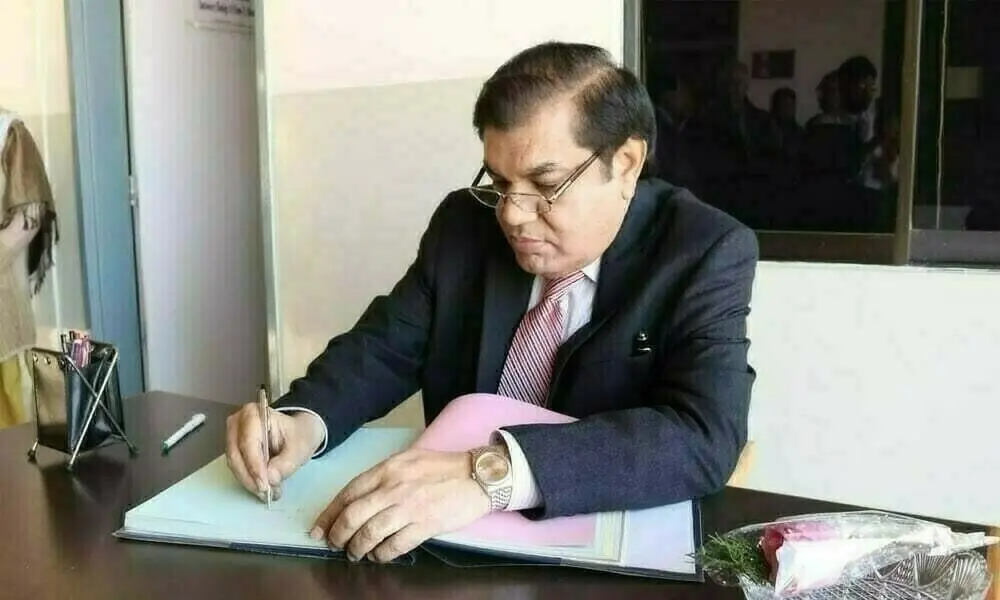

KARACHI: Mian Zahid Hussain, President Pakistan Businessmen and Intellectuals Forum (PBIF) and All Karachi Industrial Alliance (AKIA) and Chairman National Business Group Pakistan (NBG), and FPCCI Policy Advisory Board has warned that the recent India-EU trade arrangement has further weakened Pakistan’s competitive position by reducing the relative benefit of Pakistan’s GSP+ status, putting nearly $9 billion of exports to the European Union at risk.
Mian Zahid Hussain said that the biggest reason behind Pakistan textile sector’s loss of competitiveness is the unviable cost of electricity and gas. He said that electricity tariffs for industry have reached 13 to 15 cents per kilowatt-hour, including cross-subsidies of Rs7 to Rs9 per unit, making energy costs almost double compared to regional competitors such as India and Vietnam.
He said that no export industry can compete internationally when it is forced to buy energy at regionally uncompetitive rates, pay high financial costs and face excessive tax and compliance burdens at the same time. He warned that if the government does not intervene immediately, Pakistan may lose hard-earned export markets to regional competitors.
Mian Zahid Hussain urged the government to activate the newly constituted private board of the Export Development Fund without delay.
He said that the upcoming Finance Act 2026 must rationalize electricity tariffs for export-oriented industries, simplify EFS compliance for SMEs and restore confidence among exporters.
He said that the stock market rally and LSM growth are encouraging, but they cannot replace export competitiveness. Pakistan needs export-led growth, affordable energy, predictable taxation and practical facilitation for SMEs if it wants to protect jobs, earn foreign exchange and achieve sustainable economic stability.
He expressed cautious optimism over positive economic indicators, while warning that Pakistan’s economy is standing at a decisive stage where timely policy action will determine whether the recovery becomes sustainable or loses momentum.
He said that the recent rally at the Pakistan Stock Exchange and the rise of the KSE-100 Index to the historic level of 181,000 points reflect renewed investor confidence in the national economy. He noted that the introduction of the T+1 settlement cycle in February 2026 and the ceasefire understanding between the United States and Iran have improved market liquidity and strengthened investor sentiment.
Mian Zahid Hussain said that inflation rising to 11.7 percent in May and the policy rate remaining at 11.5 percent indicate that pressure on the economy has not fully eased.
However, he added that the US-Iran ceasefire has created hopes of lower inflation, reduced energy uncertainty and possible monetary easing in the coming months.
He appreciated the performance of large-scale manufacturing, saying that industrial output increased by 6.06 percent in April 2026 on a year-on-year basis, while LSM overall posted 6.44 percent growth during the first ten months of the current fiscal year.
This shows that local industry has once again started playing the role of the main engine of economic recovery.
He said that the automobile sector, with 64.33 percent growth, petroleum products with 10.04 percent growth and cement with 9.13 percent growth remained the leading contributors to industrial momentum, reflecting improvement in logistics, construction and domestic economic activity.
However, he warned that pharmaceuticals and iron and steel products continue to face contraction due to high production costs, which requires immediate government attention.
Mian Zahid Hussain said that the changes introduced by the FBR under SRO 528(I)/2026 dated March 19, 2026 in the Export Facilitation Scheme may help curb misuse and tax evasion, but they are also creating serious difficulties for small and medium-size exporters.
He said that linking the duty-free import of raw material directly with previous-cycle utilization and making six-monthly reconciliation statements mandatory will increase compliance pressure and create working capital and liquidity problems, particularly for garment manufacturers and SME exporters.
Copyright Business Recorder, 2026


























Comments