


Dollar firms on hawkish Fed bets, oil rebound; yen near 40-year low
The US dollar strengthened due to hawkish Federal Reserve expectations and rising Treasury yields, while the yen neared a 40-year low, prompting potential Japanese intervention.
- Hawkish Federal Reserve expectations and potential rate hikes.
- US dollar strength and rising Treasury yields.
- Japanese yen's four-decade low and intervention prospects.
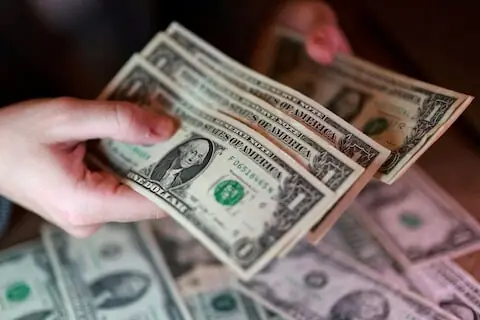

HONG KONG: The US dollar held firm on Tuesday as traders positioned for a more hawkish Federal Reserve and oil prices rebounded following steep losses, while the yen flirted with a four-decade low.
US Treasury yields remained elevated after a jump on Monday, with those on interest-rate-sensitive 2-year notes hovering near a 16-month high as traders braced for the prospect of rate hikes later this year.
Fed funds futures are pricing in 75% odds of a rate hike by September, while BofA Global Research and Deutsche Bank abandoned prior forecasts for steady policy and now expect the Fed to raise rates within the year, citing economic resilience.
“The dollar is holding firm on rising yields and hawkish Fed bets,” with limited guidance from the Fed fuelling volatility, said Sim Moh Siong, FX strategist at OCBC.
The bank now expects a modestly stronger dollar amid rising risks for tighter U.S. monetary policy, revising a previous call for the currency to be rangebound, he added.
Additional 2% to 3% upside for the dollar index — a gauge of the currency against six peers — is likely if there is a clear break above the high of the past 14 months at 101.97, he added.
The dollar index , which measures the greenback against a basket of currencies including the yen and the euro, was a shade higher at 101.01, not far from the one-year high of 101.13 hit late last week.
Also supporting the greenback, oil prices rebounded on Tuesday after a sharp fall the previous session over progress in U.S.-Iran peace talks, as investors awaited clearer signs of progress in restoring crude flows through the Strait of Hormuz.
The euro last traded at $1.1423 , hovering near a three-month low after European Central Bank President Christine Lagarde played down second-round inflation worries.
The British pound traded at $1.3246, largely steadying after Prime Minister Keir Starmer resigned and paved the way for an orderly transfer of power.
The risk-sensitive Australian and New Zealand dollars were each down roughly 0.1% to $0.6991 and $0.5704, respectively.
Yen hovers at 40-year low
The Japanese yen last traded at 161.59 after briefly weakening to a two-year low of 161.93 late on Monday as the greenback extended broad gains.
A break above 161.96 would take the yen to its weakest level since 1986.
Japanese Finance Minister Satsuki Katayama held an online meeting with U.S. Treasury Secretary Scott Bessent late on Monday, a source told Reuters, as concerns grow over sharp currency swings. The meeting focused on policy responses to the historically weak yen, potentially including currency intervention.
Japanese financial authorities kept markets guessing about possible currency intervention, with the lack of clear signals suggesting a shift in communication tactics.
“The market is now watching closely for signs that Japanese authorities will step in to defend the 161.95 level in the sessions ahead,” wrote Tony Sycamore, market analyst at IG.
“We think they are likely to intervene and try and hold the line at least temporarily,” he said, adding that such action was unlikely to have a lasting impact.




















Comments