


KP Budget
The Khyber Pakhtunkhwa budget for 2026-27, with a 2.17 trillion-rupee outlay and 48 billion-rupee deficit, includes no federal grant, a political move amidst reduced development spending and significant grievances against the Centre.
- Khyber Pakhtunkhwa's 2026-27 budget and its 48 billion-rupee deficit.
- The province's political stance on federal grants and reduced development spending.
- KPK's financial grievances with the Centre over resource distribution.
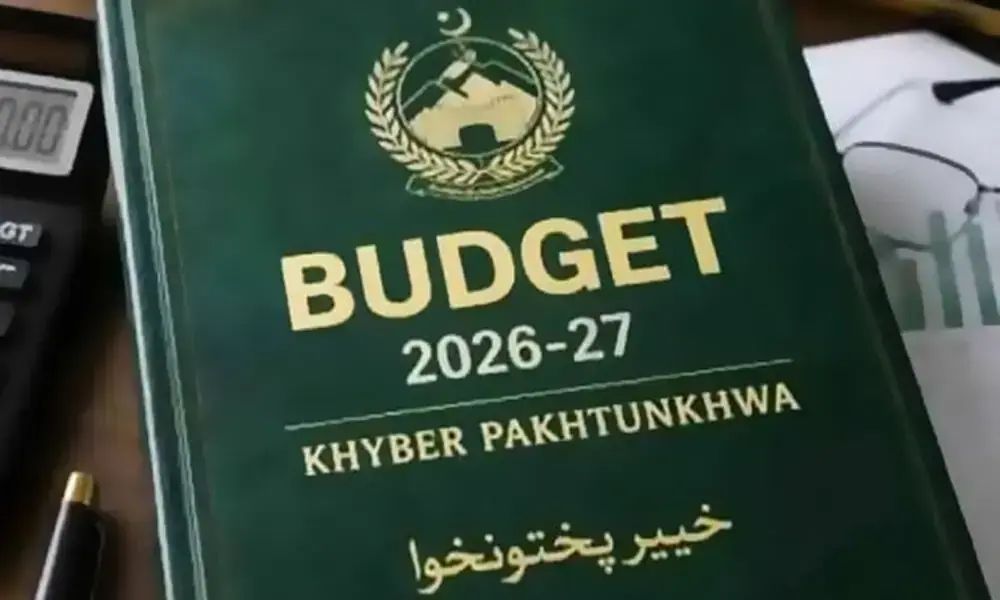
EDITORIAL: Khyber Pakhtunkhwa (KPK) budget for 2026-27 presented by Chief Minister Sohail Afridi unveiled a total outlay of 2.17 trillion-rupee - 48 billion-rupee deficit - budget with no budgeted grant for the federal government as that decision rested with the incarcerated former leader of the Pakistan Tehrik-i-Insaaf (PTI).
While this is clearly a political gambit with the purpose of compromising the commitment made by the Centre to the International Monetary Fund under its ongoing programme the allocation for development outlay, the item that other provinces scaled down to create fiscal space fort the Centre, has been reduced from 608.5 billion rupees in the revised estimates of the current year to 524.3 billion rupees budgeted for 2026-27 – a decline of 14 percent though the budget document claims that next fiscal year consists of the largest development programme in the province’s history “to accelerate economic recovery, stimulate employment creation, strengthen infrastructure, improve service delivery outcomes and reduce regional disparities.” The break-up is as follows: Annual Development Plan (ADP) of settled districts 316.8 billion rupees, ADP of devolved settled districts 235 billion rupees, ADP of provincially-merged districts 47 billion rupees and ADP of devolved managed districts 29 billion rupees. And current expenditure has been budgeted to rise from 1433 billion rupees in the revised estimates of last year to 1645.7 billion rupees next fiscal year - a rise of 14.7 percent.
The Sindh budget envisaged a deficit of 36.9 billion rupees, one percent of total budgeted outlay for the year, despite accounting for 14.62 percent of NFC transfers, Khyber Pakhtunkhwa’s budget contributes less to the consolidated provincial surplus assumed in the federal budget than Sindh’s, reflecting its larger fiscal deficit relative to its total outlay (out of the total budget outlay of Rs 2.17 trillion, this 48 billion rupees shortfall translates to a fiscal deficit of approximately 2.2 percent of the total KPK budget size). Be that as it may, the province’s lament for the failure of the Centre to give its due share under the award may echo the same concerning sentiments expressed by other provinces though no doubt shared mostly behind closed doors and quickly resolved. The KPK’s lament focused on three major failures of the Centre: (i) the continued application of horizontal distribution parameters based on pre-merger demographics does not reflect KPK’s concurrent constitutional and administrative responsibilities with 964.158 billion rupees outstanding for 8 years. The dig at the Centre, for failing to proactively engage in the eleventh NFC award is implied in the White Paper. The KPK government has sought 3 percent of share of the divisible pool of the NFC award in line with the national consensus reached at the time of the merger to address the decades of underinvestment and accelerate the merged districts socio-economic convergence with the rest of the country; (ii) the implementation of the KPK Local Government Act 2013 in line with Article 37(i) of the Constitution the provincial government approved an Interim Finance Commission Award covering the period from 1 July to 30 June 2027, which provides the framework for the transfer of allocable resources for the Provincial Consolidated Fund to local governments; and (iii) like the other three provinces the sales tax receipts, as pledged to the IMF, are projected to rise from 57 billion rupees in the revised estimates of the outgoing year to 80- billion rupees for next year – a 40 percent rise however the revenue from agricultural income tax remains insignificant – 3 billion rupees next fiscal year against – or in other words political considerations outweighed economic considerations – in common with the other three provinces.
The heavy reliance on the divisible pool taxes as well as reliance on indirect taxes, whose incidence on the poor is greater than on the rich, as the major source of province’s own revenue continued in the budget for next fiscal year in common with the two other but richer provinces, notably Punjab and Sindh, a reliance that the provinces had pledged to the IMF that they would reduce.
Copyright Business Recorder, 2026




















Comments