


China, Pakistan aim to revamp economic corridor, Gwadar port
- Also agree to expand bilateral and multilateral counter-terrorism cooperation and enhance military-to-military engagement
Pakistan and China elevated their strategic partnership, agreeing to deepen cooperation across defense, economy, technology, and diplomacy, while jointly advocating for a multipolar global order and regional stability.
- Acceleration of CPEC 2.0 and Gwadar Port development.
- New "China-Pakistan Security Partnership" and military cooperation.
- Expanded collaboration in AI, space technology, and digital economy.
- Joint advocacy for a multipolar global order and regional stability.
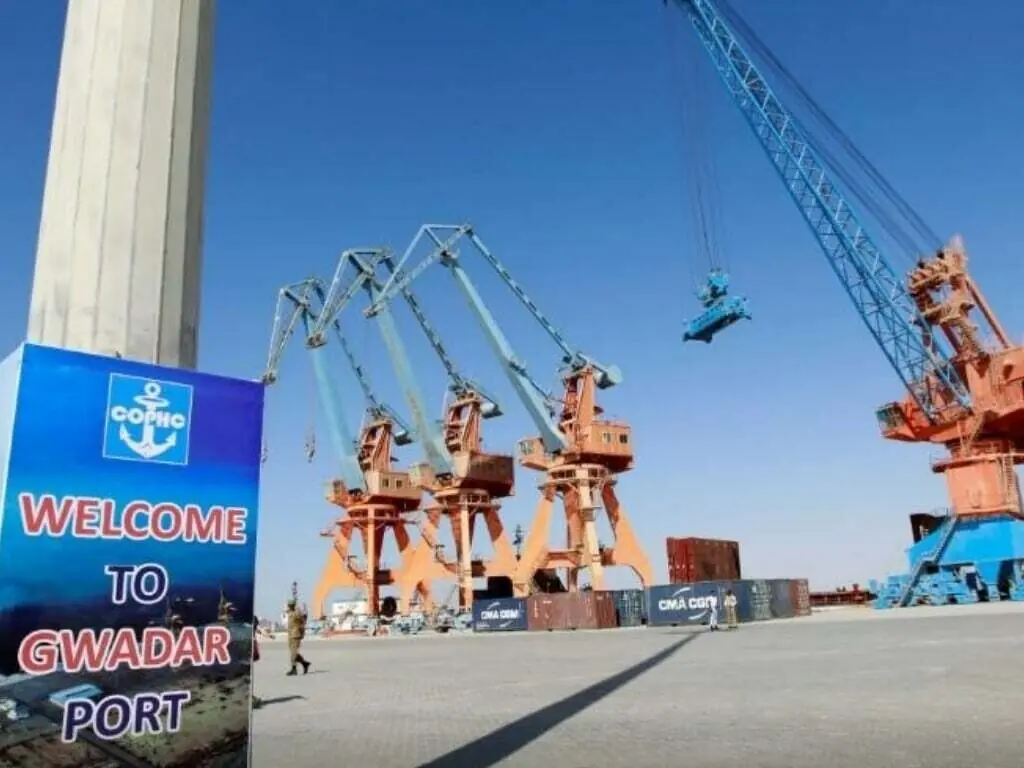

ISLAMABAD: Pakistan and China on Tuesday elevated their bilateral relationship to what officials described as a new strategic height, as both countries agreed to deepen defence, security, economic and technological cooperation while jointly advocating a multipolar global order and regional stability.
The development came through a detailed joint communiqué issued at the conclusion of Prime Minister Shehbaz Sharif’s four-day official visit to China, during which he held meetings with Chinese President Xi Jinping and Premier Li Qiang.
In the joint communiqué, both sides agreed to accelerate the development of the upgraded phase of the China-Pakistan Economic Corridor (CPEC 2.0), establish a “China-Pakistan Security Partnership,” strengthen counter-terrorism and military cooperation, and expand collaboration in artificial intelligence, digital economy, mining, energy, agriculture and space technology.
READ MORE: Gwadar Port handles over 53,277 MT of cargo
The statement described the China-Pakistan relationship as an “All-Weather Strategic Cooperative Partnership” carrying growing strategic relevance amid shifting global dynamics, with both countries agreeing to move faster towards building a “China-Pakistan Community with a Shared Future in the New Era.”
A major highlight of the agreement was the decision to institutionalise deeper security coordination under a proposed “China-Pakistan Security Partnership.”
Both sides agreed to expand bilateral and multilateral counter-terrorism cooperation and enhance military-to-military engagement to promote regional peace and stability.
Pakistan also assured Beijing of additional measures for the protection of Chinese nationals, projects and institutions operating in the country.
On the economic front, the two countries agreed to push forward the “high-quality development” of CPEC 2.0, advance the Karakoram Highway realignment project in phases, and transform Gwadar Port into a regional connectivity hub.
Both sides also agreed to further operationalise the Khunjerab Pass to improve cross-border connectivity and welcomed third-party participation in CPEC projects under mutually agreed mechanisms.
The joint statement also reflected a major expansion in future-oriented cooperation, particularly in artificial intelligence, scientific innovation, digital economy, communications and space collaboration. China confirmed that two Pakistani astronauts would receive training in China and expressed hope that a Pakistani astronaut could become the first foreign national to join early missions aboard the Chinese Space Station.
Both countries also agreed to strengthen cooperation in industrial parks, mining, oil and gas exploration, agriculture and trade liberalisation, while Beijing reiterated its commitment to provide 3,000 training opportunities for Pakistan between 2025 and 2029.
At the diplomatic level, Pakistan reaffirmed its full support for the “One China” policy and described Taiwan as an inalienable part of China. In return, China reiterated its “unwavering support” for Pakistan’s sovereignty, territorial integrity and national security.
The two sides also jointly opposed unilateral actions in international affairs and reiterated support for a “multipolar world” and an international order based on the United Nations Charter and international law.
On South Asia, the statement stressed the importance of maintaining peace and stability through dialogue and diplomacy. China reiterated that the Jammu and Kashmir dispute was “left over from history” and should be resolved peacefully in accordance with relevant United Nations Security Council resolutions and bilateral agreements.
The communiqué also highlighted growing coordination on Middle Eastern diplomacy. China praised Pakistan’s role in facilitating the temporary ceasefire between the United States and Iran and acknowledged the significance of the “Islamabad Talks.” Both countries agreed to continue contributing jointly towards peace and stability in the Gulf and broader Middle East region.
On Afghanistan, both sides welcomed recent trilateral engagements among China, Pakistan and Afghanistan and reiterated that groups including the Tehreek-e-Taliban Pakistan (TTP) and Eastern Turkistan Islamic Movement (ETIM) should not be allowed to use any territory to threaten regional security.
Copyright Business Recorder, 2026


























Comments