


The end of the unipolar moment
Donald Trump's Beijing visit underscored a global power shift, with a weakened US facing a confident China. The article warns of a dangerous transition from a unipolar to a multipolar world.
- Trump's Beijing visit and the shifting global power dynamics.
- The end of the unipolar era and rise of a multipolar world.
- Historical patterns of power transitions and modern geopolitical risks.
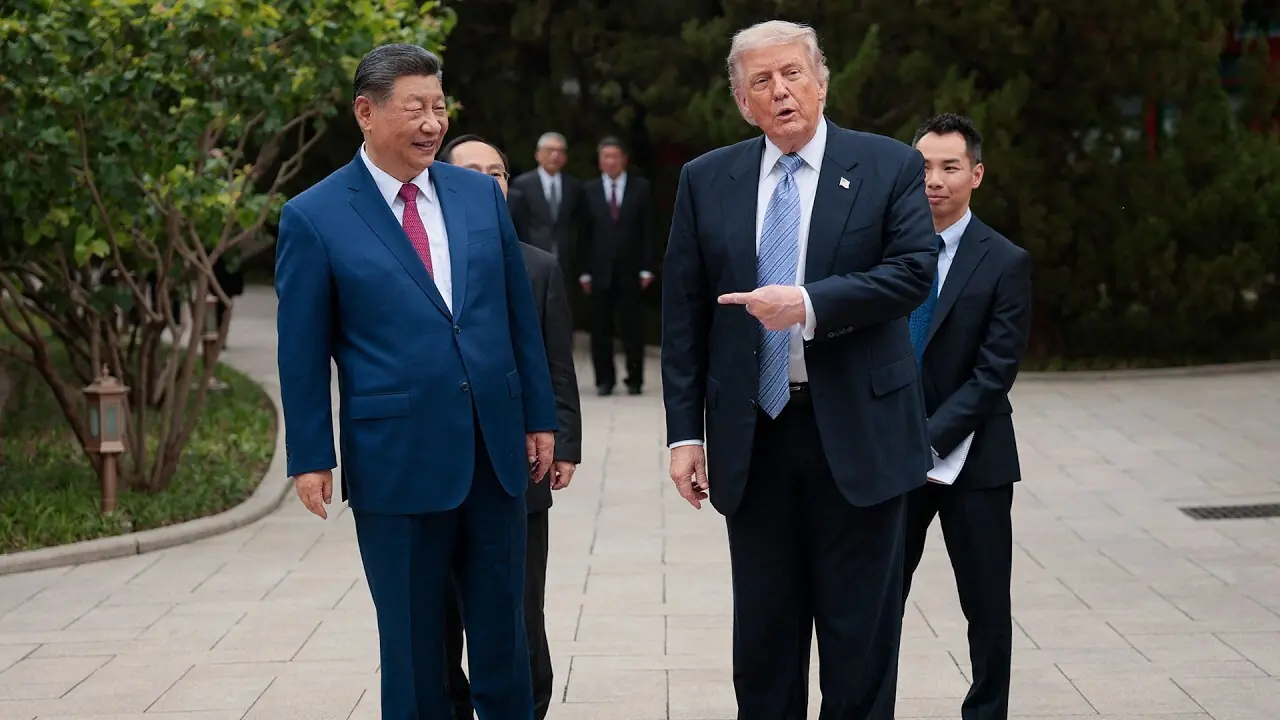
EDITORIAL: Donald Trump arrived in Beijing seeking strategic relief and left with little more than carefully staged symbolism, a result that may ultimately be remembered as far more consequential than any formal communiqué issued after the summit. The optics alone carried enormous geopolitical weight. An American president who once campaigned on restoring unquestioned US strength entered talks with Xi Jinping weakened by a costly Middle East war, rising oil prices, growing fiscal pressures and increasingly visible limits to Washington’s ability to shape outcomes unilaterally.
China, meanwhile, projected patience, stability and confidence. Beijing offered warm language, entertained discussions on trade and energy and signalled willingness to preserve dialogue, but avoided meaningful concessions. The contrast was difficult to miss. One side appeared eager for tactical relief; the other behaved like a power increasingly comfortable with the direction of history.
That perception extends far beyond the details of tariffs or commodity purchases. Last week’s meeting reinforced a broader conclusion now taking hold across much of the world: the unipolar era that followed the collapse of the Soviet Union is ending, and a transition in global power is already underway.
Such moments are rarely peaceful in historical terms. Transitions between dominant powers have often unfolded through conflict, coercion and prolonged instability. The shift from Spanish to French predominance in Europe involved wars and invasions across the continent. The rise of Britain over France culminated in major imperial wars, including conflicts linked to North America and global trade routes. The decline of Dutch commercial dominance similarly unfolded amid geopolitical struggle. The most notable exception remains the gradual transfer of primacy from Britain to the United States, eased partly by cultural affinity and the extraordinary circumstances of two world wars.
The danger today is that the modern world is vastly more interconnected, financially integrated and militarily destructive than any previous era of imperial transition. A great power confrontation in the twenty-first century would not remain confined to battlefields or shipping lanes. It would destabilise energy markets, supply chains, financial systems and entire regions simultaneously.
That is precisely why the recent summit matters. Trump’s visit effectively acknowledged realities Washington has spent years resisting. China is no longer merely a rising power; it is now central to the functioning of the global economy and increasingly influential across diplomacy, technology, manufacturing and trade. Attempts to isolate or economically contain Beijing have produced limited results while imposing growing costs on the global system itself.
The irony is that the United States still possesses enormous structural strengths. Its financial markets remain dominant, the dollar continues functioning as the global reserve currency and American innovation capacity remains formidable. Yet great powers rarely decline simply because of external competition. More often, they weaken through strategic overreach, internal polarisation and repeated policy miscalculations.
The Iran war has amplified those pressures considerably. Washington entered another Middle Eastern confrontation assuming rapid coercive success. Instead, the conflict disrupted shipping routes, drove oil prices higher and exposed the fragility of global energy markets. Trump’s subsequent need for Chinese cooperation on stabilising trade and regional tensions only deepened perceptions that American leverage is no longer as decisive as it once appeared.
This is where restraint becomes critical. History suggests declining powers often respond aggressively when confronted with relative loss of dominance. Economic pressure, proxy conflict and military escalation become tools for delaying strategic adjustment. Yet in an era of nuclear weapons, globalised finance and interconnected supply chains, such reactions carry risks extending far beyond the major powers themselves.
Countries like Pakistan understand those risks acutely. The world economy remains vulnerable to every escalation between Washington and Beijing, whether through trade wars, financial fragmentation or military confrontation. Oil-importing and debt-dependent states are often among the first casualties of geopolitical instability generated elsewhere.
The real challenge for the United States is therefore psychological as much as strategic. Accepting a more multipolar world does not require surrendering influence or abandoning competition. It requires recognising that preserving global stability may now matter more than preserving absolute dominance.
The alternative is a prolonged and increasingly dangerous struggle against historical momentum itself. And history offers very few examples where such resistance ends well for either the fading power or the wider world around it.
Copyright Business Recorder, 2026




















Comments