




Pakistan’s foreign exchange reserves are set to decline by 3.450 billion dollars this month, due to loan recall by the United Arab Emirates (UAE) – 450 million dollars on 11 April, 2 billion-dollar in roll-overs on 17 April, annually renewed since 2019 though recently the renewal period was reportedly much shorter, and one billion dollars on 23 April.
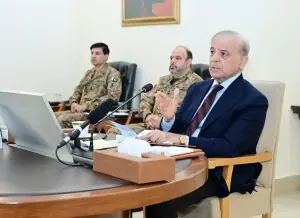
The announcement Wednesday past that Saudi Arabia has pledged 3 billion dollar roll-overs during Prime Minister Shehbaz Sharif’s visit to the kingdom must provide welcome relief to the economic managers – Finance Minister Muhammad Aurangzeb and Governor State Bank of Pakistan (SBP) Jameel Ahmed (both in Washington DC at the time), prompting the rally of Pakistan’s international bonds (those maturing in 2031 and 2036 by 0.8 cents). However, details of the amortisation period and interest charged are not known.
During the spring International Monetary Fund (IMF)/World Bank meetings (13 to 18 April) Aurangzeb indicated that the government intends to issue around 5 billion-dollar Panda bonds/Eurobonds or perhaps sukuk. The return on these bonds (commercial debt) is premised on the (i) country’s rating by the three international rating agencies which, in spite of recent upgrade, remains in the non-investment category, implying a higher rate of return than would normally be charged by bilaterals/multilaterals; and (ii) is based on the state of the economy. Given the fact that the reserves consist almost entirely of external debt, the government would have to continue to strictly adhere to the harsh upfront conditions agreed with the IMF that are undermining growth and raising poverty levels. One would hope that the two economic team leaders can successfully renegotiate to re-phase many of these conditions on the grounds that the impact on the global economy of the Middle East conflict has been significant.
The SBP website revealed foreign exchange reserves as of 27 March 2026 at 16,381.7 million dollars with the total UAE withdrawal accounting for 21 percent of our reserves – a significant amount whose withdrawal without the Saudi pledge would have had major implications on not only the ability to pay for imported essentials (fuel and food currently priced a lot higher than prior to the Middle East conflict) but also disrupt the rupee-dollar parity that has been relatively stable for the past several months. This, in turn, would have raised the budgeted mark-up allocation, which is projected to be revised upward as inflationary pressures are clearly on the rise (the IMF raised Pakistan’s inflation projection to 8.4 percent), thereby placing unbearable pressure on the Monetary Policy Committee scheduled to meet on 27 April 2026 to raise the policy rate from the current 10.5 percent.
The Indian media is gleefully citing the loan recall by UAE as a threat to Pakistan’s fragile economy, attributing it to worsening relations between the two erstwhile strategic partners yet an unnamed senior Pakistani official, with no information provided as to the position he holds and, more importantly, the Ministry he serves, is being widely reported as having stated that the return was necessary to preserve national dignity. A statement issued by the Ministry of Foreign Affairs to a UAE daily Khaleej Times dated 4 April categorically “rejected the recent misleading and unfounded commentary regarding financial deposits from the UAE held with the State Bank of Pakistan (SBP).
The deposits were placed under bilateral commercial agreements, demonstrating the UAE’s strong support for Pakistan’s economic stability and prosperity. Accordingly, pursuant to mutually agreed terms, the Government of Pakistan, through the SBP, is now returning the matured deposits to the UAE. This is a routine financial transaction, and any attempt to portray it otherwise is erroneous and misleading. This relationship has stood the test of time and has grown stronger with each passing year.
The people of Pakistan warmly cherish the pivotal role played by His Highness, the late Sheikh Zayed bin Sultan Al Nahyan, in forging this enduring friendship, as well as his special affection for Pakistan. Pakistan remains fully committed to further strengthening this enduring relationship for a shared, prosperous future.”
The X account of the Ministry of Finance quite appropriately does not mention the word ‘dignity’ and instead maintains that “in response to speculation and commentary in some section of the media regarding the Government of Pakistan’s external flows, it may be noted that Ministry of Finance is continuously monitoring and managing Pakistan’s external flows in order to ensure stable foreign exchange reserves.
The government of Pakistan remains committed to fulfilling its external obligations.” This was an appropriate response as a standard contractual clause allows a lender to demand a recall of either the full principal amount, the interest on the loan or any fees that are due prior to the maturity date at any given time.
While the economic reasons for a recall include macroeconomic strain (rising fuel prices, high inflation, regional conflicts or change in bilateral relations which may the outcome of an ongoing conflict) factors that are all relevant in the present instance, yet the general perception is that geopolitics played a key role in the loan recall. Be that as it may, ministries must synchronize their response and those who do not deal directly with a subject matter must refrain from making public statements and refer any such question to the relevant Ministry.
Pakistan too has three cards to play which to-date no member of the Cabinet has voiced. First, Etisalat still owes 800 million dollars from the 2005 privatisation of the Pakistan Telecommunications Company Limited – on which interest accrued is not yet calculated. Several administrations since then have sought accommodation with the UAE but without success so far. One would hope that the current dispensation seeks an adjustment in the loan recall.
Second, over 1.5 million Pakistanis, the second-largest national group in the UAE, work in the UAE (unskilled/semi-skilled and a rising number of skilled workers). This benefits Pakistan as well as these expatriates remitted around 10 percent of total remittance inflows in fiscal year 2025 – 3,711.8 million dollars against a total of 38,299.2 million dollars. In March 2026 remittance inflows from the UAE were a high of 823.7 million dollars against total March collections of 3,831.4 million dollars comprising about 21.4 percent of total inflows last month.
And finally, the assets held by Pakistani nationals in the UAE were estimated at around 200 billion dollars (including bank deposits and real estate) by Ishaq Dar when he was the finance minister. While real estate value has plummeted due to the conflict yet Pakistanis continue to hold sizeable assets in the UAE, including those held by politicians, the private sector and others.
To conclude, Pakistan continues to rely on borrowing externally as well as internally to strengthen its foreign exchange reserves. At present, the geopolitical situation as well as the role the country is playing as a mediator has strengthened its capacity to borrow, but one would hope that the rate of interest and the amortisation period are negotiated proactively and domestic out-of-the-box policies formulated and implemented (notably slashing current expenditure) to reduce dependence on external and domestic loans that continue to shackle the economy.
Copyright Business Recorder, 2026






















Comments