


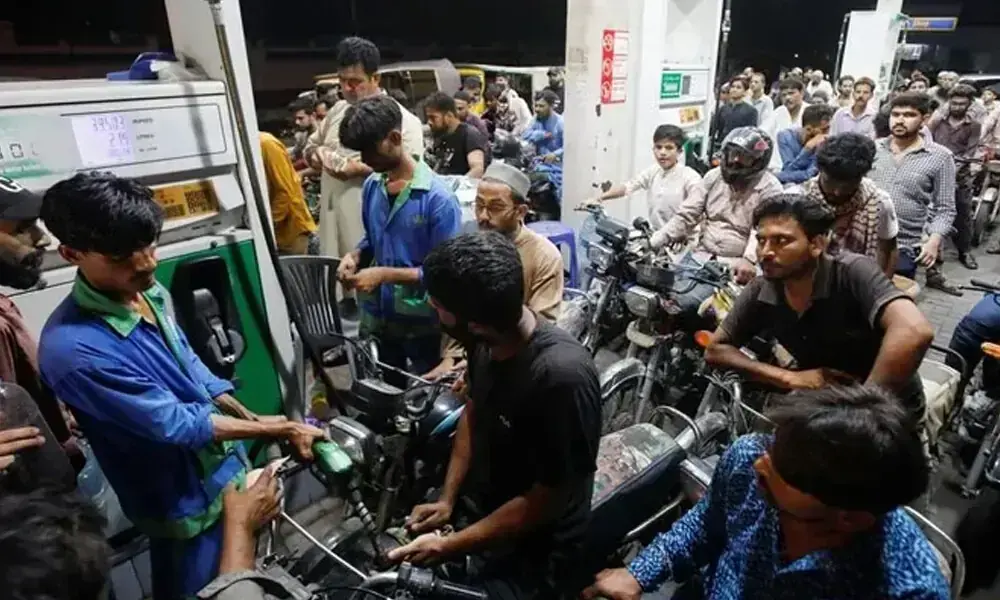

In a country where economic shocks are routinely passed down to the most vulnerable, the recent astronomical surge in fuel prices felt like the final nail in the coffin for the common man’s purchasing power.
With petrol rocketing from Rs 258 to Rs 378 per litre, and diesel hitting a backbreaking Rs 520 (prices of both petrol and diesel were reduced a couple of days ago), a devastating ripple-effect across transport and commodities was all but guaranteed. Usually, such crises are met with hollow platitudes and austerity lectures from the corridors of power.
However, the Sindh Government’s multi-pronged strategy to avert a fuel supply emergency and shield the public from these shocks is a profound breath of fresh air. It is a rare instance of a government not just talking the talk, but walking the walk.
The tone was decisively set at the top. In an unprecedented move, Sindh cabinet members have voluntarily surrendered three months of their salaries while concurrently slashing the fuel expenditures of government departments. This symbolic yet financially significant sacrifice restores a modicum of public trust, sending a clear message to the populace: the leadership is willing to share the pain.
But the real meat of the intervention lies in the Targeted Fuel Differential Subsidy. For the millions who rely on public transport daily, a fare hike proportional to the new fuel rates would have meant choosing between putting food on the table and travelling to work.
Instead, the provincial government has stepped in with a massive Rs 2.2 billion monthly package, ensuring that fares remain frozen at their pre-hike levels.
By offering substantial monthly support to transporters ranging from Rs 240,000 for intra-city buses to a staggering Rs 1.2 million for long-haul intercity routes the government has successfully circumvented a mass mobility crisis.
What makes this initiative particularly commendable is its refusal to rely on the archaic, loophole-ridden distribution methods of the past.
Subsidy disbursements are tied to a fully digital, app-based system integrated with Excise, RTA, and PTA databases, routing direct payments exclusively via Sindh Bank.
Covering over 10,000 vehicles and benefiting an estimated 57 million passengers monthly, the state has effectively put an average relief of Rs 38 straight into the pockets of daily commuters, while actively discouraging the excessive use of private vehicles.
Equally astute is the intervention by the Excise and Taxation Department for the city’s most ubiquitous commuter: the motorcyclist. Recognizing that two-wheelers are the lifeline of the middle and lower-middle classes, the government is providing a Rs 2,000 fuel subsidy per registered owner.
Yet, the sheer brilliance of this policy lies in its dual purpose. Out of the 3 million motorcycles in the province, a staggering 2 million are on open letters or remain un-transferred. By waiving the Rs 500 transfer fee, the Rs 1,000 return instrument fee, and the seller’s biometric requirement, the state is doing more than dispensing Rs 6 billion in relief via direct bank transfers—it is orchestrating one of the most effective vehicle documentation drives in recent history.
Furthermore, this crisis management brilliantly extends beyond the urban centers into the rural heartland. The soaring cost of diesel threatened to derail the crucial wheat harvesting season, which relies heavily on mechanized agriculture.
The Sindh Wheat Growers Support Program’s decision to provide Rs 1,500 per acre to small-scale farmers (owning up to 25 acres) is a timely intervention to strengthen agricultural resilience. By leveraging the existing Benazir Hari Card database, this Rs 3.07 billion initiative efficiently targets 333,872 verified farmers covering 2.05 million acres. By restricting the subsidy to already verified cardholders and avoiding new registrations, the government has bypassed bureaucratic bottlenecks to deliver immediate relief where it is needed most.
We are quick to criticize our provincial governments, and often rightly so. But when a comprehensive, digitally monitored, and deeply empathetic relief package is rolled out in the face of crippling global inflation, it demands recognition. To maximize this outreach, registration office timings have even been extended till April 15th.
The Sindh Government’s strategy combining personal sacrifice by the cabinet with targeted, tech-driven subsidies for transport, agriculture, and daily commuters is a master-class in crisis governance. The state is acting like a shield, rather than a bystander. Other provinces would do well to take notes.
Copyright Business Recorder, 2026
The writer is the Spokesperson for the Government of Sindh and hails from Lyari. The views expressed in this article are not necessarily those of the newspaper























Comments