


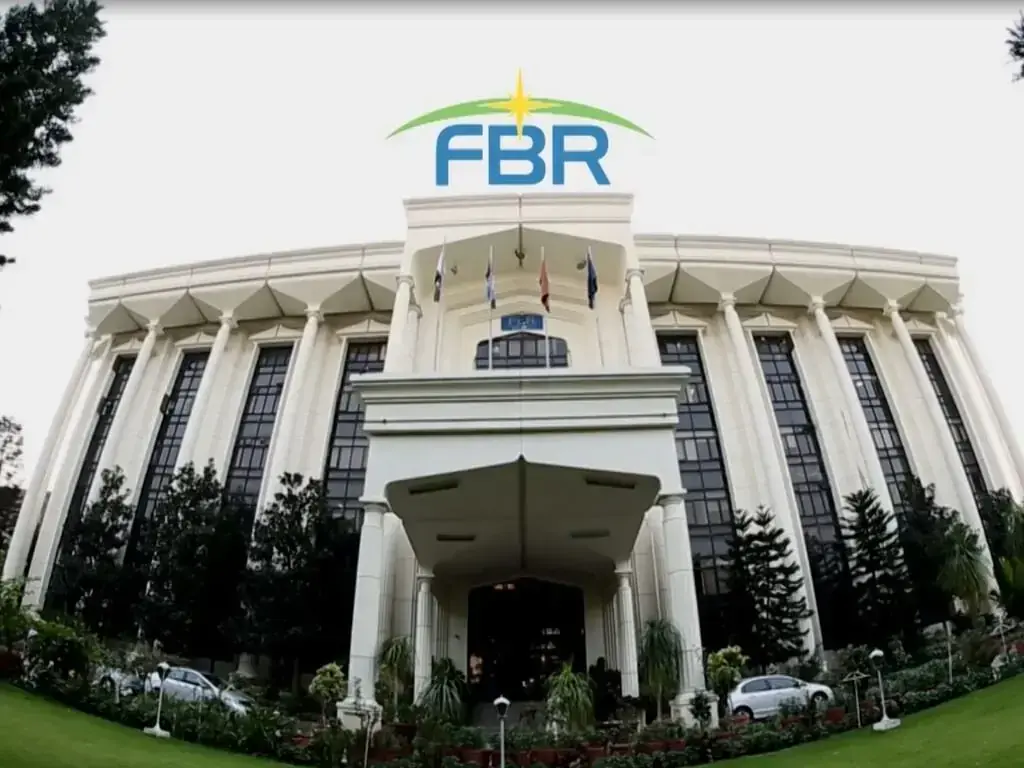

ISLAMABAD: The license awarded to a consortium led by a US firm, by the Federal Board of Revenue (FBR), on March 5, 2021, for the implementation of Track & Trace (T&T) solution in the tobacco, cement, sugar and fertiliser sectors was set to expire in 2026.
Sources told Business Recorder that a difference of opinion emerged between the tax authorities and the Licensee on the actual date of the expiry of the contract. To avoid any controversy, FBR involved the Ministry of Law for an opinion.
The issue is mainly related to the date of expiry of the contract signed between the said parties five years back. There is a difference between the signing dates of the contract and actual effective date of operationalisation of the contract. Due to prolonged litigation in court of law, and other operational constraints within FBR, the date of signing of the original contract and the effective date of implementation of the contract are different.
READ ALSO: Seizure of un-stamped goods a must for success of track & trace system
For example, in case of tobacco sector, the effective date of project implementation, mentioned on the contract, was July 1, 2021 whereas the actual date of “Go Live” of the tobacco sector track and trace system was operational in July 1, 2022, partially as the local manufacturers were under stay till April 2023. The question arises what date the FBR would take to work out the expiry date of the contract. Similarly for the cement sector, the operational date of the sector, as per the contract comes to April 2024. This shifts the operational date to 2029, minimum.
To resolve the issue, the FBR sought an opinion of the Law and Justice Division about the effective date of the contract. The matter, though not being simple, has been addressed by the Ministry of Law vehemently.
According to sources, the Law Division has suggested the FBR to legally shift forward the dates of the contract as per effective date of operationalisation of the project in all the four sectors. However, it is not known if the FBR will forward dates of the contract, and its decision would be acceptable to the party or not.
It is also not clear whether the party would accept the final verdict/ opinion or ruling of the FBR on the final date of the expiry of the contract, sources added.
However, the FBR will issue the ruling keeping in view the opinion of the Law and Justice Division.
According to tax advisers, legal experts, industry and stakeholders, FBR must; however, address the following legal and technical issues before issuing the ruling:
1- Any breach of the existing contractual framework would send an adverse signal to foreign investors, particularly US investors and the US Govt, whom the Government of Pakistan is actively seeking to attract in view of recent geopolitical and economic developments.
2- The proposed action by the Federal Board of Revenue (FBR) is unlikely to withstand judicial scrutiny and may expose the institution to adverse findings and reputational embarrassment before the court of law.
3- According to the legal opinion, the Track and Trace System constitutes a single, integrated system encompassing all four sectors—sugar, cement, fertiliser, and tobacco—and must therefore continue in force in its entirety until 2029, in accordance with the contract. The opinion, probably, also highlights that operational date to be taken for all the sectors combined. The delays, since not attributable to the Licensee and have been accepted by FBR, must be accounted for additional time.
4- Notwithstanding recent public statements by the Prime Minister and the Finance Minister in support of the Track and Trace System and its documented benefits to the national economy, the FBR appears to be making another futile attempt to dilute or roll back the successful TTS system.
5- With recent failure of the Video counting system, for its effectiveness, which does not account for illicit and counterfeit products nor provides traceability, FBR in the meanwhile, reviewing their decision.
Knowing for a fact that Video counting is merely a basic numerical monitoring tool and cannot serve as a substitute for the Track and Trace System, which provides unique visual identification and end-to-end traceability, FBR is looking for TTS solutions in various sectors.
6- FBR also issued a Request for Information for production monitoring and Track and Trace Technologies. This shows internal policy shift back to TTS, after doing experiments and wasting more than a year of time and money resulting in loss to the revenue through video counting. Reverting back is wise however at the same time, destabilizing an existing TTS Program is insane.
A non-professional approach, by FBR, will hurt not only the existing TTS Program, but will diminish the confidence of new foreign investments in future, if any.
- In line with the legal opinion, the contract must be extended and allowed to run until 2029, without fragmentation, selective application, or dilution of the existing Track and Trace framework.
Copyright Business Recorder, 2026




















Comments
Comments are closed for this article.