


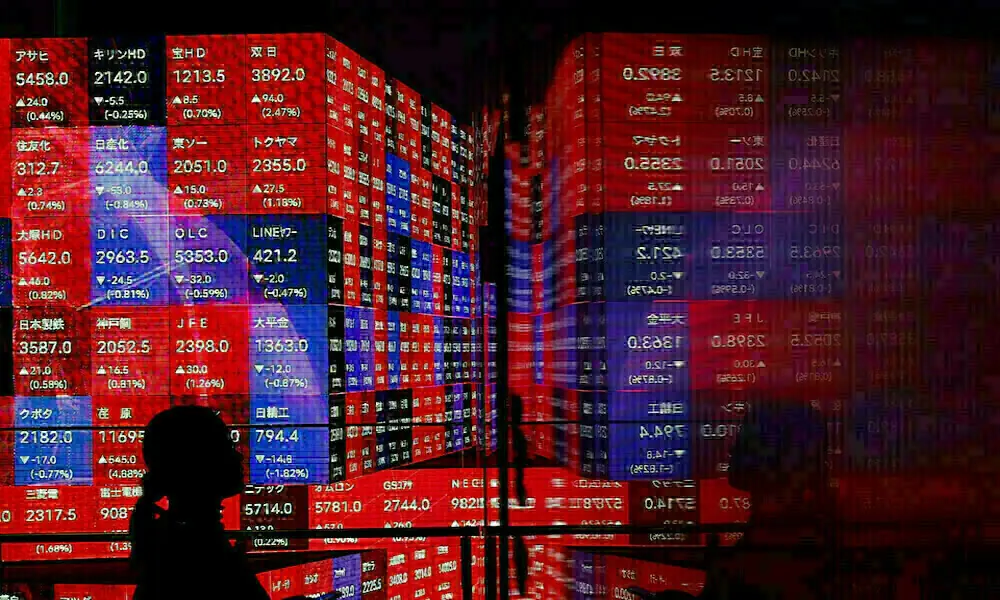
EDITORIAL: As global financial markets edge deeper into 2026, strains that were previously obscured by rising asset prices are becoming harder to ignore. US equities remain elevated after several years of outsized gains, driven by a narrow cluster of artificial-intelligence leaders and assumptions that leave little margin for error.
For frontier markets such as Pakistan’s, the relevance lies not in the daily direction of Wall Street indices, but in how abruptly shifts in global risk appetite can spill across borders and magnify domestic vulnerabilities.
History offers a misleading comfort. Pakistan was largely spared the worst of the dot-com collapse at the turn of the century because it was barely integrated into global capital markets. Foreign portfolio flows were thin and even domestic participation was limited. That insulation no longer exists. Pakistan today is more financially connected, more exposed to global liquidity cycles and more vulnerable to abrupt shifts in risk appetite than it was two decades ago.
What makes the current moment particularly fraught is the nature of the global boom now under strain. US markets are not merely expensive; they are concentrated. Returns have been driven by a handful of mega-cap firms tied to AI spending, with capital crowded into trades that assume uninterrupted growth, policy accommodation and, increasingly, implicit government backstops. When senior executives and investors openly suggest that authorities would not allow a hard landing for systemically important technology firms, risk is mispriced. Moral hazard creeps in quietly, and global risk premia adjust upward in anticipation of eventual correction rather than rescue.
For developing economies and frontier markets, this matters enormously. When risk premia rise globally, capital retreats to perceived safety. Liquidity tightens, funding costs rise and currencies come under pressure. Pakistan does not need to be directly invested in US technology stocks to feel the effects. Portfolio outflows from emerging markets, higher global yields and a stronger dollar during stress episodes have historically translated into volatility in the rupee, pressure on foreign exchange reserves and abrupt swings in local asset prices.
The uncomfortable reality is that Pakistan’s buffers remain thin. Foreign exchange reserves are modest, market depth is limited, and domestic investor behaviour is often reactive rather than risk-managed. Local equities have enjoyed periods of optimism driven by reform narratives and stabilisation hopes, but these rallies remain vulnerable to external shocks. When global markets wobble, foreign participation evaporates quickly, leaving domestic investors exposed to sharp corrections with limited hedging avenues.
There is also an awareness gap. Global market turbulence is often treated as a distant spectacle rather than a material domestic risk. Few retail investors appreciate how quickly global sell-offs transmit through exchange rates, commodity prices and capital flows. Institutional risk management remains uneven, and stress-testing against severe global scenarios is rarely discussed publicly. In contrast to larger emerging markets, Pakistan also lacks deep derivatives markets that could absorb shocks or allow investors to hedge exposure efficiently.
Policy preparedness is equally uncertain. The state’s focus remains understandably fixed on stabilisation, debt management and short-term growth. Yet global market stress has a habit of colliding with domestic vulnerabilities at precisely the wrong moment. A sharp global correction would test Pakistan’s external financing assumptions, complicate access to capital markets and potentially revive pressure on the balance of payments. These are not merely abstract risks; they are recurrent features of global tightening cycles.
None of this implies inevitability or alarmism. Corrections in advanced markets are a routine feature of financial history. What matters is readiness. Pakistan’s experience shows that crises are most damaging when they arrive unacknowledged. Awareness, transparency, and contingency planning are the first line of defence. Regulators must ensure that financial institutions understand and manage cross-border risk, while policymakers need clear plans for liquidity support without fuelling instability or moral hazard at home.
For investors, the lesson is sobering. Global exuberance built on narrow leadership and implicit guarantees rarely ends gently. Pakistan may not be at the centre of the storm, but it sits firmly in its path. In a more interconnected world, insulation is no longer a strategy. Preparation is.
Copyright Business Recorder, 2026























Comments
Comments are closed for this article.