


From Gwadar to Eurasia: Pakistan calls for deeper connectivity under CPEC
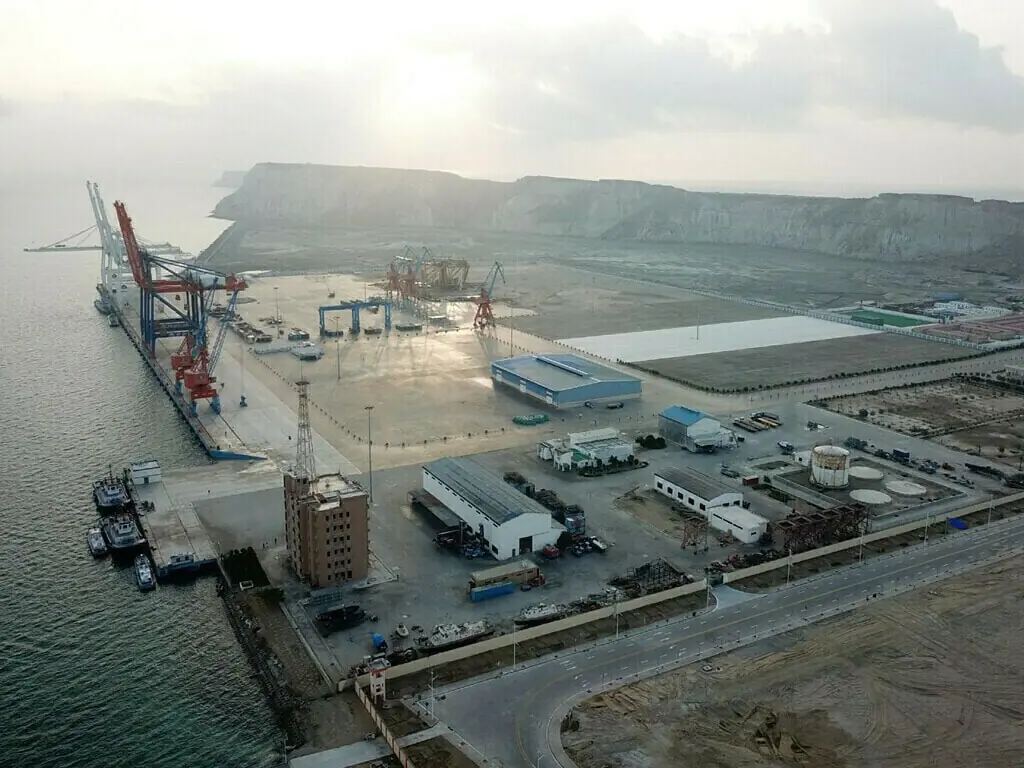

HYDERABAD: Strong policy recommendations aimed at strengthening the China-Pakistan Economic Corridor (CPEC) and enhancing Pakistan’s regional connectivity were highlighted at the conclusion of a two-day international conference on “China-Pakistan Economic Corridor: Challenges and Way Forward,” which was held by Sindh University's Area Study Center at main auditorium of Benazir Bhutto Convention Center.
The conference emphasised that Pakistan seeks to link CPEC with other major Eurasian connectivity initiatives, including the North-South Corridor and the Lapis Lazuli Corridor to expand trade routes from South Asia to Central Asia, the Middle East and Europe.
According to recommendations, such integration would enhance Pakistan’s strategic importance as a regional transit and economic hub.
Among the key recommendations, the need for speedy implementation of already agreed CPEC projects to fully optimise their economic and social benefits. It was pointed out that removal of bureaucratic hurdles would significantly improve project execution and investor confidence.
The conference also recommended the establishment of CPEC Centres of Excellence across Pakistan to develop skilled and technical human resources required for Phase-II projects, ensuring greater local participation and capacity building.
Another major proposal was the creation of a dedicated ministry or division for CPEC with camp offices in all provincial capitals to monitor and implement projects on a 24/7 basis.
In the interim, the setting up of a centralised CPEC Control Room linking all project offices across the country was suggested.
To operationalise Pakistan’s role as a regional transit hub linking South Asia, Central Asia and the Middle East, experts proposed that Pakistan and China should consider developing Afghanistan’s Wakhan Corridor as part of CPEC.
The recommendations further called for aggressive regional and global marketing of Special Economic Zones (SEZs) by arranging visits of potential investors to these zones.
The recommendations also underlined the importance of using the platform of the Economic Cooperation Organisation (ECO) to maximise regional economic benefits of CPEC through stronger diplomatic and economic coordination.
Emphasis was laid on the fact that security and economic development must move together with a safe and secure environment for workers and investors being a sovereign responsibility and a prerequisite for long-term corridor sustainability.
Finally, the conference stressed that climate resilience and green energy should define the next phase of CPEC in line with global energy transition trends and climate commitments. It was proposed that a chain of Small Modular Reactors (SMRs) across Pakistan to support EV charging stations and meet the power needs of SEZs may be included in CPEC Phase-II.
On the other hand, addressing the concluding ceremony, Sindh University Vice-Chancellor Professor Dr Fateh Muhammad Marri said that the consolidated recommendations of the conference would be formally forwarded to the Sindh Higher Education Commission and the federal government for consideration and implementation.
He said the conference had provided a timely academic and policy platform to critically review CPEC’s progress and outline a practical roadmap for its next phase. He said that speedy implementation of agreed CPEC projects was essential to maximize economic benefits and overcome existing bureaucratic hurdles.
Copyright Business Recorder, 2026

























Comments
Comments are closed for this article.