


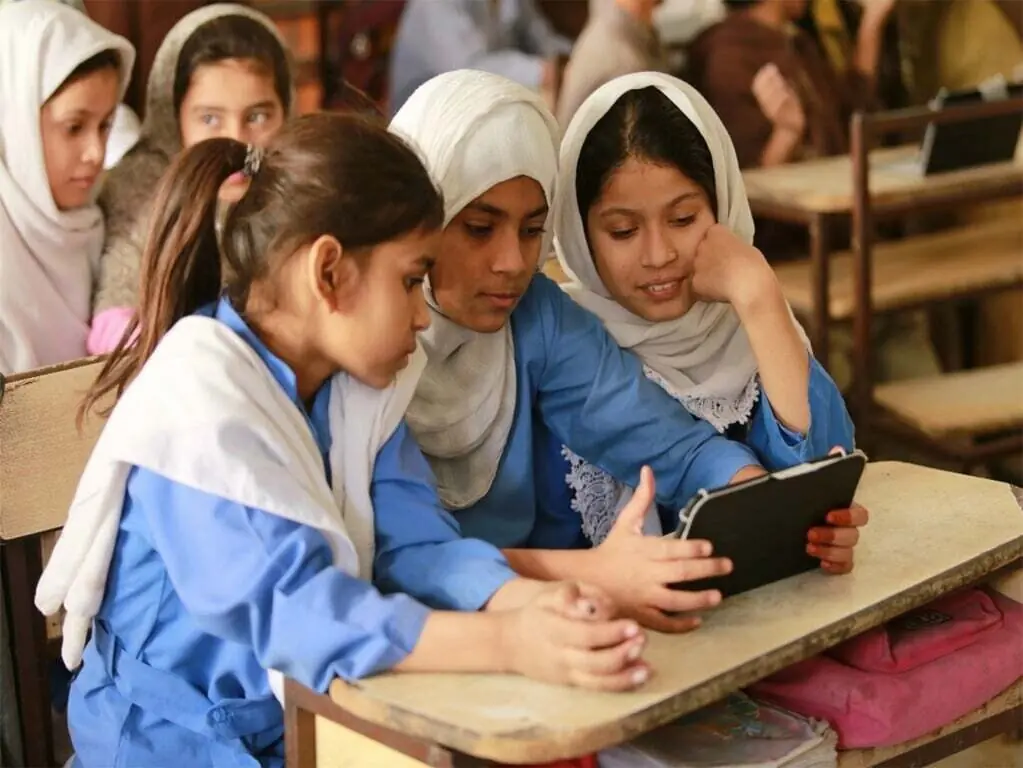
EDITORIAL: The latest findings of the Household Integrated Economic Survey (HIES) offer a sobering reality check on Pakistan’s education and human development trajectory. Despite repeated official declarations of an “education emergency,” 28 percent of school-age children — roughly 20 million — remain out of school. While this represents a numerical decline from the 25.3 million reported in 2019, progress over six years has been painfully slow and deeply uneven, exposing structural failures that political slogans alone cannot fix.
The most troubling aspect of the survey is the persistence of inequality. Rural girls, especially in Sindh and Balochistan, continue to bear the brunt of exclusion. Nationally, one in four boys remains out of school, but for girls the figure rises to nearly one in three. This gender gap is not accidental; it reflects entrenched social norms, widespread poverty, and weak public provisioning of education. For boys, economic pressure pushes many into labour, while girls are more likely to be kept out of classrooms due to family restrictions, the perceived irrelevance of schooling, or financial hardship.
That 20 percent of children never enrolled at all suggests the system is failing at the very first point of access. Equally alarming is the stagnation in Punjab. While the province still reports the lowest out-of-school rate at 21 percent, it has shown no improvement since 2019. Given Punjab’s comparatively stronger administrative capacity and higher education spending, this stagnation signals diminishing effectiveness of existing policies and a lack of innovation in reaching the hardest-to-reach children. Other provinces fare worse, reinforcing the reality that education remains a low priority in large parts of the country. The broader socioeconomic context captured by the HIES helps explain why progress has stalled. High inflation and weak economic growth have eroded household resilience. Nearly one-fourth of households now face moderate to severe food insecurity, with Balochistan and Sindh the most affected. Food insecurity in Khyber Pakhtunkhwa has also risen considerably, while in Balochistan it has nearly doubled over six years. For families struggling to put food on the table, education becomes a luxury rather than a constitutionally guaranteed right.
The survey’s first-ever measurement of digital financial inclusion adds another layer to this crisis-like situation. With only 12 percent of individuals owning a bank account and 76 percent excluded from any formal financial system, the promise of digital solutions for education and welfare delivery remains largely theoretical. Limited digital skills — particularly among women — further compound exclusion, reinforcing a vicious cycle of poor education, poverty, and digital illiteracy. Perhaps most telling is the fact that this survey was conducted after a six-year gap, reportedly following pressure from the IMF. That such essential data collection depends on external prompting speaks volumes about national priorities. Without timely and credible data, policymaking remains reactive and superficial.
Pakistan does not suffer from a lack of declarations, but from a lack of sustained, equity-focused policy action. Addressing the out-of-school crisis requires targeted financing for girls’ education, incentives for poor households, safe and accessible schools in rural areas, and closer alignment of education policy with broader economic and social protection strategies. Until education is treated as a long-term investment in human development, these numbers will continue to repeat themselves — with deeply troubling consequences for the country’s future.
Copyright Business Recorder, 2026




















Comments
Comments are closed for this article.