


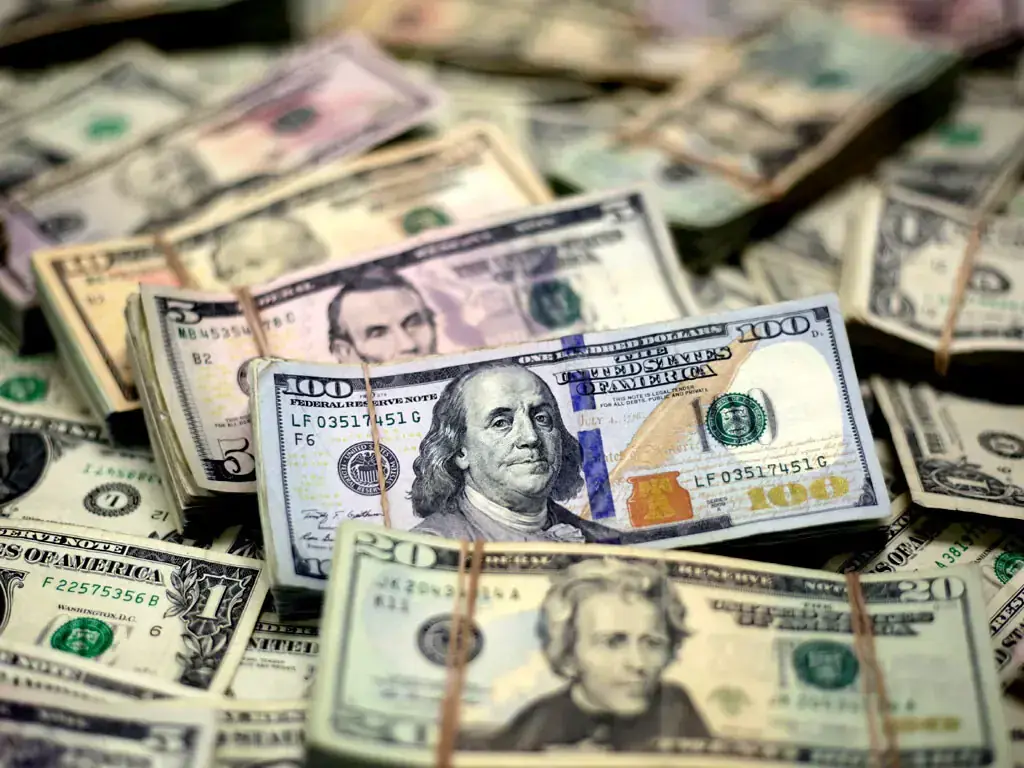

NEW YORK: The dollar eased across the board on Thursday but remained above recent multi-year lows, with investors still jittery about US policy even as a mildly hawkish Federal Reserve provided some support.
The dollar has been under pressure for several reasons, including expectations of continued Federal Reserve rate cuts, tariff uncertainty and US policy volatility.
The currency ended last week with its biggest fall since last April driven partly by concerns about US policy over Greenland.
“Concerns that investors have about trade and geopolitical policies that have been wheeled out in the US at the moment have been potentially negative for the dollar,” said Shaun Osborne, chief currency strategist at Scotiabank.
“The price action that we’ve seen in the dollar looks really quite negative,” Osborne said.
The euro was 0.1 percent higher against the dollar at USD1.19655, while the US currency slipped 0.2 percent against the yen to 153.185 yen.
The dollar found some support after the Federal Reserve held interest rates steady on Wednesday against the backdrop of what US central bank chief Jerome Powell described as a solid economy and diminished risks to both inflation and employment.
Data on Thursday showed the number of Americans filing new applications for unemployment benefits fell slightly last week, still consistent with a relatively low level of layoffs, though lackluster hiring is stoking anxiety among households over the labor market.
President Donald Trump said on Thursday that the US should have substantially lower interest rates now and should have the lowest in the world.
Some analysts did not expect cuts soon, however.
“While the outlook remains uncertain, particularly given the appointment of a new Fed Chair in coming months, our baseline remains that the rate cutting cycle is complete, as labour improvement lies ahead,” said David Doyle, head of economics at Macquarie Group.
“We see the next move as a hike, potentially occurring in the fourth quarter of 2026.”
The dollar came under pressure earlier this week after Trump said on Tuesday the value of the dollar was “great”, when asked whether he thought it had declined too much.
While Treasury Secretary Scott Bessent reaffirmed the US preference for a strong currency, relieving some of the pressure, investors remain jumpy about further losses for the currency.
“We’re getting kind of mixed messaging on the dollar from the White House and the Treasury … that doesn’t necessarily instil a lot of confidence,” Osborne said.
The euro’s recent rise above the key USD1.20 level has concerned European Central Bank policymakers, who warned that the currency’s rapid appreciation could have deflationary effects.
The Japanese currency has tracked around the 152 to 154 per dollar range for most of this week thanks to talk of rate checks from the US and Japan last week - a move often seen as a precursor to intervention.
The Australian dollar, which has drawn additional support from bets of a rate hike at home as soon as next week, scaled a three-year peak and was 0.4 percent higher at USD0.7069.




















Comments
Comments are closed for this article.