


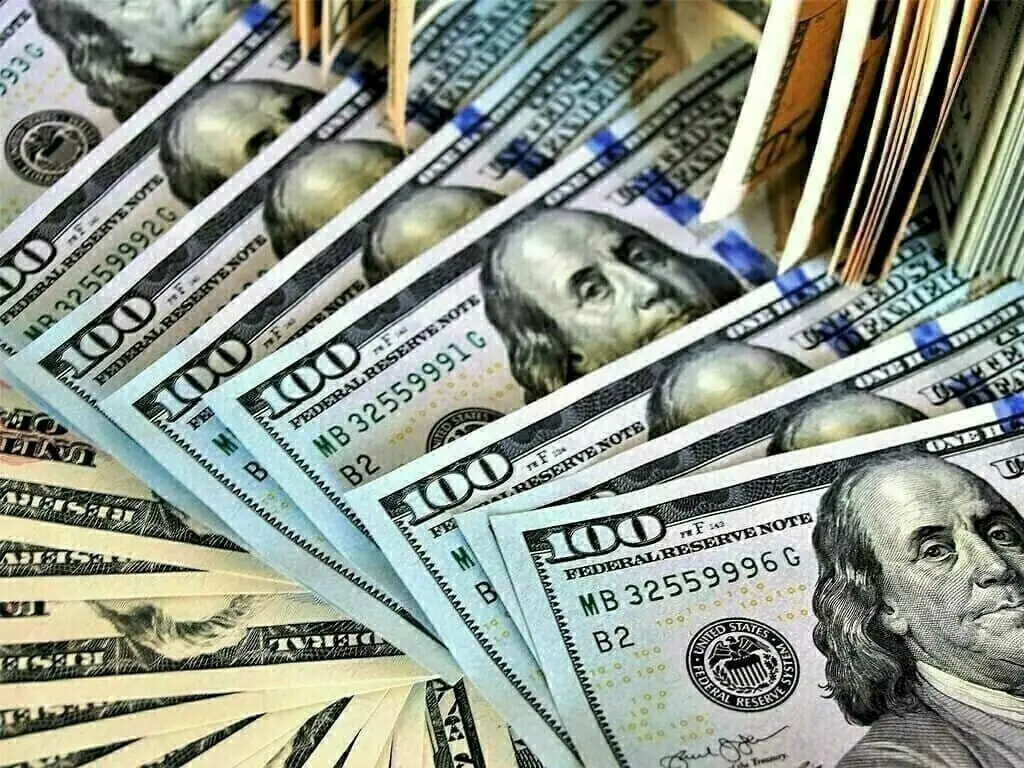

NEW YORK: The US dollar fell for a fourth straight day on Tuesday, slipping to a four-month low, as traders kept watch for possible coordinated currency intervention by US and Japanese authorities and a Federal Reserve interest rate decision.
The dollar has been under intense pressure this month from factors including US President Donald Trump’s policymaking and concerns about Federal Reserve independence.
In addition, disagreement between Republicans and Democrats over funding for the Department of Homeland Security after the fatal shooting of a second US citizen by federal immigration officers in Minnesota, has raised concerns of another US government shutdown. Meanwhile, Trump accused South Korea’s legislature of “not living up” to its trade deal with Washington, and he said late on Monday he would increase tariffs on imports from Asia’s fourth-biggest economy into the US such as autos, lumber and pharma to 25 percent.
Trump has also in recent days said he would impose a 100 percent tariff on Canada if it follows through on a trade deal with China.
The Korean won strengthened 0.45 percent against the dollar to 1,439.14 per dollar.
“With the ‘tariff man’ showing no sign of repentance and the US government headed into another shutdown, economic policy uncertainty is soaring once again, leading to an intensification in the ‘Sell America’ trade that has dominated markets for the better part of a year,” Karl Schamotta, chief market strategist with payments company Corpay in Toronto, said.
“Positive fundamentals should eventually reassert themselves, but for now, no one is willing to catch the falling chainsaw that is the US dollar,” he said.
Against a basket of currencies, the dollar fell 0.48 percent to 96.64, hovering near September’s 3-1/2-year low, and down from an earlier high of 97.287, in volatile trading.
Investors will watch the Fed’s two-day meeting this week for clues to the path of monetary policy. “The big risk, as we see it, is not in the rate decision. We’re pretty confident that the Fed is going to hold rates unchanged. But Trump is not going to like that,” said Nick Rees, head of macro research at Monex.
Trump could announce his candidate for Chair Jerome Powell’s successor soon after the rate decision, especially if the president does not support the central bank’s decision, Rees said.
Much of the foreign exchange market’s focus has also been on the yen, which has rallied by as much as 3 percent over the last two sessions on talk of the US and Japan conducting rate checks - often seen as a precursor to official intervention.
That has helped the yen slip below 153 to the dollar. It was last trading at 152.96.
“The fact that it’s coming from the US suggests, or is giving risks to the market, that there may be multiple parties perhaps prepared to intervene, which is different compared to what we’ve seen in the past,” said Parisha Saimbi, EM Asia FX and local markets strategist at BNP Paribas.
While there has been no confirmation of rate checks from officials in Japan or the US, a person familiar with the matter told Reuters that the New York Federal Reserve had checked dollar/yen rates with dealers on Friday.
Japanese authorities said on Monday they have been in close coordination with the US on foreign exchange.
The euro was last 0.7 percent higher at USD1.19635, trading around levels last seen in June 2021.
























Comments
Comments are closed for this article.