


‘Discrepancies’ in FBR reward schemes: LHC issues notices to tax officials
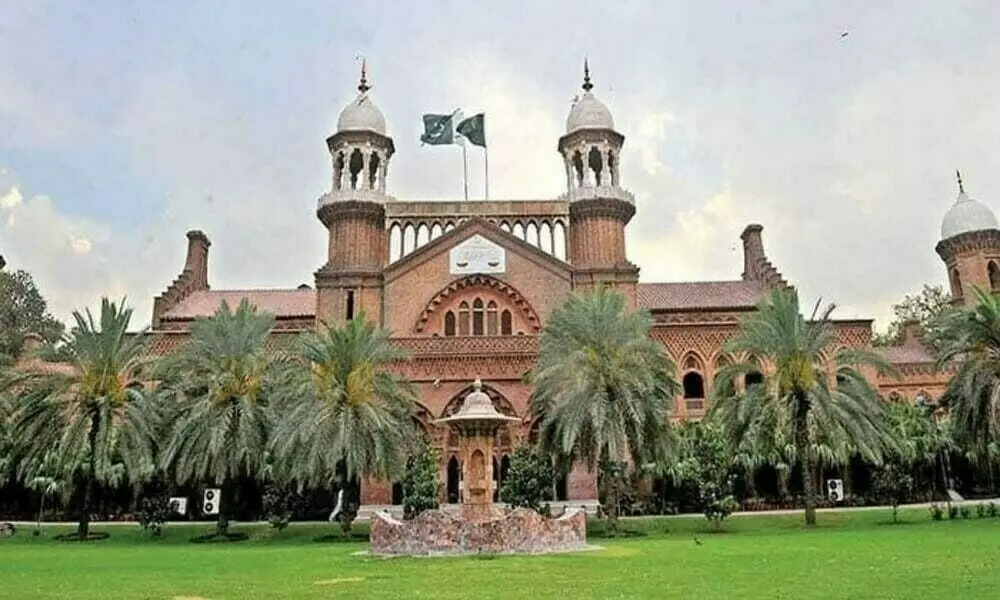

ISLAMABAD: The Lahore High Court (LHC) has issued notices to top government officials to file their comments on the allegations of unlawful distribution of millions from the public exchequer by the Federal Board of Revenue (FBR) under reward schemes (IT-based Reward & Rating System-RRS).
In this regard, the LHC has directed Principal Secretary to Prime Minister, Chairman FBR, Members of the FBR Policy Board, Federal ministers, Parliamentary Finance Committee Heads, Auditor General of Pakistan and the Director General FIA to file their comments.
The writ petition, filed by Advocate Waheed Shahzad Butt through International Constitutional lawyer Muhammad Azhar Siddique, invokes Article 199 of the Constitution and questions the legality, transparency, and constitutional validity of IR-Reward Rules 2021 and Customs Reward Rules 2012.
READ MORE: Taxpayer cannot claim full deduction on an intangible asset in single tax year: LHC
The petition alleged that senior officers of IRS and Pakistan Customs (BS-17 and above) were unlawfully granted rewards in addition to double salaries, causing massive loss to public revenue.
Constitutional Lawyer Muhammad Azhar Siddique told Business Recorder that in a major development exposing what has been termed as an institutionalized plunder of public money, the LHC issued notices to the highest echelons of power over the alleged illegal distribution of millions of rupee among senior officers of the FBR under the guise of “rewards.”
According to the petition, the impugned reward mechanism is based on a controversial “forced peer ranking” system, allegedly introduced without approval of the statutory Policy Board as mandated under the FBR Act, 2007. It is contended that officers were classified into categories carrying rewards equivalent to multiple additional salaries for a six-month period, resulting in unjust enrichment of officials at the cost of taxpayer’s money.
The petitioner has further challenged the constitutionality of the FBR Board-in-Council, asserting that its composition and decisions are ultra vires the FBR Act, 2007, and in violation of the landmark Supreme Court judgment in PLD 2016 SC 808. It is argued that any financial benefits or incentives granted without lawful authorization and parliamentary oversight are void ab initio.
The writ petition also accused the Policy Board, parliamentary standing committees on Finance and Revenue, and senior government functionaries of failing in their constitutional duty of oversight, despite being custodians of taxpayers’ money. It seeks recovery of allegedly illegal rewards, a special audit by the Auditor General of Pakistan, and initiation of civil and criminal proceedings against those responsible for loss to the national exchequer.
The LHC has taken cognizance of what the petitioner terms a matter of grave public importance involving alleged institutional misuse of public funds. The case is expected to test the limits of executive discretion, reward policies, and accountability of top revenue officials, Waheed added.
Copyright Business Recorder, 2026


























Comments
Comments are closed for this article.