


EDITORIAL: Shehbaz Sharif-led government responsible for unwarranted controversy
EDITORIAL: Finally, the government has done the needful to bring to an end a vicious bout of speculations and conjectures.
Clearly and unambiguously, the Shehbaz Sharif-led government was responsible for an absolutely unwarranted controversy that it had itself caused through its own failure to issue the notification of appointment of country’s first Chief of Defence Forces (CDF) on time, if not in time.
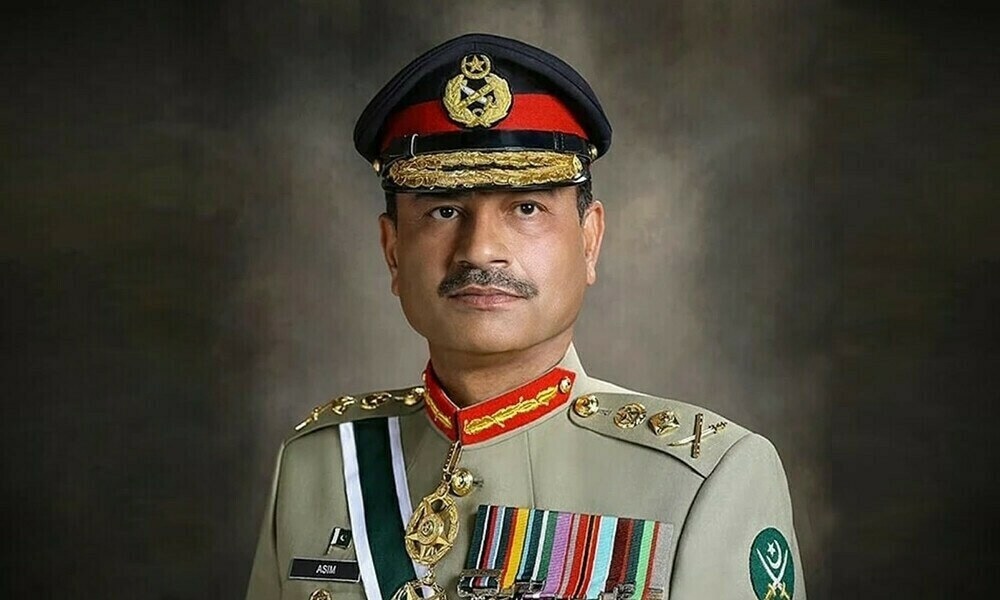
Yesterday, the Ministry of Defence officially notified Chief of Army Staff Field Marshal Syed Asim Munir as the country’s first Chief of Defence Forces, a day after President Asif Ali Zardari approved the appointment on the advice of Prime Minister Shehbaz Sharif.
Be that as it may, for a matter the government knew would attract scrutiny, it is extraordinary how casually the notification for the first CDF was handled. Days of silence allowed speculation to turn into a political storm, and when defence minister Khawaja Asif finally broke it, his statement raised more questions than it answered. In an environment where ambiguity is instantly politicised, the government itself ensured the vacuum that surrounded the issue till the issuance of the notification.
The abolition of the Chairman Joint Chiefs of Staff Committee post on Nov 27 was not a surprise event. It flowed directly from the 27th Constitutional Amendment, which restructured the higher defence organisation and created the new CDF position to be held by the army chief. The shift was planned, announced, and legislated. There was no uncertainty about timing. Yet, when the moment arrived, the government failed to issue the notification.
The date passed, and so did the original three-year term army chief Field Marshal Syed Asim Munir, before last year’s extension, without the necessary paperwork in place. That is the detail analysts pointed to when they described the delay as “baffling”. They were not entirely wrong, so to speak.
The defence minister’s post on X did little to change that perception. It confirmed what was already evident: a fresh notification was required and had not been issued. It offered no reason for the lapse, no explanation for the delay, and no reassurance about when the confusion would end.
Most independent observers seemed to agree that the government appeared complacent or incompetent, or both, and the description fits the facts available. A notification that should have coincided with the abolition of an office instead disappeared into agonizing silence. The political space left behind filled immediately with rumour and conjecture, which is entirely predictable in a system where civil–military signals are watched closely and where inconsistency is never interpreted benignly.
The prime minister’s absence added another dimension to confusion and uncertainty. The government acknowledged he was in the UK and that he would return shortly. What it did not clarify was why this particular matter was allowed to wait for him, or why the additional London leg of his Gulf trip was neither announced nor explained. That lack of transparency merely amplified doubts.
The PM is not known to let sensitive issues drift, which only deepened the sense that something had slipped through gaps that should not have existed in the first place.
The government’s communication breakdown is therefore not incidental; it is central to the problem. The defence minister’s statement did not calm the situation, precisely because it failed to establish control over the narrative. It confirmed that the process had only just begun, leaving the public to wonder why something so straightforward had been allowed to reach this stage.
The absence of timely information created the conditions in which interpretations multiplied. The government cannot now complain about the rumour mill. It fed it by failing to provide clarity when it mattered.
This episode also reflects a broader pattern. The state has long struggled with procedural discipline in sensitive areas, and this transition has exposed those weaknesses again. A constitutional amendment that restructured the country’s highest defence office required not just legislative intent but administrative precision. Instead, the government delivered ambiguity. The result was a controversy entirely of its own making, one that could have been avoided by handling the notification with the seriousness the moment demanded.
Copyright Business Recorder, 2025

























Comments
Comments are closed for this article.