


KE tariff: Govt says NEPRA Act needs to be amended to hold regulator accountable
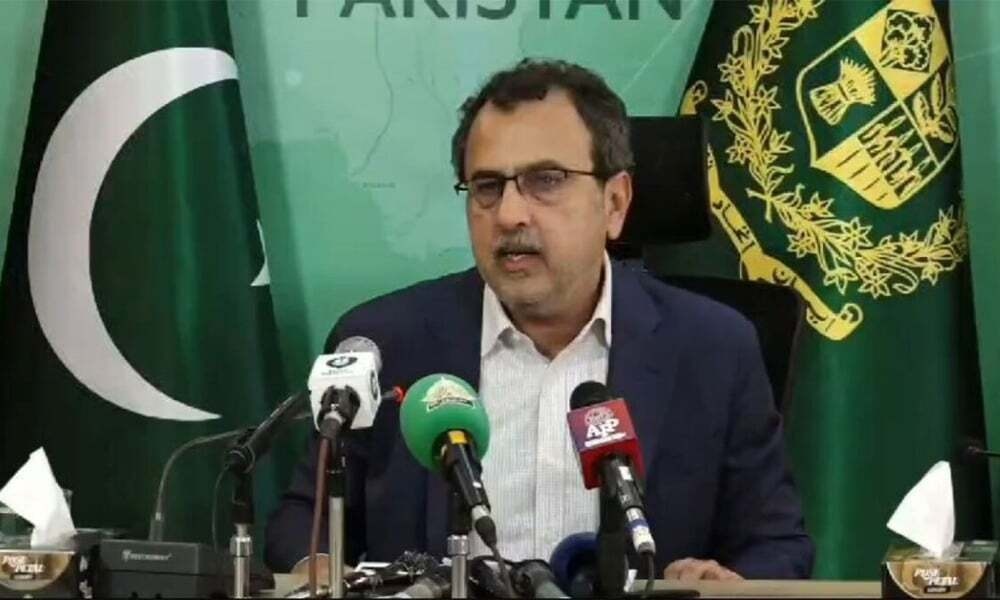

ISLAMABAD: Minister for Power, Sardar Awais Ahmad Khan Leghari, said on Thursday that the government is considering amendments to the NEPRA Act so that the regulator can be held accountable for its faulty tariff determinations.
He was responding to questions regarding K-Electric (KE) at an event organized by the Pakistan Business Council (PBC) in Islamabad.
“KE’s tariff has actually been delayed for two years because of the regulator’s capacity issues. We are looking at changing and amending the NEPRA Act itself. The regulator does not need to be controlled, but there must be some kind of accountability—how determinations are made, what their quality is, and who is appointed to the Authority,” he said.
Nepra tariff row: KE Board may opt for global arbitration
“Just because each province requires representation does not mean that should be the only criterion. Yes, provincial representation is necessary, but perhaps in a supervisory role—not as members diving into highly technical and complex financial models and making decisions based on them.”
The Minister added that the government is working to create a much-improved environment for both the regulator and policymakers to make better decisions in the future.
He further stated that KE is a publicly listed company and, under SECP rules, should conduct elections for its Board of Directors.
The Minister said he would “loudly and clearly” state that he would not hesitate to reduce subsidies. KE must improve its performance, he added, as the government cannot continue providing an additional Rs 100 billion annually. “The company needs to perform much better to ensure reliable and sustainable service,” he said.
“If an inefficient multi-year tariff regime is implemented for future privatized distribution companies, this sector would collapse within a year. No distribution company would survive, and the Q-block only survives because of the huge subsidies we provide under the uniform tariff system,” he added.
On the dispute between KE shareholders at the international legal forum, he said the issues would eventually be resolved.
Regarding the uniform tariff policy, Leghari said it is “another big evil” in the system. The government may not have the political courage to reform it immediately, but the power sector cannot survive indefinitely under the current structure. “We are dis-incentivizing efficiency by sticking to a uniform tariff. But we plan to continue it for the near and mid-term future,” he said.
On net metering, the Minister said regulations would be changed soon because current policies were burdening other consumers.
“There are 19,000 megawatts of solar capacity installed—on-grid and off-grid—and this is putting enormous pressure on consumers, the system, and the distribution grid. Regulations must be improved so that investment remains viable but is not a burden on others,” he remarked.
The Minister said that past agreements with IPPs were not transparent and had to be renegotiated. “Some investors may say our policies lack consistency because we renegotiated agreements. But the basis of those agreements was neither transparent nor competitive enough to sustain throughout their term.
He said that when the government finally realized the scale of the issue, it was compelled to renegotiate for the benefit of the public and the sustainability of the sector. “With a heavy heart, the government had to sit down and revise some IPP terms.”
He also referred to the early retirement of inefficient plants and highlighted the rapid increase in renewable energy. “We should be proud. Australia boasts when it reaches 40 percent clean energy. We have achieved 55 percent, including hydro. Pakistan has already undergone a solar revolution,” he said.
Leghari encouraged PBC participants not to fear negotiations with IPPs and urged them to participate in the privatization of DISCOs.
Copyright Business Recorder, 2025
























Comments
Comments are closed for this article.