


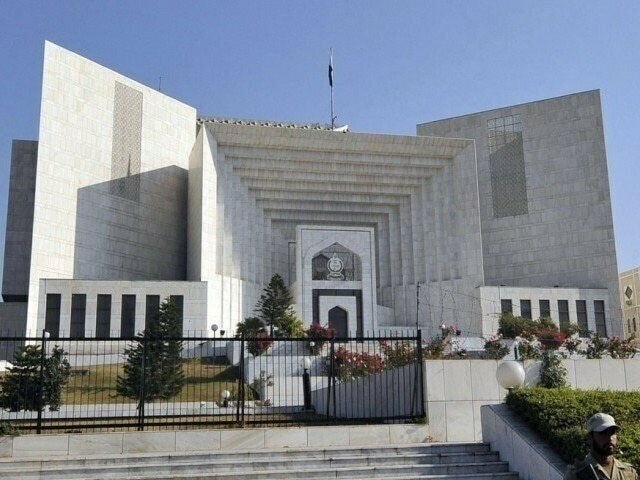
EDITORIAL: The recently released judgement delivered by a two-member Supreme Court bench in the case of Abrar vs. his sister Shahida marks a significant moment in the judicial protection of women’s inheritance rights in this country.
Stemming from a family property dispute that began after the death of the parties’ father in 2002, the case may appear at first glance to be a routine civil matter. Yet, as articulated in the judgement authored by the then Supreme Court judge Justice Athar Minallah — issued shortly before his resignation in protest against the controversial 27th Amendment — it carries implications far beyond a single family conflict.
The ruling firmly reaffirms that women’s inheritance rights are not merely legal entitlements, but constitutional and religious obligations that the state is duty-bound to safeguard.
Justice Minallah’s observations highlight a persistent and troubling pattern in inheritance disputes. He noted that the appeal before the Court amounted to little more than an attempt to delay and frustrate the rights of the other legal heirs — the appellant’s sister, Shahida, and their two siblings — “amounting to an abuse of process.” His remarks underscore an uncomfortable but well-known reality: women in Pakistan are too often compelled to give up or endure years of costly, exhausting litigation simply to claim what the law already guarantees them.
Appropriately, therefore, the judgement extends beyond the immediate dispute and offers a systemic remedy. It asserts that the state has a constitutional responsibility to ensure that “every woman is informed of, and enabled to claim her rightful share in inheritance without delay, fear, or dependence on lengthy litigation.” This vision demands a shift from passive judicial remedies toward proactive state intervention. Justice Minallah calls for a dedicated and accessible mechanism capable of identifying women at risk of dispossession, reaching out to them, and ensuring they can secure legal protection without intimidation, coercion, or prohibitive expense.
The ruling also resonates with the Federal Shariat Court’s landmark decision earlier this year declaring practices such as chaddar, parchi and haq bakhshwai — long used to deprive women of their inheritance — as un-Islamic and devoid of legal standing.
Echoing this position, the Supreme Court grounds its reasoning not only in constitutional and statutory principles, but in religious doctrine itself. The right to inheritance, the judgement emphasises, is “not a concession granted by human law, but a divinely ordained command explicitly declared in the Holy Quran.” Any obstruction of this right is therefore not merely unlawful; it is a transgression against Divine Will. In essence, denying women their rightful share in inheritance constitutes a profound injustice, contrary to both the Constitution and Islamic principles of equity.
The Supreme Court’s ruling brings renewed clarity to a longstanding issue: the dignity and rights of women are non-negotiable. It is now incumbent upon the state, and society at large, to confront entrenched inequities and ensure that every woman in Pakistan can access the inheritance that is rightfully hers.
Copyright Business Recorder, 2025




















Comments
Comments are closed for this article.