


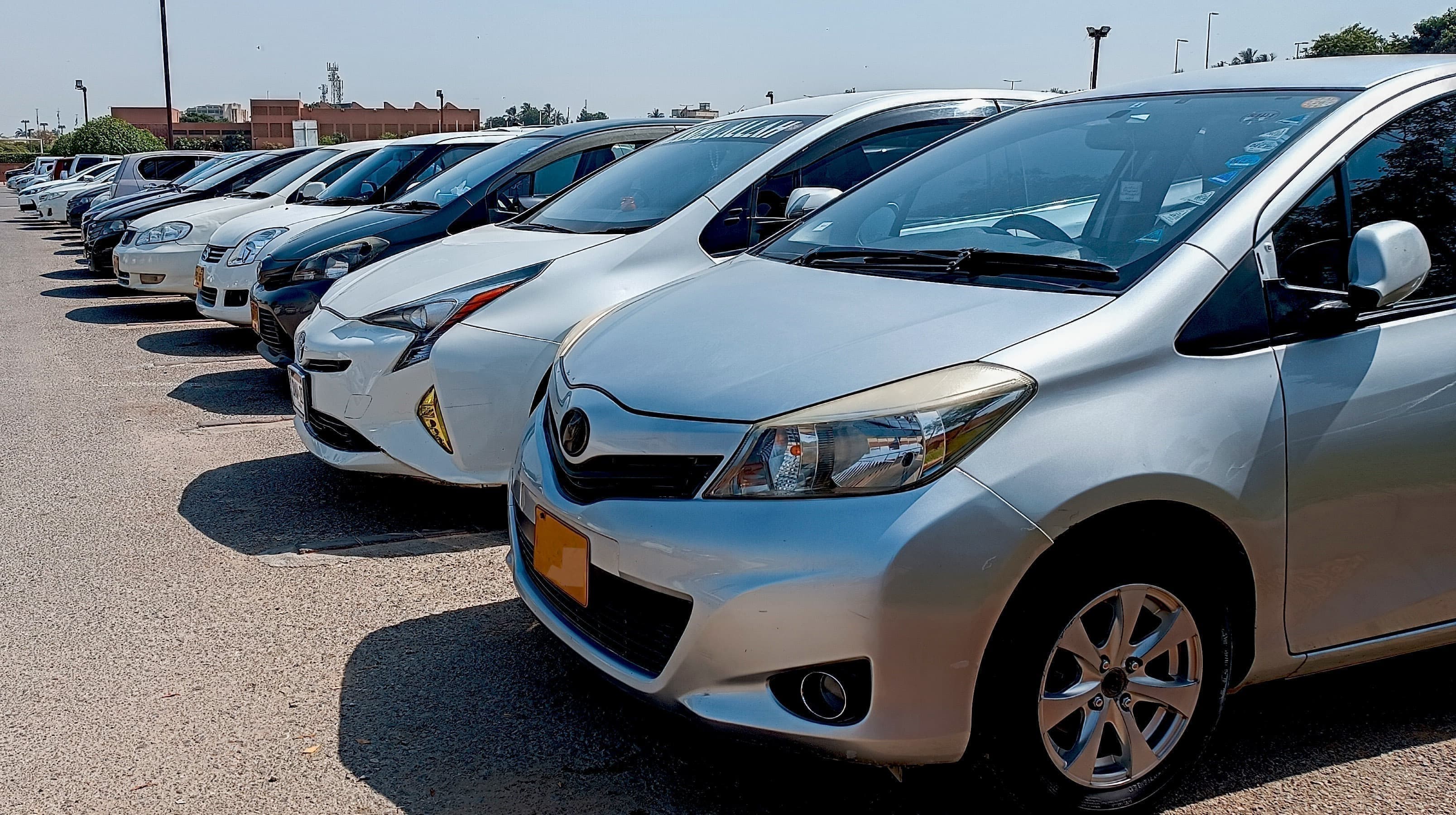

KARACHI: Local auto industry estimates suggest that the auto-parts sector loses approximately Rs 48–60 billion in annual business due to imported used cars.
“Each imported vehicle displaces about Rs 1.5 million worth of locally produced components. This loss translates directly into reduced economic activity, lower tax revenue, and declining employment.
“The government’s localisation and ‘Make in Pakistan’ vision cannot succeed if such large-scale displacement of domestic value addition continues unchecked,” said Shehryar Qadir, Senior Vice Chairman Paapam.
Liberalisation of used car imports threatens auto industry: PAAPAM
He added that the backbone of the auto industry — the domestic vendor base — is already under strain as with every used-car import vendors lose direct business since these vehicles bypass local supply chains entirely.
“Declining orders lead to idle capacity, financial distress, and eventual shutdowns of small and medium enterprises (SMEs). The closure of vendors not only hurts employment but also reverses years of progress in localisation, technology transfer, and skill development,” said Shehryar Qadir.
He added that the automotive sector supports hundreds of thousands of skilled and semi-skilled jobs but every imported used vehicle represents not just a missed sale for local assemblers but a lost employment opportunity.
“When assembly lines slow down and vendor factories close, it triggers layoffs across the value chain — from parts suppliers to logistics and after-sales services.
“The social and economic implications are severe: unemployment rises while government revenue declines, creating a negative cycle that affects industrial and social stability alike,” reasoned Shehryar Qadir, Senior Vice Chairman Paapam.
He informed that Pakistan’s auto-parts manufacturers collectively employ more people than any other sub-sector in the manufacturing industry — roughly three hundred thousand directly and over two million indirectly.
“These firms have invested in technology, localisation, and skilled labour to build globally competitive capabilities. However, unrestricted import of used cars is now threatening their survival.
“As PAAPAM has repeatedly warned many vendors could face closure, erasing decades of industrial progress and depriving thousands of workers of livelihoods,” said Shehryar Qadir. He added that since the government’s priority is employment it can be achieved through developing the country as a strong manufacturing hub.
“Countries that have built their auto industries did so by nurturing domestic manufacturing while gradually integrating with global markets,” concluded Shehryar Qadir, Senior Vice Chairman Paapam.
Copyright Business Recorder, 2025




















Comments
Comments are closed for this article.