


Inflation may go up further: Real GDP growth now likely to stay at 3pc: World Bank

ISLAMABAD: Amid projections of a further hike in inflation, the World Bank stated that Pakistan’s real GDP growth, initially projected to accelerate to 3.4 percent in fiscal year 2026, is now expected to remain at 3 percent.
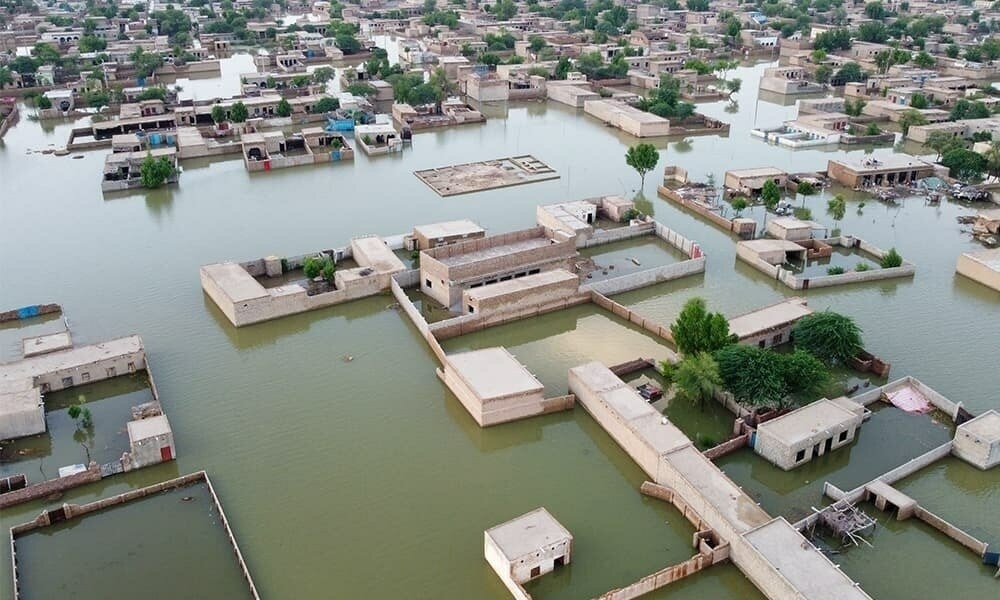
The Bank said that recent floods have complicated the outlook, imposing significant human costs and economic losses, dampening growth prospects, and posing additional challenges to macroeconomic stability amid constrained fiscal space, high external financing needs, and major regional and global uncertainties.
In its latest report “Pakistan Development Update, staying the course for growth and jobs” released on Tuesday, the World Bank stated that flood-related shock to food supply is expected to push inflation above earlier projections, peaking at 7.2 percent in fiscal year 2026 before easing to 6.8 percent in fiscal year 2027 as food supply constraints, commodity and energy prices decline, and the exchange rate remains market-determined.
Pakistan’s GDP growth to remain modest at 2.6% in FY26 amid flood impact: World Bank
The fiscal outlook assumes the government maintains a prudent fiscal stance and avoids large off-budget commitments, and that the International Monetary Fund (IMF) Extended Fund Facility (EFF) program remains on track, anchoring investor confidence and ensuring access to external financing.
Floods are anticipated to affect poor and vulnerable rural households, who face the loss of agricultural assets, with limited savings and inadequate coping mechanisms. These vulnerabilities are compounded by rising food inflation and the volatility of informal jobs in the low-skilled industry and services sectors. As a result, the pace of poverty reduction is expected to slow, with poverty declining only modestly to 21.5 percent in fiscal year 2026 and to 20.6 percent in fiscal year 2027.
Fiscal consolidation is expected to continue under the ongoing IMF programme. However, flood-related relief and reconstruction needs will add to spending pressures, with the fiscal deficit projected to remain elevated at 5.4 percent of GDP in fiscal year 2026.
Debt is projected to reach 75.9 percent of GDP in FY26 due to modest flood-related spending and elevated financing needs, before declining steadily over the forecast period, supported by continued primary surpluses. Gross financing needs will nevertheless remain high, reflecting maturing short-term debt, repayments to multilateral and bilateral creditors, and upcoming Eurobond maturities.
The current account is projected to shift only to a small deficit of around 0.3 percent in fiscal year 2026, as higher food imports and lower exports are partly offset by strong remittance inflows and lower global oil prices. In fiscal year 2027, the deficit is expected to widen as economic growth strengthens, import demand rises, and remittance inflows normalize post-flood.
The Bank officials, while briefing the media, said that higher growth and lower inflation contributed to a decrease in poverty, with the poverty rate, measured at the national poverty line, estimated to have fallen to 22.2 percent in fiscal year 2025 from 25.3 percent in fiscal year 2024.
Strong growth in the construction and logistics sectors, which employ around one-quarter of all working poor, boosted labor incomes. Furthermore, the sharp drop in food inflation reduced price pressures and improved the purchasing power of the poor, who spend roughly 45 percent of their household budgets on food, they added.
Replying to a question regarding the decline in poverty rate, the Bank officials said that the latest official poverty rates are available for the fiscal year 2019, which was the year of the last Household Integrated Economic Survey (HIES). Since then, Pakistan has undergone several major crises, including the COVID-19 pandemic, devastating floods in 2022, and a macroeconomic crisis made more precarious by increased political uncertainty.
It is expected that these shocks had a profound impact on household welfare and poverty rates in the country, but recent survey data are not available to quantify these. In this context, welfare levels for Pakistan can be estimated using a micro-simulation tool that models the path of household welfare based on macroeconomic indicators.
The underlying assumption for this approach is that macroeconomic indicators, such as sectoral GDP growth, inflation, and changes in the real value of private and public transfers, directly influence households’ real labor and non-labor incomes, which in turn have a direct bearing on consumption levels and poverty.
Poverty headcount is computed based on simulated monthly household consumption using the national poverty line (PKR 3,030 per adult equivalent per month in 2013/14, or PKR 8,231 in 2024 prices).
Agriculture is expected to remain subdued for the second consecutive year due to flood-related losses, particularly to rice, cotton, sugarcane, and maize crops, which could weigh on rural incomes and food security and create spillovers to industry and services. The textile sector, accounting for about one-quarter of industrial output and over half of goods exports, may face input shortages as domestic cotton typically supplies around half of its needs.
The Bank said that fragmented tax policy function, paired with multiple property valuations at the federal and provincial levels, non-digitized land records, data silos, and limited institutional capacity on newly assigned taxes, has resulted in underutilized revenue sources.
The Bank has recommended for fully implementation of the single portal for Goods and Sales Tax on Services (GSTS), implementation of the recently revised AIT and continue reforms on property valuation to address systematic undervaluation, improving taxpayer e-services, implement compliance risk management, and introduce prepopulated tax forms to curb tax evasion and misreporting and develop and implement a tax expenditure policy to reduce tax expenditures.
Reduce the number of zero-rated items under the fifth schedule, eliminate preferential treatments under the income tax ordinance, and conduct ex-ante cost assessments for new exemptions, evaluate past exemptions, and institute sunset clauses.
The report noted that Central bank exchange rate intervention creates temporary stability but leads to disruptive adjustments, deterring investment and undermining confidence. The Bank recommended enabling a deep and liquid interbank market without SBP intermediation and broader participation from market players, including exporters, importers, and foreign investors.
The Bank further recommended publishing detailed data on interbank market transactions, including volumes and participants, and phasing out ad hoc interventions so that the exchange rate reflects actual supply and demand.
High tariffs and limited trade finance, exacerbated by the incomplete operationalization of EXIM Bank, continue to hinder investment, competition, and productivity growth, it added.
The Bank highlighted that the government’s large presence in commercial sectors, delays in privatization, and a complex business environment have created credibility gaps and deterred investment. It recommended the conclusion of concession process of key airports to the private sector, introducing private participation in the energy sector, SOEs, and offering shares of selected SOEs to the public to improve commercial discipline, corporate governance, and performance.
The Bank further recommended for establishing a National Regulatory Delivery Office to implement business environment reforms, including under the Pakistan Regulatory Modernization Initiative, incorporating private sector feedback, pass the revised Investment Act to align the legislative framework with policy and international best practice and establish a single business registry, fill leadership vacancies at the Competition Commission and Competition Appellate Tribunal with qualified staff, and strengthen the legal and institutional framework for creditor/debtor relations by implementing recommendations from the Insolvency and Creditor/Debtor Rights Report on the Observance of Standards and Codes shared with the Securities and Exchange Commission of Pakistan.
The Bank recommended further right-sizing the government, including eliminating redundant or unproductive positions or agencies, reviewing public sector compensation, including monetization and simplification of in-kind benefits to reduce costs and enhance transparency, and implementing parametric pension reforms to reduce future liabilities and gradually transition to a contribution-based system.
“Pakistan’s recent floods have imposed significant human costs and economic losses, dampening growth prospects, and adding pressure on macroeconomic stability,” said Bolormaa Amgaabazar, World Bank Country Director for Pakistan. “Staying the course on reforms and accelerating job creation is critical to maintaining growth along with strengthening social safety nets and infrastructure that protects the most vulnerable citizens, and that will help ensure sustainable development and economic resilience for all.”
“Sustaining progress will require a balanced mix of revenue and expenditure measures to manage flood impacts while maintaining progress towards fiscal consolidation,” said Mukhtar Ul Hasan, lead author of the report. “Urgent implementation of priority fiscal reforms is essential, including broadening the tax base, strengthening tax administration, and reducing the presence of the state in the economy through state-owned enterprise divestiture and rationalizing the public sector.”
Copyright Business Recorder, 2025


























Comments
Comments are closed for this article.