


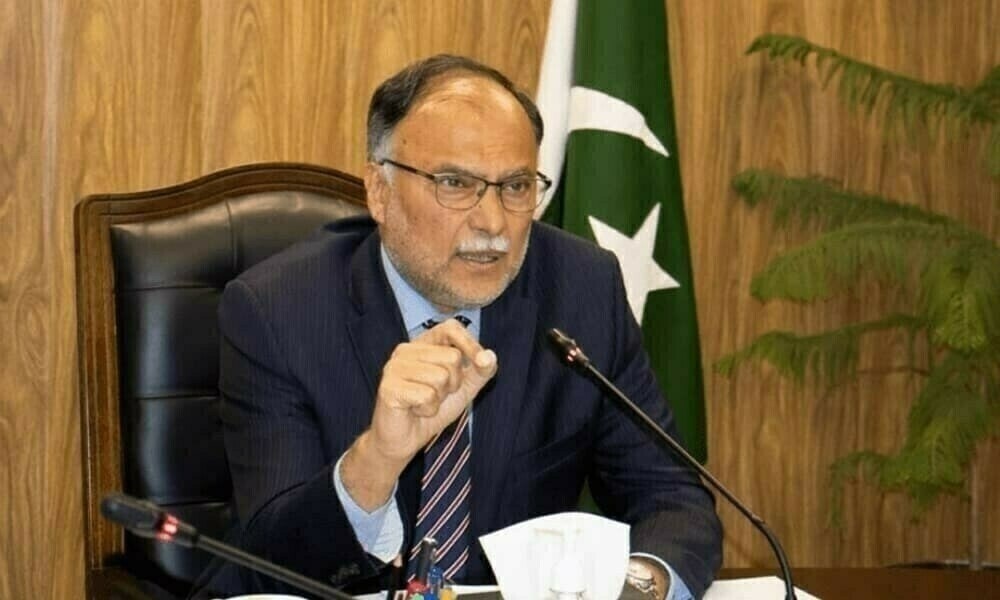
ISLAMABAD: Federal Minister for Planning, Development & Special Initiatives (PD&SI) Ahsan Iqbal highlighted the importance of integrated policies to enrol 25 million out-of-school children, improve basic services for rural communities, and manage increasing urban pressure.
Federal Minister Ahsan Iqbal stated this on the World Statistics Day 2025 ceremony held at the Pakistan Bureau of Statistics. The Minister also announced the commencement of DataFest 2025: “Numbers to Lives,” on 11-12 November 2025, a nationwide initiative promoting data-driven innovation and engagement among academia, civil society, and youth.
He emphasised that reliable data plays a pivotal role in decision-making, planning, and policy formulation. Declaring agriculture as the backbone of the national economy, he noted that the number of farming households has risen from 8.3 million to 11.7 million, with 97 percent owning less than 12.5 acres of land. He called for modern techniques and targeted interventions to boost crop yields and develop the livestock sector, including dairy, meat, and leather industries, identifying food security as a major future challenge.
He emphasized "URAAN Pakistan" as a comprehensive development initiative and stated that the government is prioritising data-driven strategies in shaping the national roadmap. He said that the first digital census conducted in 2023 through national consensus was a milestone and highlighted that 61 percent of Pakistan’s population resides in rural areas, while 39 percent lives in urban centers, underscoring the urgent need for action in education, healthcare, and urban planning.
Ahsan Iqbal reiterated that the government’s top priorities include employment generation, public service, and problem-solving. He affirmed that by ensuring public access to data, policymakers are being empowered to make informed and effective decisions.
He further said that the Pakistan Bureau of Statistics must evolve into an institution that provides strategic direction to the nation and advances development through scientific leadership.
The population census tells us how many we are, the agricultural census informs us about the quantity of crops we produce, and the economic census guides us on where investment is needed. All these censuses serve as tools for national guidance. The Federal Minister appreciated the work of PBS.
Earlier, in the welcome address, Dr Naeemuz Zafar (SI), Chief Statistician, PBS, reaffirmed the organisation’s commitment to innovation, transparency, and service excellence. He emphasised that PBS is continuously evolving toward a modern, data-driven ecosystem that translates statistical information into actionable insights for policymakers, researchers, and citizens alike. “The goal,” he noted, “is to ensure that data is not just collected — it is understood, used, and trusted.”
Muhammad Sarwar Gondal (SI), Member (Support Services/ Resource Management), delivered a detailed presentation on the new data repository, website, and interactive dashboards. He highlighted the platforms’ user-friendly interface, dynamic visualizations, and advanced analytical tools that allow users to explore and interpret data more efficiently. These innovations, he stated, reflect PBS’s vision to make data smarter, more accessible, and more impactful for every user from policymakers to students.
The event marked a major milestone in PBS modernization journey. The digital platforms represent a significant advancement toward a smarter, more connected statistical infrastructure, one that empowers users, enhances transparency, and transforms numbers into meaningful narratives. PBS remains dedicated to its mission of making official data more accessible, relevant, and impactful with quality statistics that shape a better future.
Copyright Business Recorder, 2025





















Comments
Comments are closed for this article.