


Cement: Promising first quarter

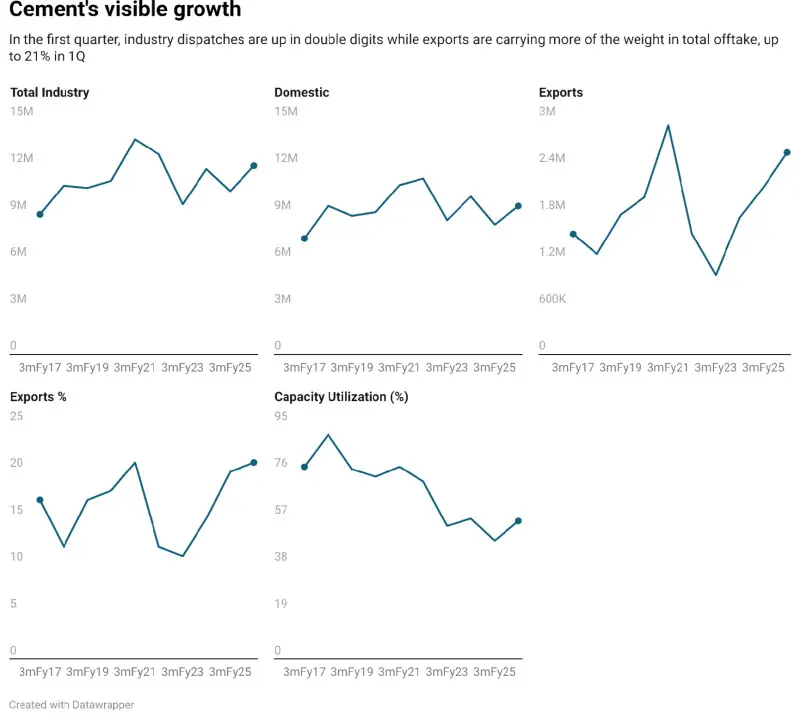
Latest numbers for cement offtake reveal a 16 percent recovery in total dispatches in the first quarter of the fiscal year with a recovery visible in the domestic market that has seen weaker demand over the past two years. This recovery may not be a fluke either. Domestic dispatches in 1QFY26 are up 14 percent year on year.
Where last year’s demand was severely affected by floods, this year demand is expected to grow between 10-15 percent in the full year despite many regions affected by floods directly owed to a much more stable macroeconomic environment.
The other major driver, particularly in cities, will be construction of homes as the SBP launches the latest affordable housing finance scheme “Mera Ghar Mera Ashiana” that is bringing a mark-up subsidy back to first time home buyers.
This is fairly similar to the Mera Pakistan Mera Ghar scheme that was unceremoniously halted at the ouster of the Imran Khan government a few years ago. Once the new home loans roll out, construction demand in housing may recuperate, though there is no limitation on whether the home owner would purchase a built-in property with the loan or construct on their own.
The government also previously reduced the withholding tax on property buyers in order to reduce transaction costs for genuine buyers which will add to the benefit of the mark-up subsidy facilitating home ownership. Already domestic dispatches on monthly average are higher than the last three years, matching the peak industry demand during FY21 and FY22.
On the exports front, the Port Qasim Authority is expanding capacity for cement handling and storage in order to faciliate greater quantities of exports.
Already, cement exports have grown to 21 percent as a share of total offtake, growing gradually from 11 percent, 15 percent and 20 percent over the past three years. This is at the current capacity utilization of 55 percent which is still fairly lower than an ideal 60-70 percent capacity.
The domestic and exports sales mix dynamics were pretty simple: cement and clinker exports came to the rescue when domestic demand was particularly weak in order for companies to keep covering their fixed costs.
However, with more companies gaining access to markets abroad, growing their reach to developed regions of the world, it does seem like exports will hold more significance to demand dynamics than before. With costs firmly under control, exports continue to make sense for the industry until it reaches a utilization beyond 80 percent. At that point, the industry typically begins planning an expansion, thoughat current utilization levels, we are still far from that point.

























Comments
Comments are closed for this article.