


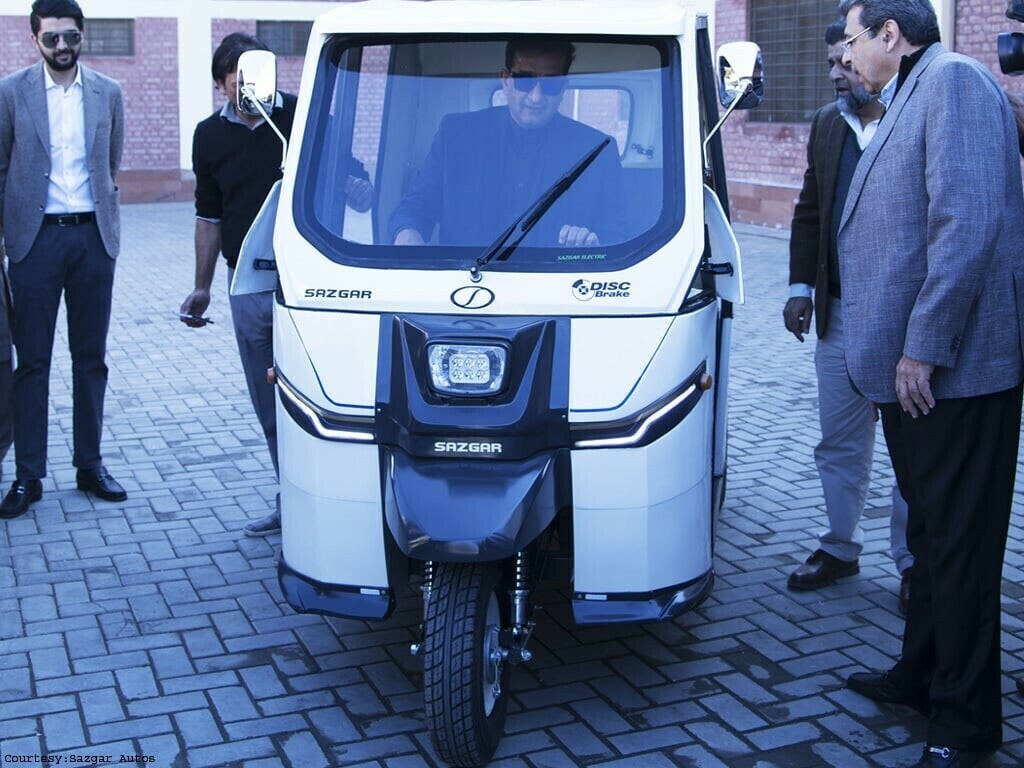

Nothing seems to be fazing the rickshaw turned SUV maker Sazgar Engineering (PSX:SAZEW). When other assemblers are floundering in disarray, angry and indignant with the government for the “egregious” policy to open up the commercial import of 5-year old used cars, a sour subject for OEMs and parts manufacturers alike, Sazgar appears unperturbed. Used car imports won’t hurt Sazgar; the company is certain.
The message between the lines is: we are in a different league.
In a matter of two years, Sazgar has created a market for itself enough to grow its top-line by 6 times! It’s market share for SUVs has grown to 7 percent from 1 percent in FY23 having started its four-wheel journey in rear end of 2022 after launching the Chinese Haval into Pakistan.
Since last year, Haval’s share in the SUV segment (including Toyota Fortuner and Hilux, Hyundai Tucson and Santa Fe, Honda BR-V) has grown from 18 percent to 44 percent.
In the latest quarter, Sazgar sold three times more locally assembled Haval than Hyundai did Tucson and 1.4x the total volumes for Fortuner and Hilux.Earnings have responded. In the last year alone. Sazgar’s after-tax profits have doubled.
Compared to other more established players in the market, Sazgar’s position as a new entrant is by now means precarious. It’s margins are unrivalled at 29 percent, compared to Indus Motors’ 15 percent and Honda’s 9 percent.
Indus Motors by comparison sold triple the number of cars as Sazgar during the fiscal year and earned double the revenues.Obviously, the difference is not only in the much higher price point for Sazgar’s fleet but also the higher margin these vehicles carry.
Demand for Sazgar’s six variant offerings of Haval H6 and Jolianis growing so fast that the company is assembling 60 vehicles per day, with a capacity of only 40 vehicles. The company plans to raise its capacity from the current 40 to 120 per day with fresh investments into the production plant.
Meanwhile, Sazgar has additional models lined up in both CBU and CKD forms, and is banking on higher volumes to offset potential margin losses once the benefits from the auto development policy expire in June 2026.
Operationally too, Sazgar is running a tight business keeping overheads in control and having no major debts on the books.
Together overheads and finance costs constitute only 4 percent of the top-line which is at par with Indus Motors and better than Honda. Inventories seem well-aligned with demand and the decision to not pass on the new green levy imposed by the government worked well to keep bookings stable. The company is winning on several fronts—the 15 percent net margin being testatment to it—and price stability is one of them.
One thing is certain: even in an arguably crowded SUV market, where demand is rising as buyers shift to Chinese options over costly imported CBUs, Sazgar is enjoying a rathersweet ride,run bystrong execution and operational efficiency few rivals can match. That the Pakistani market has so much space for more and more models of SUVs is a discovery in its own right.
There is certainly a point where they may be too many SUVs in the market where competition truly kicks in. But such a future point doesn’t take away from Sazgar’s shine. For now.

























Comments
Comments are closed for this article.