


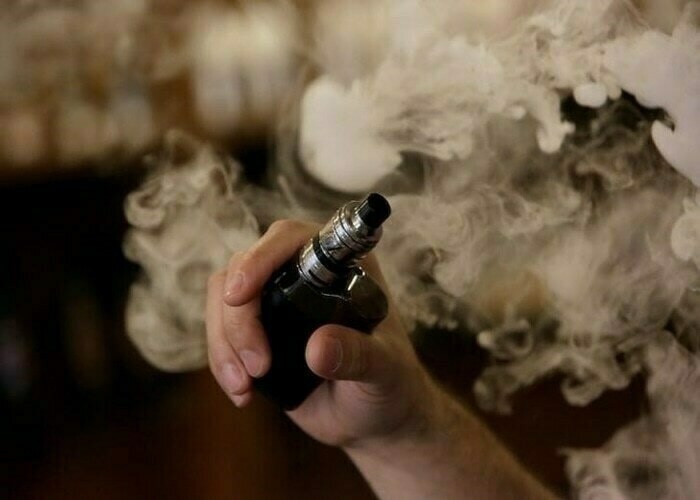

Tobacco has been used across societies for generations, yet it is only with modern research that its risks and alternatives have come into sharper focus.
Modern research has established that the primary harms of smoking arise not from nicotine itself, but from the combustion of tobacco, which releases thousands of toxic chemicals, including more than seventy known carcinogens. This distinction matters. It means that while nicotine is addictive, it is not the direct cause of cancer, heart disease, or stroke.
Recognising this, public health bodies such as the UK’s Royal College of Physicians and the National Health Service (NHS) have underscored the potential of safer alternatives such as vapes, heated tobacco, and oral nicotine pouches when regulated appropriately. These products can significantly reduce exposure to harmful toxins and offer adult smokers a less harmful pathway away from traditional cigarettes.
This vision is underpinned by adopting tobacco harm reduction (THR) as the preferred public health policy. While quitting remains the safest choice for smokers, many are unlikely to do so without alternatives. THR aims to transition adult smokers, who would otherwise continue smoking, to significantly less harmful nicotine products.
Hence the question is, are there any good practices for a government to follow and any miscalculated strategies to avoid when it comes to the changing landscape of tobacco alternatives? The answer is, yes! There are indeed some proven practices that substantiate both the parts of the question.
Sweden has long adopted a risk-based regulatory approach to smokeless nicotine products, especially tobacco-free oral pouches, which are widely recognized as lower-risk alternatives by health authorities. In the 1960s, nearly half of Swedish men smoked.
Recent government statistics reveal that only 4.5% of Swedish-born individuals over the age of 16 smoke, a figure well below the global benchmark for smoke-free status. Dr. Delon Human, leader of the Smoke Free Sweden movement, said: “This remarkable achievement shows the world what can be accomplished when policymakers follow the evidence. Sweden’s adoption of harm reduction as a cornerstone of its tobacco strategy will undoubtedly save lives and inspire other nations to prioritize science and public health over ideology.”
On the other hand, when policies are not inclusive, they have severely impacted countries. Let’s take the example of Australia where prohibition of vapour products has paved way for the illegitimate industry to spawn and organised crime to flourish.
The illegal vape trade, largely controlled by organized crime, has become increasingly violent, with over 200 incidents of arson, firebombing, and targeted killings. Instead of curbing use, prohibitionist policies have driven consumers toward unregulated products. By restricting legal access, authorities have inadvertently empowered illicit producers and sellers, compromised safety and exposed users to toxic substances like arsenic, zinc, lead, and mercury.
The Australian Deputy Commissioner of the Border Force, Tim Fitzgerald, explained that these organized crime groups compete for market share of the lucrative illicit vape trade, resulting in escalating criminal activity, arson and violence.
Globally, a more balance approach has shown success: countries like Sweden, which have embraced progressive policies on smokeless products, have seen sharp declines in smoking rates, unlike prohibitionist nations such as Australia, where intended outcomes remain elusive. Another example is Japan, where the introduction of heated tobacco products (HTPs) has coincided with a sharp decline in cigarette sales.
Between 2016 and 2021, cigarette consumption dropped by nearly one-third, one of the fastest declines recorded globally in such a short period. Industry and government data attribute much of this shift to adult smokers switching from conventional cigarettes to HTPs, which now account for more than a quarter of Japan’s total tobacco market.
In Pakistan, currently there is an absence of a public health policy which caters to these new alternative products. The existing situation is more focused on the fiscal policy which has not been able to drive a positive health outcome. New products such as vapor products and nicotine pouches are also under the punitive lens of the regulators which risks stifling potentially safer options without offering consumers viable alternatives.
Regulation is important but it must be public centric. Smoking rates have dropped in New Zealand, Sweden and Japan by following the most effective strategy of tobacco harm reduction and adopting them on a national level as public health policy. New Zealand started a national campaign to promote vapor products for smokers to switch to less harmful options.
The Ministry of Health actively encourages smokers to switch, running campaigns such as ‘Vaping Facts’ to promote accurate information, which resulted in people switching from smoking to reduced risk products.
Similarly, NHS now marks the importance of lower risk alternatives by celebrating a ‘Vapour Day’. These countries have avoided the pitfalls of prohibition and instead advanced policies rooted in evidence, consumer safety, and harm reduction; an approach Pakistan could adapt to its own context.
Pakistan should have standards which ensure these products are safe for consumers, have stringent quality checks and are properly enforced by government authorities. Our country can greatly benefit from international best practices such as establishing a regulatory framework, which supports smokers to shift to alternatives which comply with the set government standards.
Alongside that, the public must be educated on the associated risks of smoking and the gains which can be made by switching. While no nicotine product is completely without risk, regulated alternatives can provide a lower risk option for adults who cannot or do not wish to quit smoking. Nonetheless, the best choice remains to avoid its use entirely and never to start this ritual.
The Government of Pakistan is steadily moving towards a prohibitionist approach that will only lead to similar outcomes as those in Australia. There is a dire need for a prudent and earnest regulatory mechanism to make safe products accessible for the consumers.
By following the examples set by the likes of Sweden and New Zealand where the smoking rates have dropped drastically with a successful implementation of the THR, our government needs to focus on reducing illicit trade, increase focus on health outcomes, enhance policy coherence and reduce taxation on safe and quality products for consumers.
Now it all boils down to the question whether we would like to ban it all out of fear or benefit from the facts.
Copyright Business Recorder, 2025
The writer is a public health practitioner in KP with over 25 years of experience in child protection, health planning, and humanitarian program management. The views expressed in this article are not necessarily those of the newspaper




















Comments
Comments are closed for this article.