


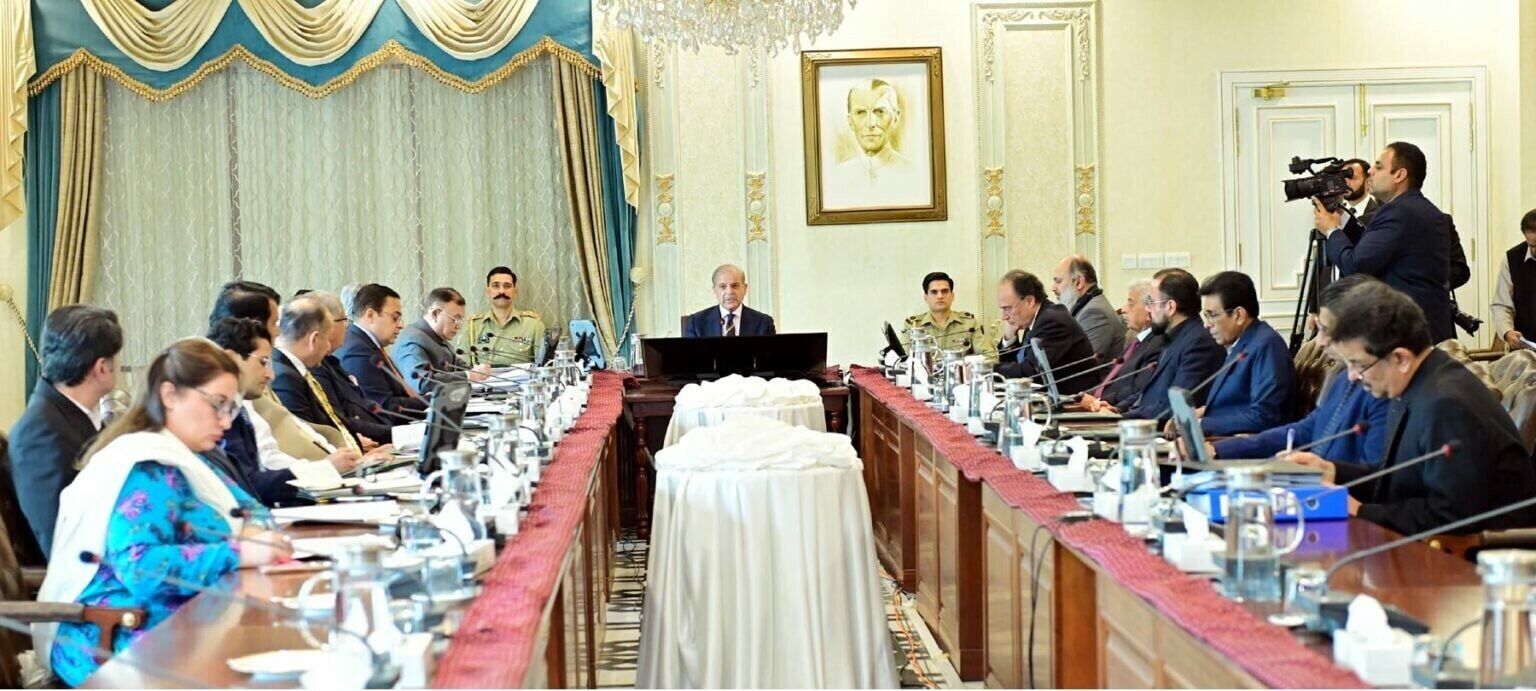
EDITORIAL: When a prime minister has to publicly scold his own cabinet and bureaucrats for ignoring directives, it says less about impatience at the top than about paralysis across the state machinery. But is it really any surprise that orders from the highest office have piled up unimplemented, exposing a system so resistant to change that even the chief executive’s authority struggles to move it? Such disregard is indefensible in any functioning government.
Repeated delays and missed deadlines have become standard practice in Pakistan’s governance culture. Meetings are held, instructions are issued and communiqués are circulated — yet progress stalls as files sit idle and timelines lapse. The prime minister’s latest intervention, conveyed through his adviser to all ministries and divisions, shows that this dysfunction is no longer confined to lower rungs. It now implicates the very ministers and secretaries entrusted with driving the state’s agenda.
The excuses are always the same: competing priorities, lack of capacity, procedural hurdles. But none can justify why decisions taken at the highest level are treated as optional. In most countries, directives from the prime minister are not reminders to be filed away but instructions that demand execution. If extensions are needed, reasons must be compelling and transparent, not a mask for indifference or inertia. The new requirement that delays be justified before deadlines expire is an attempt to impose accountability where there has been almost none.
Yet rules on paper will mean little unless responsibility is enforced. The prime minister has said compliance rests with ministers, secretaries and department heads. That is correct. Authority cannot simply be delegated downward when it suits and reclaimed upward when questioned. The political leadership must own decisions and ensure delivery. A bureaucracy that has grown accustomed to coasting cannot be jolted into efficiency without visible consequences for non-performance.
The costs of inaction are not abstract. Every directive ignored delays a reform, a project, or a service meant for citizens. It can mean hospitals left underfunded, infrastructure half-built, policies trapped in draft form, and international commitments not properly met. This is governance failure in its most basic form: the inability to translate decision into action. Pakistan’s crisis of implementation is not new, but its persistence in the face of repeated admonitions from the top exposes how deeply embedded the rot has become.
If the government wants this cycle to end, it must go beyond expressions of frustration. Mechanisms exist to monitor compliance, track deadlines, and record bottlenecks. What is missing is the political will to confront those responsible. Public reprimand is only the first step. Accountability must follow, not just at the level of clerks and section officers but also among ministers and secretaries who allow directives to lapse.
For too long, inefficiency has been tolerated as a cultural norm within the state. That indulgence has hollowed out institutions and eroded public trust. A prime minister should not need to remind his own team that orders are to be implemented, not debated endlessly after the fact. If this latest warning is to mean anything, it must be backed by consequences that finally break the cycle of delay. Otherwise, even the centre of government will remain a place where authority is proclaimed but rarely enforced.
Copyright Business Recorder, 2025
























Comments
Comments are closed for this article.