


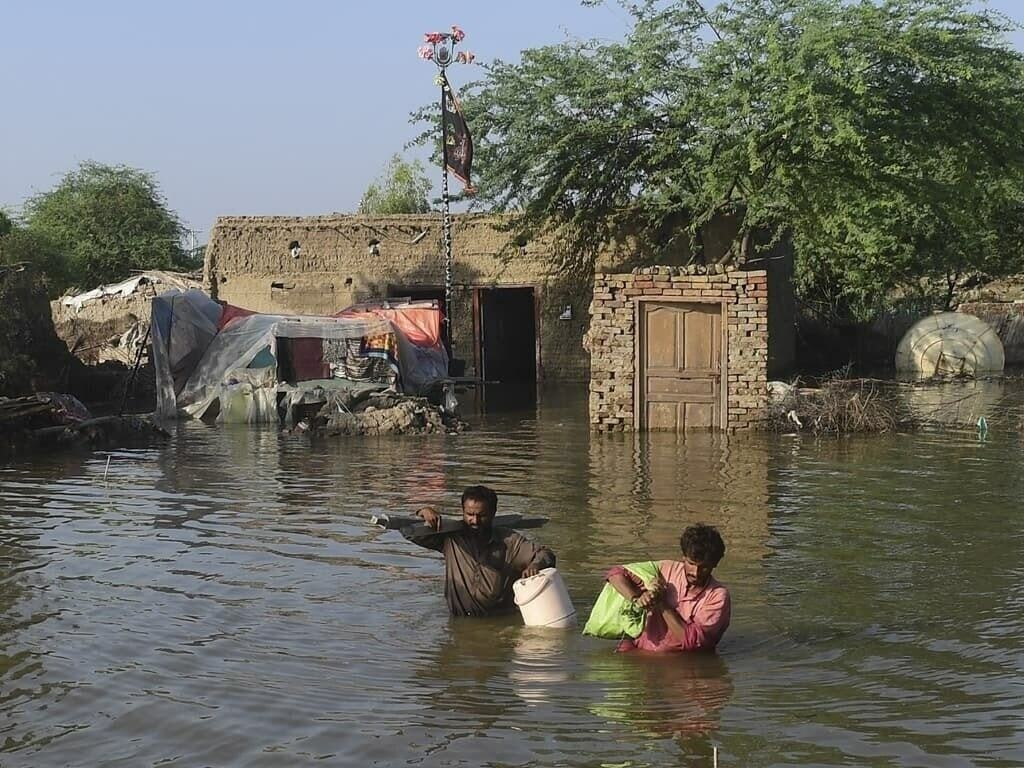
KARACHI: A report says Pakistan’s fragile economy has been dealt a severe setback as the 2025 monsoon floods leave behind destruction on a massive scale, causing nearly USD2 billion in damages to agriculture and infrastructure while threatening the country’s GDP growth, inflation outlook, and external account stability.
According to the latest research report by JS Research analyst Waqas Ghani, figures compiled by the National Disaster Management Authority (NDMA) show that at least 955 people have lost their lives, more than 1,000 have been injured, and over 96,000 displaced citizens are currently sheltering in relief camps.
The catastrophe has torn through Punjab and Khyber Pakhtunkhwa, washing away 672 kilometres of roads and toppling 239 bridges, while destroying 2,216 homes and damaging more than 6,200 others. Livelihoods in rural communities have been decimated as more than 6,500 livestock perished, depriving families not only of income but also of vital sources of food.
Report notes that at the heart of the devastation lies the agriculture sector, which contributes about 22 percent to Pakistan’s GDP and provides the foundation for its textile exports and rural economy.
JS Research estimates crop and livestock losses at USD1.67 billion, with infrastructure damage adding another USD323 million. Cotton, rice, sugarcane, wheat and maize have all sustained heavy losses. Nearly 1.5 million cotton bales have been washed away in Punjab, wiping out up to 30 percent of the province’s crop, with Bahawalnagar district reporting as much as 40 percent destruction.
Rice production has also been shattered, with as much as 60 percent of central and southern Punjab’s crop destroyed, amounting to losses of about 2 million tons. The sugarcane harvest has shrunk by an estimated 12.5 million tons, while wheat has lost about 320,000 tons and maize nearly 600,000 tons.
The immediate consequence is a blow to GDP and exports. Cotton losses will increase reliance on imports at a time when Pakistan had already imported four million bales in FY25, adding USD1.2 billion to the import bill. Every additional one million bales lost is expected to cost the economy USD300 million.
Rice exports worth USD3.5 billion annually are at risk, with each one million tons of destroyed crop resulting in a USD550 to USD600 million loss. Should floodwaters persist long enough to delay wheat sowing, Pakistan may be forced to import up to 15 percent of its total demand, costing as much as USD1.3 billion.
The broader macroeconomic outlook is equally grim. The external account could face a USD1.8 billion setback as lower textile and rice exports combine with rising cotton and wheat imports. Inflation, which had been easing toward a projected 6.5 percent in FY26, is now expected to climb into the 7.5 to 8.2 percent range, with a worst-case scenario echoing the 2022 crisis pushing it toward 9.5 percent.
Copyright Business Recorder, 2025























Comments
Comments are closed for this article.