


RLNG allocation for domestic sector: Ogra advocates careful evaluation
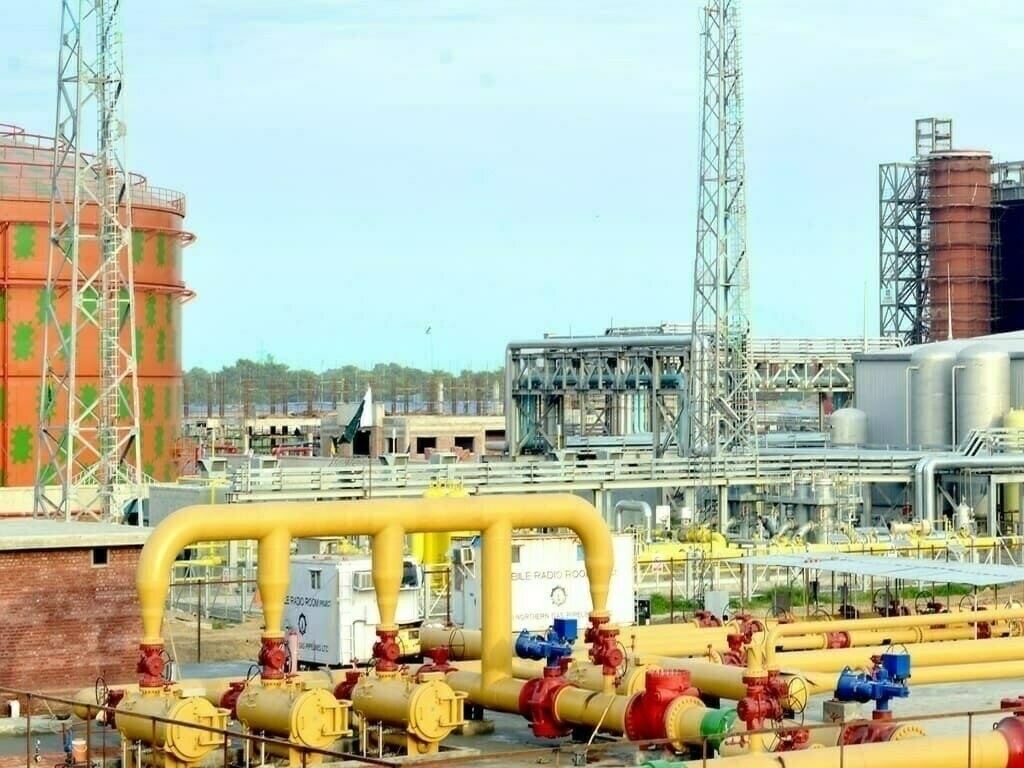

ISLAMABAD: The Oil and Gas Regulatory Authority (OGRA) has emphasised that the allocation of Re-gasified Liquefied Natural Gas (RLNG) for the domestic sector must be carefully evaluated in light of the Net Proceeds for Development (NPD), price disclosures, ongoing and future contract negotiations, and the expiry of the current LNG supply contract in 2031.
The OGRA conveyed these concerns in a proposal submitted ahead of a Pakistani delegation’s visit to Qatar, led by Petroleum Minister Ali Pervaiz Malik, for renegotiation of LNG contracts. The negotiation process is expected to take at least three months.
In its comments on a summary submitted by the Petroleum Division to the Cabinet Committee on Energy (CCoE) — titled “Relaxation of Moratorium for Provision of New Domestic Connections on RLNG” — the OGRA agreed to lifting the moratorium. The authority noted that gas allocation and management fall within the policy jurisdiction of the federal government.
Ogra-determined rates: CCoE set to allow SNGPL, SSGCL to provide RLNG connections
The OGRA highlighted that while the lowest slab of indigenous gas consumers pays a significantly low tariff, RLNG consumers are charged between Rs 3,600 to Rs 4,000 per MMBTU, and LPG consumers pay even more — ranging from Rs 4,705 to Rs 5,500 per MMBTU. It suggested that these price differences should be publicly advertised when seeking consumer consent.
The regulator also warned that rendering the merit of older applications null and void could lead to legal challenges. However, it noted that higher RLNG costs may lead to greater energy conservation by consumers, potentially limiting overall gas consumption.
The oil and gas regulator further stated that declaring the merit of older applicants null and void may result in litigation, adding that there will be more energy conservation by the consumers of costly RLNG, therefore, the overall consumption may not be significant.
The proposed framework for new RLNG based domestic connections proposed by the Petroleum Division is as follows: (i) the annual target for RLNG based domestic connections will be considered/ reviewed by the OGRA based on projected availability of RLNG in the network and capacity of Sui companies to process the applications; (ii) consumers who have already paid the connections fee/demand note/urgent fee for indigenous gas connections will have first priority provided they pay the differential of security and sign the exclusive RLNG Supply Contract.
The merit list for processing all such applications will be assigned from the date of payment of differential of security/demand note fee. Provided further that the Sui companies would demand an undertaking for seeking prior consent of applicant for processing of RLNG connection only; (iii) security deposit and connection fees to be determined by the OGRA from time to time in line with existing practices; (iv) upto 50 percent of the yearly quota of RLNG based domestic connections may be considered for processing on urgent fee basis. These connections will be provided within 3 months of the payment of urgent fee and considering availability of network Merit lists of older applications on indigenous gas will be rendered null and void and only new merit list for demand notices will be issued in RLNG category considering the new application date and date of payment of demand notice; (vi) Sui companies will stop acknowledging new applications for indigenous gas connections and only applications submitted by consumers on RLNG supply would be acknowledged ;(vii) the disconnected domestic consumers with aging of more than one year would be converted into RLNG connections at the time of reconnection subject to signing of revised gas supply contract; (viii) a separate merit list will be maintained by Sui companies for RLNG based new bulk/special domestic connections ; and (ix) the policy of provision of RLNG based domestic connections to all areas will be implemented prospectively.
Ministry of Planning, Development and Special Initiatives, argued that the existing operational indigenous gas connections shall continue to be billed on system gas tariff as approved by Federal Government from time to time. The Ministry of Planning is also of the view that given the back-to-back LNG procurement commitments and declining RLNG demand from the power sector and Captive Power Plants (CPPs) /industries, the proposal to provide RLNG to the domestic sector purely at RLNG prices is supported. However, the proposal be reconsidered to allow applicants already on the waiting list the option to opt for RLNG-based connections before rendering the previous merit list null and void.
The Planning Ministry further noted that while the proposed measure may address the RLNG surplus in the short term, a sustainable solution is essential to avoid recurring reliance on ad-hoc measures that increase consumer burden.
The continued decline in indigenous gas production, rising dependence on expensive LNG, rigid take-or-pay contractual terms, and lack of policy coordination risk adding USD 6-8 billion annually to the import bill by 2030, further aggravating the energy trade deficit already above USD 20 billion.
Policy reforms to incentivise local exploration, address infrastructure constraints, renegotiate LNG contracts for seasonal flexibility, curb flaring of marginal fields, and explore infrastructure options such as additional FSRUs should be prioritized to ensure long-term affordability, energy security, and competitiveness.
Copyright Business Recorder, 2025




















Comments
Comments are closed for this article.