


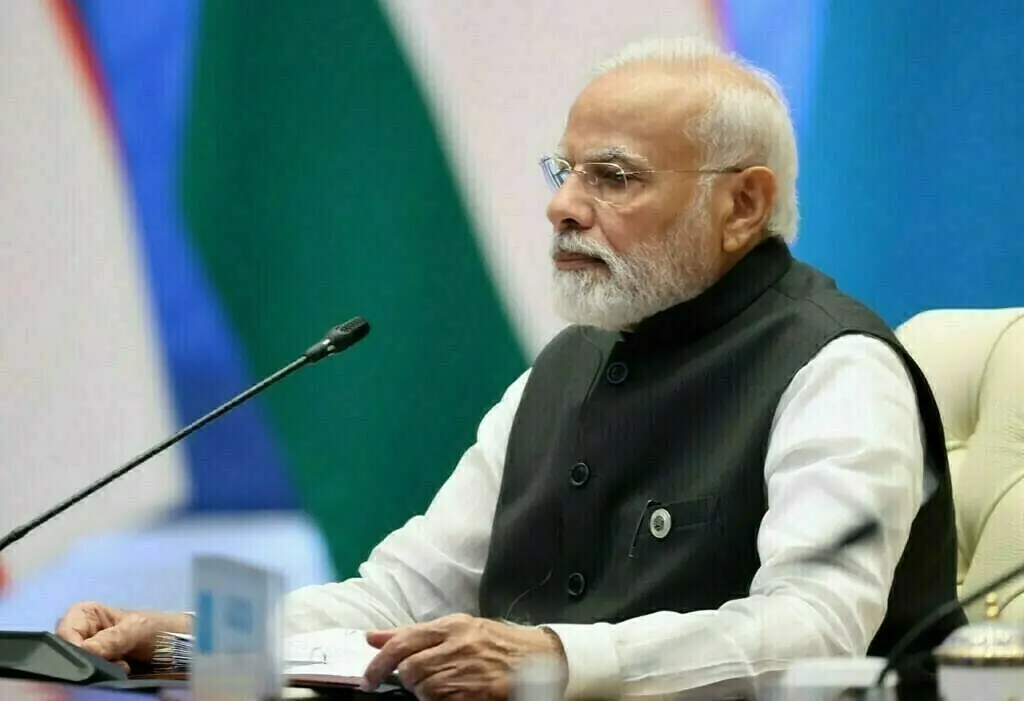

MUMBAI: Indian Prime Minister Narendra Modi’s plans for sweeping tax cuts are at risk of facing a delay as states governed by key opposition parties have sought compensation for any revenue loss from the planned changes.
In a rare move, Modi used his Independence Day speech to announce sweeping goods and services tax (GST) cuts on household items and “aspirational” goods, calling it a Diwali gift ahead of the October festival.
Economists see the tax cuts as a way to balance the likely economic impact of punitive U.S. tariffs on India.
Potential revenue loss
The federal government’s proposal of a two-rate tax structure of 5% and 18%, with some luxury and sin goods such as cigarettes taxed higher at 40%, has broadly been accepted by states, but they are now wrangling to protect revenues after the tax changes.
The proposals could lead to a substantial revenue loss and hurt welfare and development spending, said a statement issued by eight states, including Tamil Nadu, Himachal Pradesh, West Bengal, and Kerala, among others, after a meeting on Friday.
India plans sweeping consumption tax cuts by October to boost economy
They estimated the revenue loss at 1.5 trillion rupees ($16.67 billion) to 2 trillion rupees per year, adding that states will bear over 70% of that loss.
“If states lose 20% of GST revenue, it will destabilise the fiscal structure of state governments across the country,” said Krishna Byre Gowda, revenue minister for the southern Indian state of Karnataka.
The federal government has not shared any estimate of the revenue the exchequer will have to forgo due to tax cuts. However, economists estimate it at 1.1 trillion-1.8 trillion rupees.
Gross GST collections hit a record 22.1 trillion rupees in fiscal year 2025, 9.4% higher than a year earlier.
A final call on any GST changes is taken by the GST Council, chaired by the federal finance minister with state ministers as members, with most such decisions taken unanimously.
The council is scheduled to meet next week.
India panel proposes exempting taxes on health, life insurance
New levy
Opposition-ruled states are proposing a new levy to protect state revenue losses stemming from the GST reorganisation, which comes at a time when an earlier compensation cess is also set to lapse.
This can be done via a levy on luxury and sin goods, the proceeds of which should be passed on entirely to states, the statement said.
India had merged dozens of state taxes by implementing GST in 2017, and assured compensation to its provinces for any losses until 2022.
In 2020, when tax revenues dropped due to the COVID-19 pandemic, the federal government borrowed funds and compensated states through market loans, and also extended the additional levy until June 2026 to repay these borrowings.
The repayments of these loans would be over by October-end, two government sources told Reuters, requesting anonymity as they were not authorised to speak to the media.
It would be illegal to collect this levy after loans are fully repaid, the sources added.
These states have also proposed that the federal government raise loans and compensate them for a minimum of five years for the revenue loss.




















Comments
Comments are closed for this article.