


Hiroshima warns against nuclear weapons as it marks 80 years since A-bomb
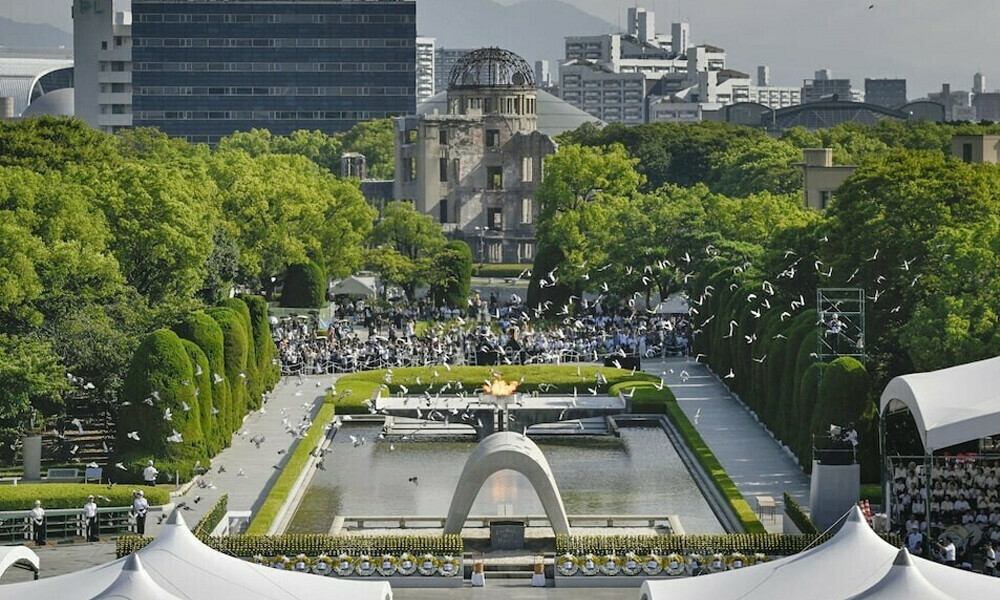

HIROSHIMA: Exactly 80 years since an atomic bomb was used in war for the first time, thousands bowed their heads in prayer in Hiroshima on Wednesday, as the city’s mayor warned world leaders about the nuclear warheads that still exist today.
The western Japanese city of Hiroshima was levelled on Aug. 6, 1945, when the United States dropped a uranium bomb nicknamed “Little Boy”, killing about 78,000 people instantly.
Hiroshima was the headquarters of some military units and a major supply base during World War Two. U.S. war planners calculated that the surrounding mountains would concentrate the force of the bomb and enhance its destructiveness.
In Hiroshima, Nobel Prize brings survivors hope, sense of duty
“Little Boy” unleashed a surge of heat reaching 4,000 degrees Celsius (7,200 Fahrenheit) and radiation that killed tens of thousands more by the end of the year. It was followed by a plutonium bomb on Nagasaki three days later, and Japan’s surrender on Aug. 15.
Representatives from a record 120 countries and territories including nuclear superpower the United States, and Israel, which neither confirms nor denies having nuclear weaponry, attended the annual ceremony at the Hiroshima Peace Memorial Park for the milestone year.
After a moment of silence observed at 8:15 a.m., the exact time of the blast, mayor Kazumi Matsui called on leaders to heed the lessons of Hiroshima and Nagasaki and warned of the consequences of the global trend towards a military buildup.
“Among the world’s political leaders, there is a growing belief that possessing nuclear weapons is unavoidable in order to protect their own countries,” he said, noting that the U.S. and Russia possessed 90% of the world’s nuclear warheads.
“This situation not only nullifies the lessons the international community has learned from the tragic history of the past, but also seriously undermines the frameworks that have been built for peace-building.
“To all the leaders around the world: Please visit Hiroshima and witness for yourselves the reality of the atomic bombing.”
Yoshikazu Horie, a 71-year-old tourist, expressed a similar sentiment.
NATO boss says Iran must not develop a nuclear weapon
“It feels more and more like history is repeating itself. Terrible things are happening in Europe … Even in Japan, in Asia, it’s going the same way, it’s very scary,” he said.
“I’ve got grandchildren and I want peace so they can live their lives happily.”
In the decades following the attacks, those who survived, called “hibakusha”, often faced discrimination as rumours spread that they carried diseases and their offspring could be tainted.
Hiroshima marks a-bomb anniversary, calls nuclear deterrence ‘folly’
Their numbers fell below 100,000 for the first time this year.
Japan, the only country to have suffered nuclear attacks, has stated its commitment to nuclear disarmament but is not a signatory or observer of the U.N. treaty to ban nuclear weapons.




















Comments
Comments are closed for this article.