


Dar urges urgent global financial reforms to save SDGs at UN Forum
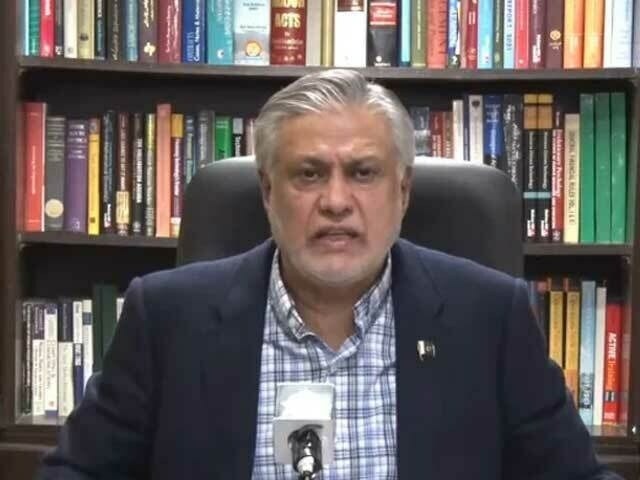

NEW YORK: Pakistan’s Deputy Prime Minister Ishaq Dar delivered a strong call for sweeping global financial reforms during his address at the UN High-Level Political Forum (HLPF) debate, warning that the world is far off track in achieving the 2030 Sustainable Development Goals (SDGs).
He stated that with only five years left until 2030, just 35 percent of the SDGs are currently on course. The Deputy Prime Minister blamed the reversal in development progress on the compounded impacts of the COVID-19 pandemic, global food, fuel, and financial crises, and the growing intensity of climate change—all of which have undermined hard-won gains and worsened inequality worldwide.
Despite these global setbacks, Dar emphasised that Pakistan remains fully committed to the 2030 Agenda. He highlighted that the country’s national development strategies, including its “Udan Pakistan” framework, are closely aligned with the SDGs.
Dar said Pakistan’s social protection initiatives, such as the Benazir Income Support Programme and the Benazir Nashonuma child development scheme, are aimed at ensuring inclusivity and preventing marginalisation. To empower the youth, Pakistan has launched the Digital Youth Hub, while efforts are underway to expand access to quality education through smart schools and new university campuses.
On the climate front, Dar noted Pakistan’s ambition to achieve 60 percent renewable energy by 2030, along with resilience-building projects like Recharge Pakistan and the Living Indus initiative. He added that the country’s updated Nationally Determined Contribution (NDC) on climate action is in its final stages.
Alongside its climate efforts, the government has introduced key economic reforms to ensure fiscal stability and create a more investor-friendly environment. He said that the Special Investment Facilitation Council (SIFC) is playing a central role in attracting foreign direct investment into key sectors of the economy.
However, Dar cautioned that national-level efforts alone are insufficient to bridge the global development gap. He stressed the need for deep reforms in the international financial architecture to support SDG implementation, particularly in developing countries.
He called for expanded access to concessional and grant-based resources, meaningful debt relief, and increased climate finance to enable countries like Pakistan to meet the financial requirements of sustainable development.
Dar referenced the Compromise of Seville, adopted at the Fourth World Conference on Finance for Development, describing it as a clear and actionable roadmap. He urged the global community not to delay its implementation any further.
As the world marks the 80th anniversary of the United Nations, Dar said the Secretary-General’s UN80 initiative provides a critical opportunity to strengthen the UN’s three core pillars—peace, development, and human rights—and to ensure that the SDGs are achieved on time, not just in principle but in practice.


























Comments
Comments are closed for this article.