


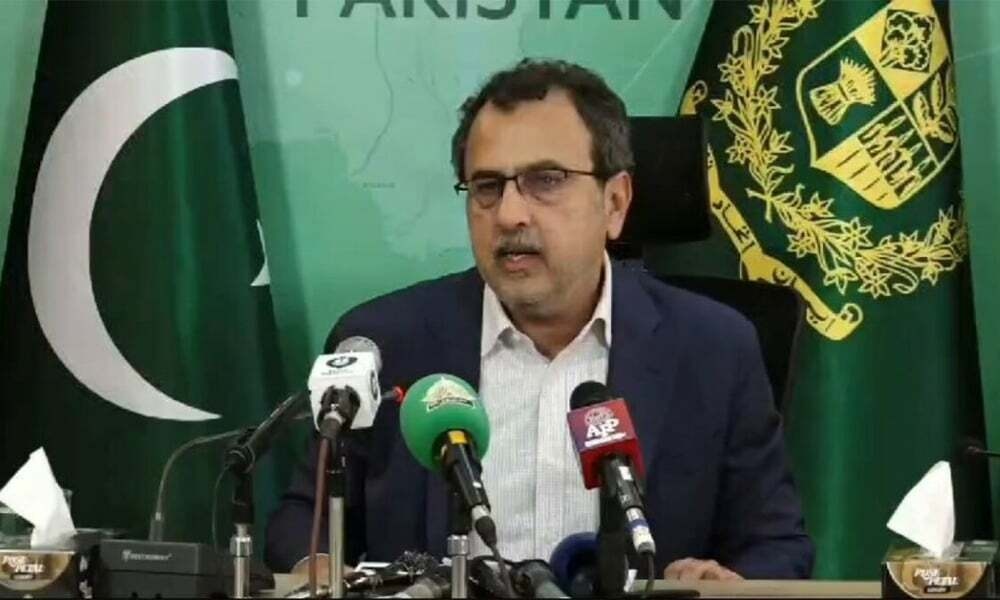

ISLAMABAD: Minister for Power, Sardar Awais Ahmad Khan Leghari, on Thursday staunchly defended the Economic Merit Order (EMO), declaring that any attempt to alter it would be a “grave sin” (Gunnah Kabeera). He urged the Petroleum Division to review Liquefied Natural Gas (LNG) contracts—if necessary—just as the Power Division had done with Independent Power Producers (IPPs).
Leghari made these remarks during a press conference focused on the performance of Distribution Companies (DISCOs) in curbing power sector losses.
Highlighting improved operational efficiency, the Minister revealed that Pakistan saved Rs191 billion in FY 2024–25. Power sector losses were reduced to Rs399.7 billion, down from Rs590.9 billion in FY 2023–24.
According to documents, amount of total billing was Rs 3.925 trillion, of which share of IESCO was Rs 502.75 billion, LESCO, Rs 995.95 billion, GEPCO, Rs 452.72 billion, FESCO 580.55 billion, MEPCO, Rs 620.32 billion, PESCO, Rs 29.8 billion, HESCO, Rs 156.43 billion, QESCO, Rs 124.60 billion, SEPCO, Rs 92.82 billion and TESCO, Rs 49.25 billion. The figures show reduction in recovery of Rs 132 billion between billing and recovery for FY 2024–25. Insiders have reportedly raised concerns regarding recoveries in the last quarter of the fiscal year especially in five top loss making Discos i.e. PESCO, HESCO, QESCO, SEPCO and TESCO. Power Division, however, has not shared figures of recovery, which creates doubts about the claims of recovery.
System constraints: KE says unable to get more than 2,000MW from national grid
“This significant reduction is due to better performance by DISCOs. If these losses had been avoided, it would have been easier to pay off the country’s debt,” he noted.
Leghari admitted that the performance of Sindh-based DISCOs remained the poorest, and despite multiple efforts, the Power Division had been unable to replace the Boards of these companies.
Responding to remarks by Petroleum Minister Ali Pervaiz Malik regarding LNG supply losses caused by underutilization by power plants, Leghari clarified that Malik was referring to contracts signed by previous governments.
“Ali Pervaiz Malik is a close friend, and his concerns are valid if the contracts are flawed,” Leghari said. “Power plants operate under the EMO, which prioritizes electricity generation from the cheapest sources. If RLNG plants don’t qualify under EMO, they simply can’t be operated,” he explained.
“I consider any deviation from the EMO a grave sin. If there are issues with LNG contracts, they must be reviewed—just as we reviewed the IPP agreements.”
On net metering, the Minister announced that work on revising the rate of return had been completed, and a summary would be submitted to the Federal Cabinet within one to two weeks.
“Our aim is to ensure that net metering remains sustainable and does not impose a financial burden on other electricity consumers,” he said. He emphasized that the current rate of return on solar net metering is not justified and must be revisited. “If the net metering rate is not revised, it could add Rs3 trillion per annum to the bills of existing consumers,” he warned.
ON the matte of K-Electric (KE) and its Fuel Cost Adjustment (FCA), Leghari noted that the Power Division may seek a review of NEPRA’s recent decision, citing the Cabinet’s role in policy oversight. “K-Electric is currently drawing 1,600 MW from the national grid, and this may rise to 2,000 MW,” he said.
“If KE draws more power, a uniform tariff should be applied to ensure fairness.”
Regarding the Competitive Trading Bilateral Contract Market (CTBCM), Leghari confirmed that a summary for final approval would soon be submitted to the Cabinet.
He also shared updates on surplus electricity: “We are in talks with the IMF and international development partners to utilize 7,000 MW of surplus electricity at discounted rates to support economic growth.”
Responding to another question, Leghari revealed that he had written to provincial Chief Ministers requesting the discontinuation of Electricity Duty (ED) from July 1, 2025.
“In the letters, I made it clear that the federal government cannot act as a collecting agent on their behalf,” he said.
“We did what was within the federal government’s control at the time. The PTV fee has already been removed from electricity bills. So far, only one Chief Minister has responded regarding the abolition of ED. Once I receive replies from the other three, I will escalate the matter to the Prime Minister.”
The Minister further stated that the base tariff had been reduced for FY 2025–26 due to the termination or renegotiation of contracts with IPPs and Government Power Plants (GPPs). He anticipated that the tariff would remain stable throughout FY 2025–26.
He also reported progress in negotiations with the remaining IPPs, including wind power producers, promising to update the media on developments.
In a stern message regarding electricity theft, Leghari said that in the Lahore Electric Supply Company (LESCO), major industries and furnace oil-based power plants were involved in large-scale theft. “LESCO has launched a major operation to curb this. In some cases, a single industrial unit was found to be stealing more electricity than an entire village,” he said.
“We will continue these improvements into next year, and losses will be reduced even further. Next year will be customers’ satisfaction year. Apna Meter Apni Reading is one of the steps in this direction,” the Minister concluded.
Copyright Business Recorder, 2025

























Comments
Comments are closed for this article.