


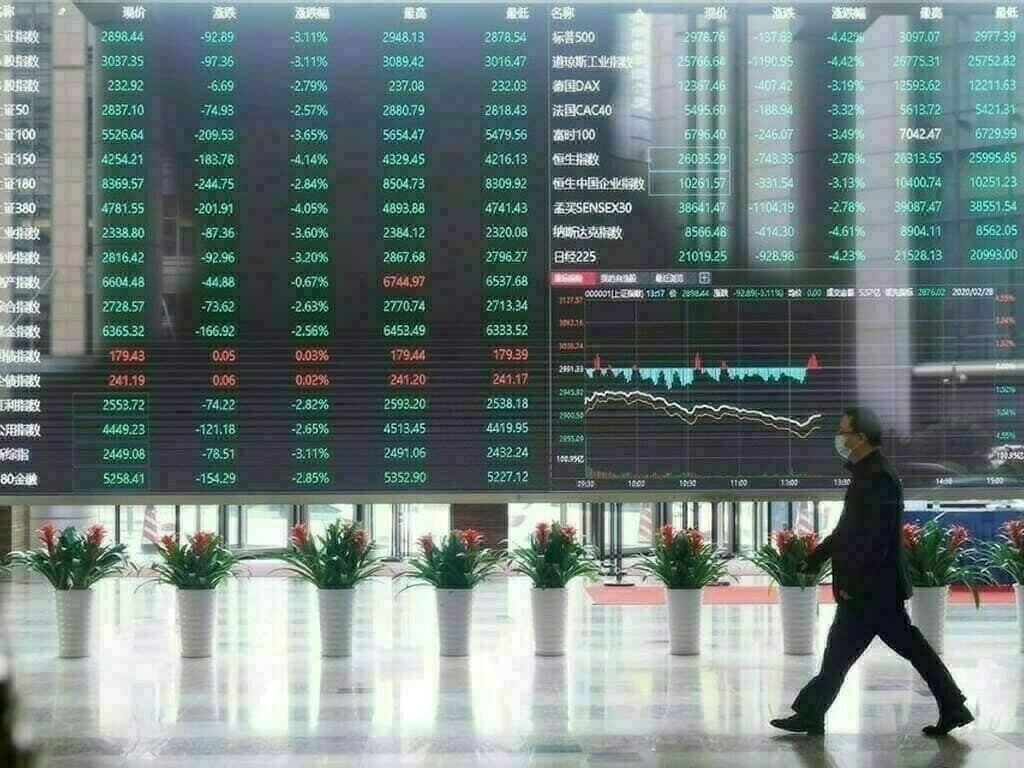

SHANGHAI: Shanghai stocks closed at a more-than-six-month high on Wednesday, while Hong Kong ended at its loftiest since March, boosted by a ceasefire between Israel and Iran, as well as some hopes of an earlier-than-expected US Federal Reserve rate cut.
The ceasefire brokered by US President Donald Trump between Iran and Israel appeared to be holding on Wednesday, a day after both countries signalled that their air war had ended, at least for now.
“Tensions between Iran-Israel will be eyed as financial markets remain hopeful that a delicate ceasefire between the two nations would hold,” analysts at UOB said in a note.
At the close, the Shanghai Composite index was up 1.04% at 3,455.97 points, the highest close since December 12, 2024.
The blue-chip CSI300 index was up 1.44% at 3,960.07 points, the highest closing level since March 20.
The smaller Shenzhen index ended up 1.41% and the start-up board ChiNext Composite index was higher by 3.113%.
Brokerage shares led the gains, with CSI securities sub-index rallying 5.48%. Defence shares were also among top winners, with the sub-index jumping 3.68%.
Meanwhile, China’s Premier Li Qiang said on Wednesday that he was confident the country could maintain a “relatively rapid growth rate” and transition from a manufacturing-led economy to a consumer-driven one.
In Hong Kong, the Hang Seng index was up 1.23% at 24,474.67 points, the highest closing level since March 19. The Hang Seng China Enterprises index rose 1.13% to 8,859.29 points.
Separately, Fed Chair Jerome Powell said on Tuesday that higher tariffs could begin raising inflation this summer, a period that will be key to the US central bank considering possible interest rate cuts.
“While Powell reiterated the message that Fed need not rush to cut, he did suggest that the Fed may cut rates sooner rather than later if inflation pressures remain contained,” OCBC analysts said in a note. “But he was careful in not committing to a timeline.”
Fed rate cuts could aid Hong Kong stocks as they are closely tied to global monetary policy shifts.


























Comments
Comments are closed for this article.