


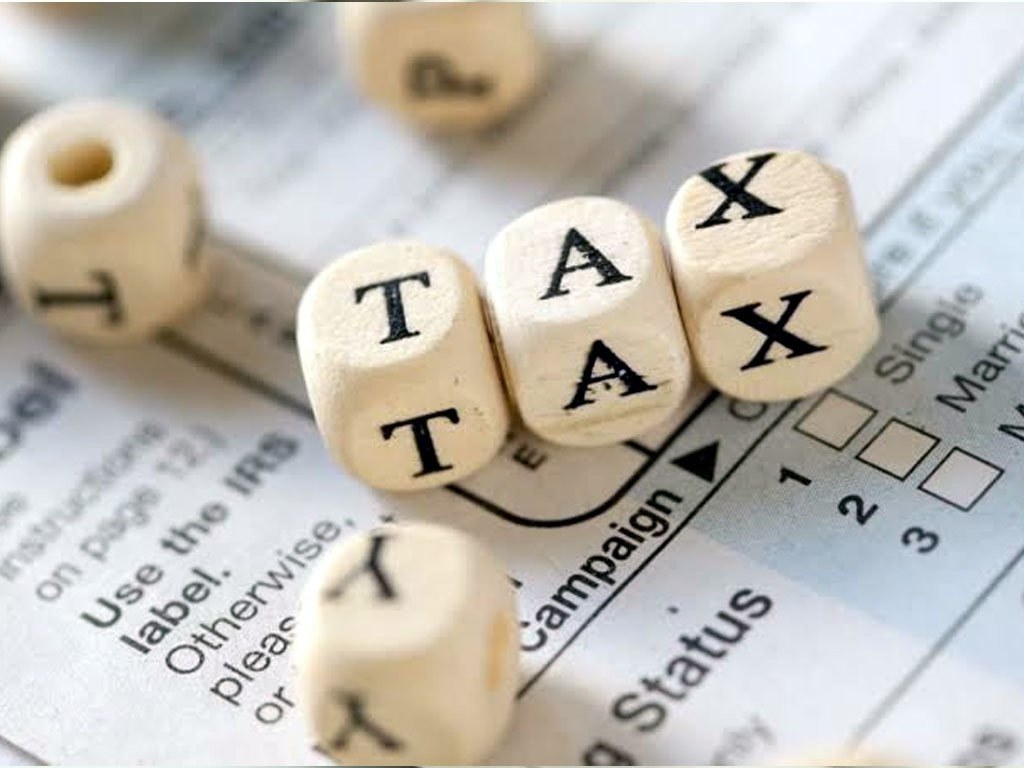

Did you know that Pakistan has not ever been able to frame any income tax act after due debates in the assembly, not once since independence? The country has had two ordinances on income tax, both promulgated under military dictatorships. If that isn’t shocking, then what is? Perhaps the fact that all the champions of democracy from the country’s civilian leadership – be it leaders from the PPP, the PML-N, or the PTI – have not found the time to fix this historical wrong, nor even straighten the well recorded flaws of the currently implemented 2001 ordinance? These are just some of the many findings of Huzaima Bukhari’s and Ikramul Haq’s latest book on taxation.
Published by Pakistan Institute of Development Economics (PIDE), the book titled ‘Tax Reforms in Pakistan: Historic & Critical View’ flags a host of problems in the country’s taxation system, and their potential solutions. These include the need for simplicity of taxes; aligning tax policy with economic policies; doing away with confiscatory taxation; setting up a national tax agency and proper tax tribunals and much more that readers of the duo’s op-ed columns in this newspaper would be all too familiar with.
Whilst all of these issues and proposed solutions warrant rich debate in the parliament and outside, one that particularly piques interest is documentation.
The authors highlight that FBR’s recent pursuit of transaction tax as documentation measure was flawed in its intent and impact. It’s a theme that PIDE’s VC Nadeem ul-Haq also stresses upon in his foreword to the book. “There are no good and bad transactions. Documentation is a tax on transactions. The primary reason for much of the legal framework and government machinery is to facilitate transactions,” wrote ul-Haq, flagging earlier in his foreword that “PIDE has estimated that the cost of documentation may be as large as Rs. 250,000 a year (excluding premises, utility and other charges), an onerous amount for small businesses.”
Yet there is clear evidence, as authors show in their book on number of occasions, that large sections of economy such as wholesale and retail trade, and “a large number of entities remain out of the tax net due to lack of proper documentation; hence, devising a system to address the issue of poor documentation should be the top priority.”
“Undoubtedly, poor documentation and weak enforcement are the main reasons for low tax contribution”, authors note, adding that “unfortunately no serious effort has ever been made in Pakistan to devise a rational tax policy for encouraging industralisation through corporatization of business leading to economic growth and documentation of economy.”
Perhaps, therefore, the debate should begin from the subject of documentation. Whether or not transactions should be recorded formally, with or without taxation or tax rates regardless? If only some kind of transactions be recorded, then who shall be exempted and who shall decide such favours.
One would have thought that with the commutation over taxation over the last decade, Pakistan’s public and private sector would have at least had invested in time and money over researching on questions like these within the overarching theme of tax policy, administration and tax law.
It’s rather unfortunate, ul-Haq notes, “Huzaima and Ikram are the only researchers to focus on this subject. I am afraid even academics are seriously remiss in producing enough material to help develop a much-needed revision of the law”. Then again, as authors note, “it is difficult to determine the actual tax bases” ….“due to the large size of undocumented economy and lack of reliable data”.
Both the authors, Huzaima and Ikram, and PIDE’s VC are looking forward to a debate on the findings of this book. In Pakistan such debates often take the shape of seminars, conferences, newspaper op-eds and television shows; and hardly in the parliament. Perhaps, therefore, it is time to reflect on the theory of change. Whilst all these platforms are important, there is one platform that hasn’t yet been tapped as much as far Pakistan’s key economic issues are concerned: simple tutorial-like videos for complex problems that TikTok, Instagram and YouTube surfers can watch and share and be informed.
The DFID-funded Raftaar campaign had experimented with it albeit with not much results before the switch was turned off. Be that as it may, if documentation is a problem in need of public debate, as the book in review shows, then best create awareness among the populace, and get people talking across regions and languages. Even if it doesn’t lead to spring of parliamentary debates on taxation, democratic disposition requires that the people know. Perhaps there should be a start-up for simplifying books and debates like these on social media! Would social enterprise investors, incubators, accelerators please stand up?



















Comments
Comments are closed for this article.