


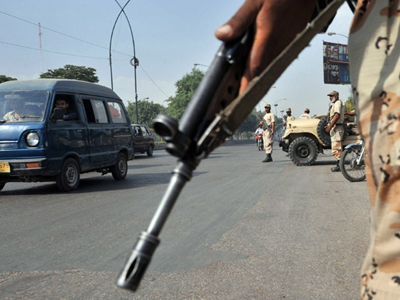
 Raging sectarian hatreds claimed the lives of three Karachi lawyers from the same family - a father, a son, and a nephew - on Wednesday, brining the number of such killings in the first month of the new year to six. Just a day earlier, two lawyers who served as legal advisers with the Ahle Sunnat Wal Jamaat were shot dead. Five of these murders took place in Karachi South's red zone, where additional measures have been put in place to prevent terrorist attacks. That obviously did not help although a police party was present near the scene of the killings. In fact, the policemen acted safe, firing into the air instead of targeting the gunmen who made good their escape. Sindh Home Minister Manzoor Wassan reacted by suspending the area's SHO and forming two police parties to conduct an investigation. An indignant Supreme Court Bar Association President Yaseen Azad gave a countrywide strike call to protest the unabated killings of lawyers. Notably, as many as 24 lawyers have been killed in Karachi in a year's time which calls into question the Sindh government's resolve to address the situation. Most of these people were engaged in defending sectarian activists in courts. Two factors stand out as the cause of these crimes in the press reports examining the circumstances surrounding the latest killings. One, the police are reluctant to book cases against the perpetrators. Cases are usually registered against unidentified persons despite the complainants naming suspects. Police inaction encourages vendetta killings. Second, activists of proscribed sectarian outfits remain free to pursue their violent agendas. Clearly, it is not enough for the government to declare a ban on such extremist organisations, it must also ensure that they do not resort to violence against their rival groups. That it is not happening is plain from the remarks of a senior police official who told a section of the press that sectarian violence increased after the release in 2009 of a prominent activist of a banned outfit, who reorganised his group and started killings. It needs to be recognised that these are not freelance extremists. They have links to bigger, and in some instances, outside interests. There is a method to their madness. It is imperative therefore that the government looks at the bigger picture to stop this bloodletting. Towards that end, it must reach out to leaders of the rival sects to persuade them to rein in their followers. Equally important is the need to control the funding of all seminaries and sectarian organisations. Those willing to cooperate may be allowed to keep the donations. Monetary incentive or restriction, as the case may be, may work more effectively than any other measure. Copyright Business Recorder, 2012
























Comments
Comments are closed for this article.