


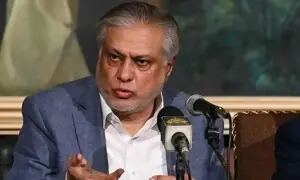
Most bankers believe in continuous improvement in the delivery of financial services and recent innovations in the field have made their task comparatively easier. In keeping with this tradition, the State Bank Governor, Shahid Kardar on 9th May 2011 launched the Financial Innovation Challenge Fund (FICF) of 10 million pounds and unveiled its first phase of Government to Person (G2P) Payments.
Delivering his keynote address at the "Branchless Banking: Government to Person (G2P) Payments Conference 2011," he said that the FICF would provide grants to foster innovations, test new markets, lower the cost of service delivery, enable systems and procedures to be more efficient and provide new ways of meeting the unmet demand for financial services. In Pakistan, G2P payments had typically utilised only location-specific cash payments.
The FICF would enable banks, public sector institutions, micro-finance institutions, government agencies, pension funds to provide G2P payments through bank accounts and branchless banking outlets and also provide other services to the G2P payment beneficiaries. Broader and deeper alliances between government agencies and financial services providers would leverage the existing banking and agent networks to engage in the distribution of G2P payments.
Shahid Kardar also highlighted the key benefits of automating G2P payments and said that this would reduce the time lag in delivery and monetary inefficiencies due to leakages and corruption in the system and allow better targeting of subsidies. Besides, the e-payments would assist small businesses such as grocery stores and agents, to create new opportunities in existing business infrastructures and enable small business owners to earn commission for providing an automated service point.
According to the Governor, the outcome will not just be direct but also indirect because of externalities, whose benefits would be difficult to quantify but could be around one percent of GDP. The launching of the FICF is definitely a good effort to make greater use of the innovations in the banking industry in other countries and widen the reach of financial services in Pakistan.
It was also natural to cover G2P payments under the first phase because payments like wages, pensions and social benefits under the BISF, Watan Card and World Food Programme are quite substantial, in both numbers and volumes, in Pakistan and this promises a considerable opportunity to link a large proportion of unbanked people to the financial system. In addition, payments that are not made by the government but by donor agencies could benefit from the e-payment system to reach the targeted population easily and without much fuss. However, this would be just the beginning.
The Financial Inclusion Programme (FIP), sponsored by the UK Aid, which has earmarked 10 million pounds for the FICF, is not only meant for G2P payments but could cover a very wide-range of activities to help the financial sector reach the "excluded" with the use of innovations. To start with, an FICF Advisory Committee has been set up and an assessment criteria fixed to determine the eligibility of the applicants to avail its expertise and resources. Hopefully, the success of the project would facilitate the people at large, assist the small businesses to grow, inculcate banking habits across the country and raise the saving rate in the economy to a certain extent.
The project could also lead to the popularity of micro-finance and greater opportunities for gainful employment. We hope that the State Bank and other financial institutions would like to ensure that the funding provided for the project by an outside agency is put to optimal use and not squandered away like in certain other cases. However, it is necessary to point out that such initiatives are more useful in a growing or at least a stable economy, because of a close link between the real sector and the financial sector. A highly dynamic banking system may be necessary but is not a sufficient condition for a vibrant economy.




















Comments
Comments are closed for this article.