



 BEIJING: China said it successfully launched an unmanned spacecraft on Tuesday to carry out a key docking mission, taking its next step towards the goal of building its first space station by 2020.
The Shenzhou VIII blasted off from the Gobi desert in China's northwest at 5:58 am (2158 GMT), the state Xinhua news agency said.
It then separated from its carrier rocket, a modified Long March-2F, about 200 kilometres (120 miles) above the Earth.
The commander-in-chief of China's manned space programme, Chang Wanquan, said the spacecraft had successfully entered a low Earth orbit.
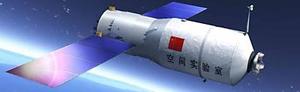
It is due to join with the Tiangong-1 or "Heavenly Palace" experimental module in two days in what would be the country's first space docking.
The docking is part of China's preparation for building its first space station by 2020, where astronauts can live for several months, as they do on NASA's International Space Station.
The technology for docking in space is hard to master because the two vessels, placed in the same orbit and revolving around Earth at some 28,000 kilometres per hour, must come together progressively to avoid destroying each other.
If it is a success, China will launch another two spacecraft next year to conduct more docking experiments.
At least one will be manned, and two female astronauts are among those being trained for the mission, according to Xinhua. If they are chosen, they will be the first women China has sent into space.
China began its manned spaceflight programme in 1990 after buying Russian technology and in 2003 became the third country to send humans into space, after the former Soviet Union and the United States.
China sees its ambitious space programme as a symbol of its burgeoning global stature.
Tuesday's launch was attended by Chinese Vice Premier Zhang Dejiang, as well as senior experts from the European Space Agency and the German Aerospace Center, Xinhua reported.
The launch of Tiangong-1 on September 29 -- ahead of China's National Day on October 1 -- was attended by Premier Wen Jiabao, while President Hu Jintao watched from a space flight control centre in Beijing.
But Beijing is playing catch-up in the space arena. The planned space docking will only emulate what the Americans and Russians achieved in the 1960s.
Xinhua said docking technologies were crucial to the success of China's ambitions for a space station.
It said the docking would take place 343 kilometres above the surface of the Earth. The spacecraft will return to Earth after two docking operations.






















Comments
Comments are closed for this article.