



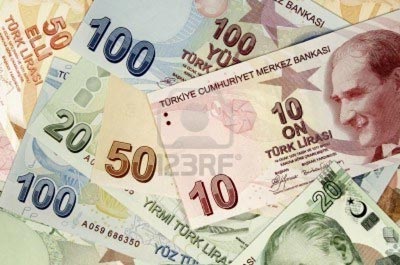
 ANKARA: Turkey's lira weakened slightly on Monday, a day after a car bomb in the capital Ankara killed at least 37 people and raised fears over stability in the country as it battles Kurdish rebels in the southeast and Islamic State militants in Syria.
As with previous attacks, the impact of the bombing on financial markets was muted and analysts said security risks had largely been priced into the Turkish market. Nevertheless by 1429 GMT the lira had slipped to 2.8802 against the dollar compared to 2.8650 at the close of Friday.
Attacks in Ankara and Istanbul over the last year have increased concerns among investors for the longer-term political and economic stability of NATO member Turkey, which is wrestling with prolonged separatist Kurdish violence in its impoverished southeast and shares borders with war-racked Syria and Iraq.
And not all analysts are convinced that markets have fully priced in the threats facing Turkey.
"All in all, we remain wary of a possible escalation of the conflicts that Turkey is involved in, and stick to our long-held view that the current level of short-term rates is inadequate to cover the risks," brokerage Finansbank said in a note.
Investors are also concerned about Turkey's economic challenges as President Tayyip Erdogan keeps up his pressure on the central bank to hold down borrowing costs despite rising inflation and currency weakness in order to safeguard growth.
The bank kept interest rates on hold for the 12th consecutive month in February, even though the volatile lira is more than 8 percent weaker than a year ago.
The main share index was in line with emerging market peers on Monday, up 0.62 percent to 79,874 points.
The benchmark 10-year government bond yield fell to 10.09 percent compared to 10.11 percent on Friday.

























Comments
Comments are closed for this article.