


Bank of England to sit tight on rates, QE: analysts

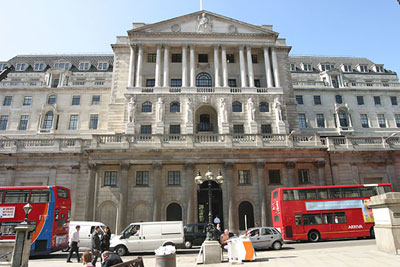 LONDON: The Bank of England is set to keep its key interest rate at a record low 0.50 percent on Thursday to support Britain's weak economy but will resist calls to pump out new money, analysts said.
The BoE's main lending rate has stood at an all-time low since March 2009, when the central bank also decided to begin injecting #200 billion ($321 illion, 228 billion euros) into the economy under a policy known as quantitative easing.
With Britain enjoying only anaemic growth amid fears of a return to global recession, business leaders have suggested that the BoE's nine-member Monetary Policy Committee could launch a new round of QE, or the pumping out of new money via the purchase of government and private assets.
But opponents of the policy argue that fresh stimulus would fuel inflation, which in Britain is already far above the BoE's target rate.
"The MPC looks set to maintain the bank rate at 0.5 percent on Thursday" following its latest monthly meeting, said Investec economist Philip Shaw.
"Further QE is possible over the coming months, but the high prevailing rates of inflation are likely to dissuade members from sanctioning further sset purchases unless there are signs that the UK is re-entering a lasting downturn."
British 12-month inflation stood at 4.4 percent in July, while the BoE is forecasting it to hit 5.0 percent later this year, driven by soaring domestic nergy bills.
The British central bank's main task is to use monetary policy as a tool to keep the annual inflation rate close to a target of 2.0 percent.
Taking into account the current inflation picture, Capital Economics analyst Jonathan Loynes predicts that the BoE will begin another round of QE totalling #50 billion in February.
"However, we would certainly not rule out earlier and more aggressive action if the news on the economy remains as weak as that seen over recent weeks," he added.
Britain's economy slowed sharply in the second quarter, posting growth of only 0.2 percent after 0.5 percent in the first three months of the year, according to recent official data.
Also on Thursday, the European Central Bank is likely to signal a halt to its rate hike cycle at its meeting and keep borrowing costs at 1.50 percent, as the eurozone debt crisis undercuts growth in the 17-country bloc.
After two controversial rate increases in April and July, some even expect a reversal in policy with interest rate cuts in the coming months, after core economies France and Germany reported a sharp slowdown in growth.
Copyright AFP (Agence France-Presse), 2011
















Comments
Comments are closed for this article.