



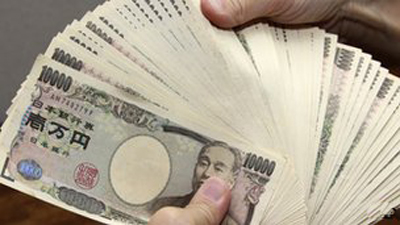
 LONDON: Investors sought refuge in the traditional security of the yen and Swiss franc on Friday after U.S. President Barack Obama approved air strikes in Iraq, adding to tensions in the Middle East and Ukraine which have unnerved global financial markets.
Obama said in an address that he authorised targeted strikes to protect the besieged Yazidi minority and U.S. personnel in Iraq, after the Iraqi government requested help.
The benchmark U.S. Treasury yield fell to a 14-month low as bond prices rose in the wake of the air strike news, helping to weaken the dollar almost half a percent against the yen. The franc gained a quarter of a percent.
"President Obama's authorisation of selective air strikes on Iraq has dominated overnight market movements," said Adam Cole, head of G10 currency strategy at RBC Capital Markets in London. "All markets, including FX, have a severe risk-off tone."
Currency markets in general have been relatively resistant to concerns over the situation in Ukraine, Gaza or Iraq, but there is growing concern that a mix of growth-sapping sanctions and potentially higher oil prices could derail the global economy.
That has begun to overshadow the past month's big play - a push by the dollar to 11-month highs that has supported speculation the U.S. currency was finally on track for a longer-term rally.
The euro also recovered, briefly blipping back above $1.34 before consolidating to trade 0.1 percent higher on the day at $1.3394.
"Geopolitics is muscling out the Fed as the primary market focus," analysts from Citigroup said in a morning note, referring the discussion of U.S. growth and Federal Reserve monetary policy which has markets this year.
"In the case of EURUSD we are dealing with positioning squeeze more than anything else. We saw waves of profit taking in long dollar positions against the yen and franc. Now it's the euro's turn it seems with investors closing short positions."
Tokyo's Nikkei stock average shed 3 percent and other Asian bourses also fell across the board. The yen strengthened further in early European deals to gain 0.4 percent on the day at 101.73.
"Now it's up to how far the flight from risk assets will go. There are many views on the U.S. involvement in Iraq, but it doesn't look like the operations will end any time soon," the trader said.
A Russian ban on Western food imports is expected to weigh chiefly on European growth and the euro.
"Broadly speaking dollar/yen is still in a range centred around 102. But it failed to establish a foothold above 103 last week after the weaker-than-expected U.S. non-farm payrolls," said Masafumi Yamamoto, market strategist at Praevidentia Strategy in Tokyo.
"With the economic impact of the Ukrainian conflict now drawing more attention and Treasury yields declining, downward bias for the dollar is building," he said.




















Comments
Comments are closed for this article.