


Syria's Assad rejects UN chief's calls

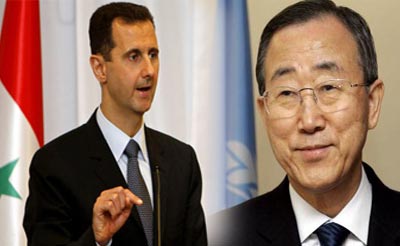 UNITED NATIONS: Syrian President Bashar al-Assad is refusing to take telephone calls from UN chief Ban Ki-moon, an outspoken critic of the crackdown on opposition protests, officials said Friday.
Ban tried to call Assad on Thursday but was told the Syrian leader was "not available," UN spokesman Martin Nesirky told reporters.
The UN leader has had three stormy telephone calls with Assad since protests, which rights groups say have left at least 1,100 dead, started in March.
Ban said last month that Assad had complained to him: "Why do you keep calling me?"
Assad promised in one call to let UN human rights investigators probe events in Syrian protest cities such as Daraa. The team has not been allowed into Syria, however.
Last week, Ban called the events in Syria "violent repression" and said he was "deeply troubled by the continued serious violations of human rights, including disturbing reports of the deaths of children under torture, live ammunition and shelling."
The United States meanwhile called for greater international pressure on Syria but UN Security Council diplomats said no progress had been made in talks on a proposed European resolution condemning Syria's deadly crackdown.
With Britain, France, Germany and Portugal showing growing frustration at opposition from some of the 15 council members, talks were set to be extended through the weekend.
Russia and China have strongly opposed Security Council action against Assad's crackdown and could veto the measure if it came to an official vote. South Africa, Brazil and India have also expressed strong reservations about the European resolution, which has been amended in a bid to win them over.
New talks were arranged for Saturday. The European countries say they would like a council vote as soon as possible but their efforts are being frustrated by the lack of support from the new powers.
European diplomats say the new deaths in Syria and the flow of refugees into Turkey has made Security Council action more urgent. Turkey's Prime Minister Recep Tayyip Erdogan, an Assad ally, deplored the "atrocity" of killing protesters.
With the deteriorating events, "it really is time for these leading democracies and would-be permanent (Security Council) members -- Brazil, South Africa and India -- to at least start discussing what the Security Council's response could be," said one Western diplomat.
The European countries say they have at least nine votes on the council and hope for 11.
Copyright AFP (Agence France-Presse), 2011




















Comments
Comments are closed for this article.