



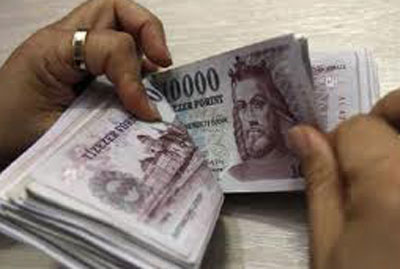
 BUDAPEST: Hungary led a fall of Central European currencies and bonds on Wednesday, after its central bank cut rates, triggering concern over demand at an upcoming government bond auction on Thursday, and as violence worsened in neighbouring Ukraine.
The forint weakened more than 1 percent against the euro, dipping at one point to a 2-year low of 314.40.
Hungarian government bond yields rose by 15-20 basis points, which dealers blamed largely on the central bank's insistence on rate cuts.
The prospect of a flood of refugees from Ukraine weighed on sentiment throughout the region.
Most equities in the region hardly moved, but shares in Hungary's biggest lender OTP, which has a unit in the Ukraine, shed over 2 percent.
The zloty and Romania's leu fell 0.6 percent against the euro and the Czech crown weakened by 0.2 percent. Central Europe has tighter financial links with the European Union than with Ukraine, but widespread violence could send refugees fleeing westward.
Worries in other emerging economies have already weighed on the region as risk aversion grows, fuelled by the Federal Reserve's cuts in US monetary stimulus.
The forint has been the main victim of contagion. Hungary's high debt, frequent economic policy surprises and unflinching monetary easing all weigh on the currency.
The central bank's 2.70 percent base rate, down from 7 percent in 2012, may be too low now compared with the increased risks of a forint sell-off, dealers said. The bank reduced rates by 15 basis points on Tuesday.
That was more than most analysts expected, but investors' main worry is that rates are already too low, and the bank has not ruled out further easing, defying a trend of rate hikes in the jittery world of emerging economies.
The forint was bid at 313 against the euro in late trade, off the day's lows, but still down 0.8 percent from Tuesday. Dealers said falls through technical support around 314 could open the road towards record lows of 324.
"The forint is hanging by a thread at the moment," one Budapest-based currency dealer said. Forint volatility surged this year and both buyers and sellers may have been burnt as it swung through stop-loss and option barrier levels.
Foreign owners of forint-denominated government bonds have reduced their holding by 400 billion forints ($1.77 billion)since mid-January, to 4.68 trillion forints.

























Comments
Comments are closed for this article.