


Euro falls after region sinks deeper into recession

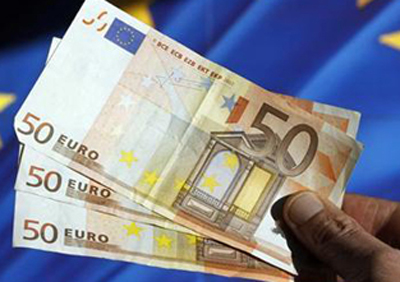 LONDON: The euro fell to a three-week low against the dollar on Thursday after data painted a grim picture of the euro zone economy as it struggles with the debt crisis now in its fourth year.
Output in the 17-country euro zone slid by 0.6 percent in the fourth quarter, more than the 0.4 percent decline expected in a Reuters poll and deepening its recession.
The bloc's two largest economies, France and powerhouse Germany, also shrank by more than expected in the final quarter, casting doubt on forecasts of a recovery in early 2013.
That bolstered inflows into safe-haven German Bunds and fanned expectations the European Central Bank will lower interest rates in the next few months. ECB Vice President Vitor Constancio said negative interest rates - where banks effectively pay the central bank to hold their cash securely - were still a possibility, although no decision has been made.
Those developments are likely to keep the euro off its recent highs of above $1.37, and it hit a three-week low on Thursday, falling 1 percent on the day to $1.33195 - well below a one-week high of $1.3520 struck on Wednesday.
Against the yen, the euro was down 0.8 percent at 124.60 yen.
"The GDP numbers were weaker than expected and while it's not dramatic, going forward if data continues to weaken and does not reflect the improved financial conditions, we may see some monetary policy response from the ECB," said Paul Robson, currency strategist at RBS.
Those worries are likely to pin the euro down, he said.
The euro has risen 1 percent against the dollar and 9 percent against the yen this year after banks repaid some crisis loans to the ECB, effectively tightening liquidity while both the Federal Reserve and the Bank of Japan have been expanding their balance sheets by printing more money.
And while figures earlier in the year from Germany showed some signs the economy was stabilising, peripheral euro zone countries have continued to struggle in the face of tough austerity measures. Data on Thursday showed the recessions in Italy, Portugal and Greece had worsened.
Financial conditions in the euro zone have improved, however, with peripheral bond yields well below highs struck last year, lending solid support to the euro.
"The GDP numbers are a bit backward-looking and the more forward-looking indicators all show signs of stability," said George Saravalos, G10 FX strategist at Deutsche Bank.
"We are neutral on the euro and expect it to finish the quarter at $1.35."
CAUTION BEFORE G20
Investors will nonetheless stay cautious on the euro given the risk of a tough statement on currencies from a G20 summit in Moscow this weekend. Speculation has continued that the group of industrialised nations may apply pressure on Japan to slow the yen's slide.
G7 nations - Britain, the United States, Japan, Germany, France, Italy and Canada - said this week that fiscal and monetary policies must be directed at domestic economies and not at targeting exchange rates.
But confusion reigned after a G7 official said the statement was aimed at Tokyo, a comment that prompted the yen to surge on a volatile foreign exchange market. Other G7 countries later said it should be taken at face value.
While the yen was higher against the euro, it slipped against the dollar. The dollar traded at 93.54 yen, up 0.3 percent but still well below a 33-month high of 94.465 set on Monday.
Earlier, the BOJ kept policy steady as expected and revised up its assessment of the Japanese economy.
Some believe the BOJ might hold off on expanding stimulus next month, and wait until the first rate review under its new governor, scheduled for April 3-4.
BOJ Governor Masaaki Shirakawa will leave three weeks ahead of the end of his five-year term, clearing the way for slightly earlier implementation of aggressive easing under his successor.




















Comments
Comments are closed for this article.