

OPINION: Discos: privatisation plan won’t succeed without market deregulation

After PIA’s successful privatisation, all eyes are on power distribution companies (the so-called discos), which are at the top of the active privatisation list.
Consultants have been appointed and millions of dollars have been spent.
However, these assets lack investor interest, as there is no clarity on the regulatory front. Plus, the only privatized entity (K-Electric) is being presented by government agencies involved in the energy sector as a poster child.
In the energy value chain, the easiest business is generation, where a very profitable structure is in place. Once IPPs (Independent Power Producers) make an investment, they have thirty years of guaranteed returns. On the flip side, the most complex and difficult business (distribution) has no, or very low, incentive. There are issues of rights of way, politically influenced connections, and pricing, to name a few.
Distribution is the most complex business in the chain and, without an overall sector overhaul and a regulatory reset, there is little hope of any success. The problem is that the same people deployed in government regulatory and operating agencies (such as the power ministry, PPIB, CPPA-G, NTDC, Nepra and the discos) are making the roadmap for energy sector deregulation and discos’ privatisation, even though they created the mess in the first place. It is a non-starter.
The impression one gets is that these stakeholders do not want discos to be privatized, as perhaps they may lose control and access to gravy trains. Many in Islamabad cite KE as a bad example of privatisation. KE was a success from 2009 to 2015. A private equity player (Abraaj) came, turned it around, and was about to exit. In 2016, Shanghai Electric publicly showed interest in acquiring a 66.4 percent majority stake in KE. However, it never got security clearance for unexplained reasons (perhaps geopolitics was in play). Had that transaction taken place, it would have set the right precedent for future privatisation.
Unfortunately, later, the Abraaj Group was liquidated, and a new player emerged that claims majority shareholding in KE and apparently has no issues with security clearance. Anyhow, KE has kept muddling along. Its multiyear tariff remained pending. Finally, after 1.5 years of deliberations, the regulator (Nepra) issued a tariff in mid-2025, which it drastically revised two months later by issuing a suo motu notice. Either of the two decisions is wrong. This means the regulator is influenced. It gave a decision and, after media and power-minister bashing, took a 180-degree turn.
This clearly shows that the regulator is not politically independent and lacks the capacity to deal with complex businesses. Seeing this, investor interest in discos is limited and they seek regulatory clarity. Even lenders (commercial banks) will be reluctant to extend debt to discos, as the perceived risk of their lending to KE has heightened.
The problems are not limited to the regulator. The tussle between the power and petroleum ministries is further complicating matters. One decides to put a levy on captive power to reduce its circular debt. However, this increases the circular debt in the other division. Then there is no coherent long-term policy. A few years ago, the country was celebrating RLNG deals, and now the jubilation is over the net proceeds differential mechanism.
The country, in the meanwhile, oscillates between crippling shortages and expensive surpluses. In a less regulated industry (like cement), the cost of surpluses is borne by producers (investors). However, in a highly regulated power sector, no matter what, consumers pay the price of delayed actions and inefficiencies. We were told that after renegotiations with IPPs everything would be kosher, but the mess remains where it was.
This madness should end. All contracts should be opened and renegotiated, and that cannot happen with excessive government involvement. Uniform tariffs should be abolished, and tariffs should be lower where the underlying cost is low. Implicit subsidies to any province must stop. Encourage fair pricing. Get a good wheeling charge mechanism. And stop referring to every state owned asset as a “strategic asset”.
In a nutshell, a complete reset is required, led by someone who is not politically influenced and who has the capacity to deliver. Fresh thinking is required by taking decision-making out of the hands of the old guard. PIA’s success should be a testimony: the shift from failure in 2024 to success in 2025 came from addressing investor concerns and making the transaction marketable. A similar approach is required in the energy sector, with much greater zest and resolve.
Copyright Business Recorder, 2026
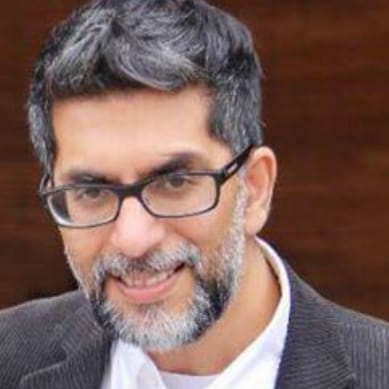
Ali Khizar is the Director of Research at Business Recorder. His Twitter handle is @AliKhizar