



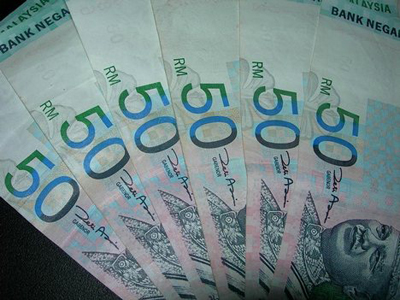
 SINGAPORE: Most emerging Asian currencies eased on Friday as investors took profits after disappointing earnings from US technology giants, although they were mainly poised for weekly gains amid signs the global economy is stabilising.
The Malaysian ringgit lost 0.4 percent as interbank speculators covered dollar-short positions, while the Philippine peso slid on speculation of a rate cut by the central bank next week.
Regional stocks also eased as weaker quarterly results from Google Inc and Microsoft hit technology names in the area.
But the retreat in emerging Asian currencies is simply a correction on profit-booking, dealers and analysts said.
Regional units are also expected to move higher against the yen if the Bank of Japan takes another easing step at a policy meeting on Oct. 30, they added.
Most local currencies in Asia have already gained versus the Japanese unit with the South Korean won hitting a six-month high.
"Still, US funds are looking for attractive places for yields next year. We will see more inflows to emerging markets towards the end of this year, especially after the US election and China's transition of power," said a European bank dealer in Singapore.
The dealer said those funds are likely to look to South Korean and Malaysian bonds.
Most emerging Asian currencies were on course for weekly gains as economic data from the United States and China earlier this week alleviated concerns over a slowing global economy.
Some UScompanies also delivered solid earnings, supporting risk appetite, although Asian currency authorities such as central banks in the Philippines, Singapore and Taiwan were spotted intervening to stem rises in their currencies, dealers said.
The South Korean won led weekly gains among emerging Asian currencies with a 0.7 percent climb against the dollar. Offshore funds and domestic exporters chased the local currency.
The Taiwan dollar has risen 0.4 percent against the greenback so far this week, while the ringgit and the Chinese yuan have both gained 0.3 percent, according to Thomson Reuters data.
The Singapore dollar has advanced 0.2 percent, the data showed.
But the Indian rupee has lost 1.7 percent as higher-than-expected inflation data undermined hopes for a rate cut to boost the economy. Indian oil companies also bought the dollar to make payments.
RINGGIT
The ringgit earlier weakened past 3.0476 per dollar, the 38.2 percent retracement of its appreciation since Oct. 10 on dollar-short covering.
Technical charts indicated that the Malaysian currency may head to 3.0543, the 50.0 percent retracement, if it ends the day weaker than the 38.2 percent level.
However, some traders have been buying the ringgit on dips, limiting its depreciation.
"Besides Google, the market is in a risk-on mode. I will try to sell dollar/ringgit between 3.055 and 3.060," said a Malaysian bank dealer in Kuala Lumpur.
Investors remained cautious over possible intervention by the central bank as well, especially after it was spotted buying dollars below 41.20 earlier this week, dealers said.
"We will not tolerate excesses in exchange rate movements and will not hesitate to consider other tools in our policy tool kit," Governor Amando Tetangco said in an email.
Still, the local currency found some support at 41.45 per dollar on expectations of remittance inflows, dealers said.
"The peso can correct up to 41.57 and 41.75 if the BSP cuts in policy rates," said a European bank dealer in Manila, referring to the central bank.
"But for now 41.45 would be strong support, given that there is not enough negative news to reverse the recent risk rally."
WON
The won turned higher as exporters including shipbuilders and electronics companies bought the local unit to settle payments. Custodian banks also purchased the South Korean currency, dealers said.
The local unit started the day softer and weakened to 1,106.5 per dollar as some offshore funds and domestic interbank speculators sold.
But exporters did not miss the chances to buy the won on dips, especially around 1,106, dealers said.
"Given growing expectations for further appreciation in the won, exporters snapped it up whenever it weakened," said a South Korean bank dealer in Seoul.


























Comments
Comments are closed for this article.